Britain is moving to harden its defenses against the next shock, with officials shifting from a “just in time” model to “just in case” planning as climate extremes, border insecurity and broader geopolitical strain expose how quickly critical systems can be stretched.
UK resilience plan shifts to just-in-case planning

The change matters because resilience has become an economic issue, not just a public-safety one. When transport links, energy supplies, communications and emergency services are built around efficiency rather than redundancy, a single disruption can cascade into higher costs, slower growth and wider financial losses for households and businesses.
Sentiment IndicatorsⓘProprietary · adalytica.com · October 2, 2026
This is a snapshot — live sentiment, awareness and momentum for 130+ markets update continuously in the dashboard.Open AlphaPulse
That is the logic behind the Office of Civil Defense’s seven-point agenda and infrastructure plan, which aims to move disaster response upstream into prevention and preparedness. The broader effort also echoes the European Commission’s push to bolster the security and resilience of the EU’s external borders, underscoring how governments across Europe are treating climate and geopolitical instability as overlapping risks.
For investors, the shift points to more spending on resilience-related infrastructure, logistics, cybersecurity, border systems and emergency planning, while raising the bar for firms exposed to supply-chain interruptions or weak contingency capacity. It may also mean a larger policy role for public capital in areas where private markets alone have underinvested because the payoff is protection, not immediate return.
Geopolitical Risk — 30-day sentimentadalytica.com
Explore this data interactively — full history, time series and cross-market comparisons.Open AlphaPulse
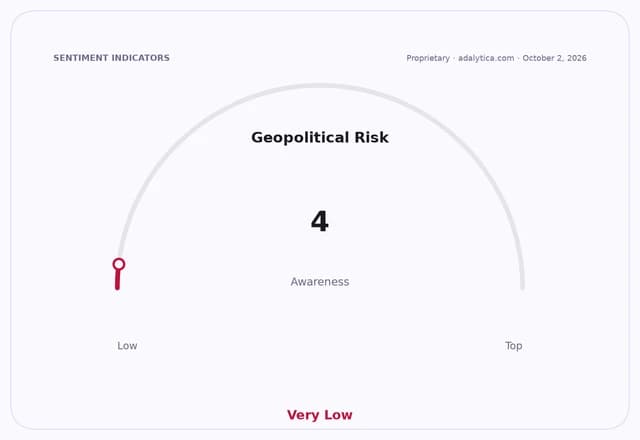
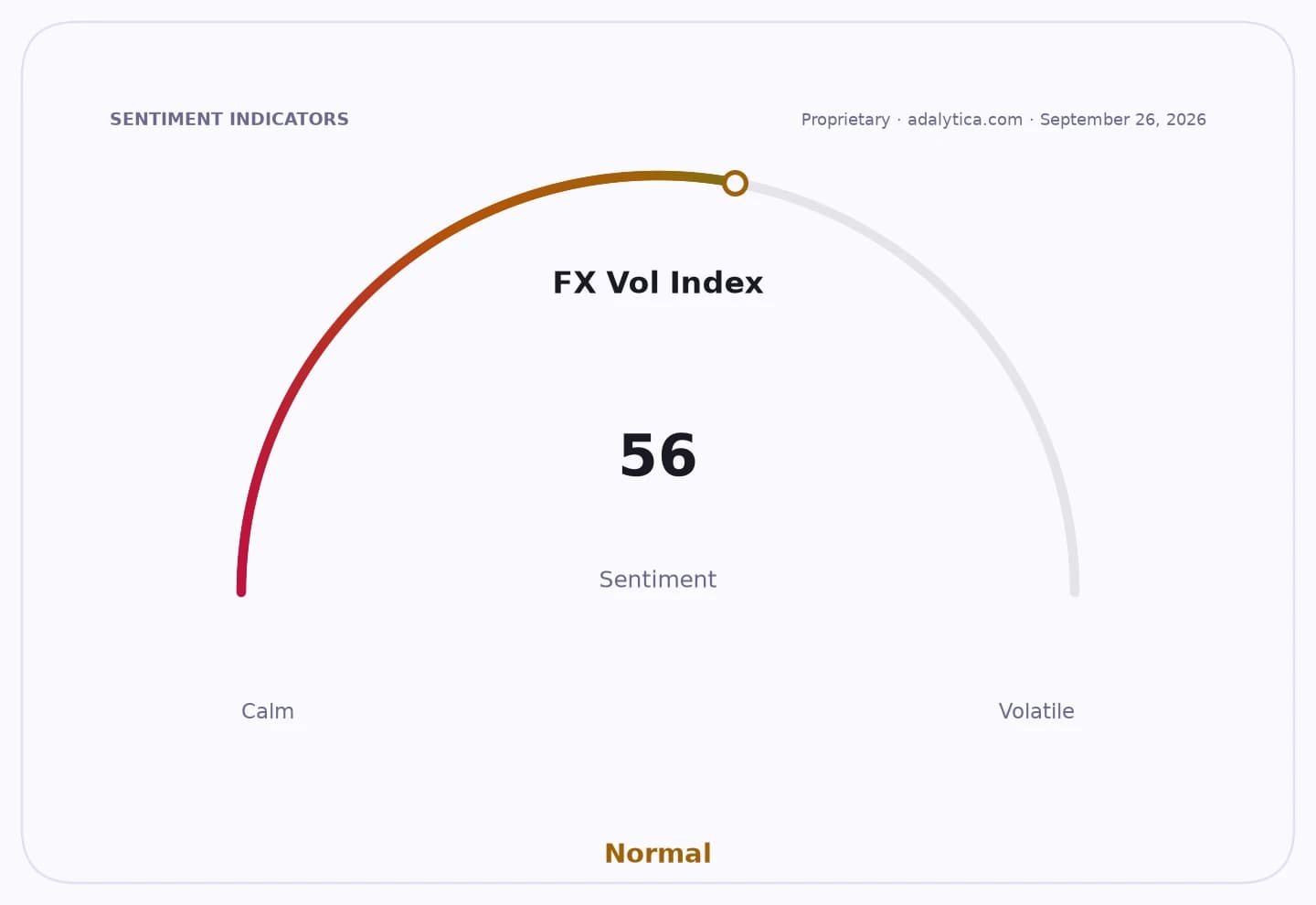
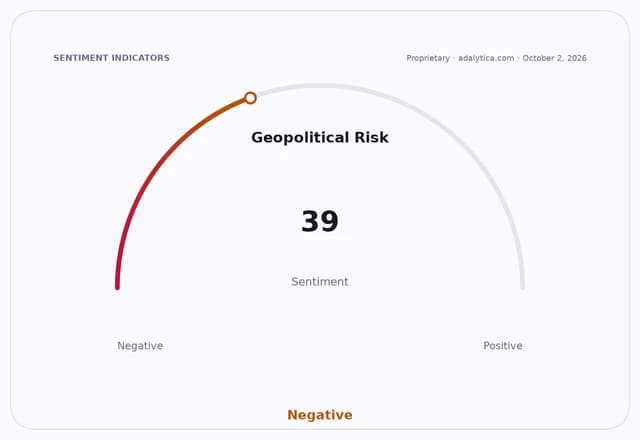
Adalytica’s Global Stability Sentiment gauge shows a sharp deterioration in risk appetite, with sentiment at 39 and awareness at 4, classified as extreme fear, while FX volatility signals also sit in extreme fear territory. The U.S. dollar trade signal is similarly weak, suggesting markets are pricing a more fragile global backdrop even as policymakers prepare for more frequent shocks.
The next test will be whether governments can turn resilience planning into funded infrastructure before the next emergency hits, with climate damage, border pressures and financial market stress likely to keep the issue high on the policy agenda.
| Entity | Gains | Losses |
|---|---|---|
| UK government | ▲stronger crisis readiness | ▼efficiency-first budgeting |
| Infrastructure and resilience contractors | ▲more public spending | ▼underinvested legacy systems |
| Households and businesses | ▲fewer disruption losses | ▼higher near-term costs |
| Importers and supply chains | ▲better redundancy | ▼just-in-time models |