Kyiv has stepped up contact with Iran as the widening conflict around the Middle East and Ukraine sharpens the market’s focus on energy security, sanctions risk and the durability of wartime alliances.
Ukraine, Iran Contact Amid Energy Security Risks

The immediate significance is not diplomatic theater. It is the growing overlap between two wars that are starting to pull on the same global fault lines: crude supplies, weapons flows, drone technology and the political bandwidth of Washington and its allies. When Kyiv is reaching out to Tehran while Russia deepens cooperation with Iran, investors should read that as a sign the conflict map is becoming more interconnected — and more dangerous for commodity inflation and defense spending.
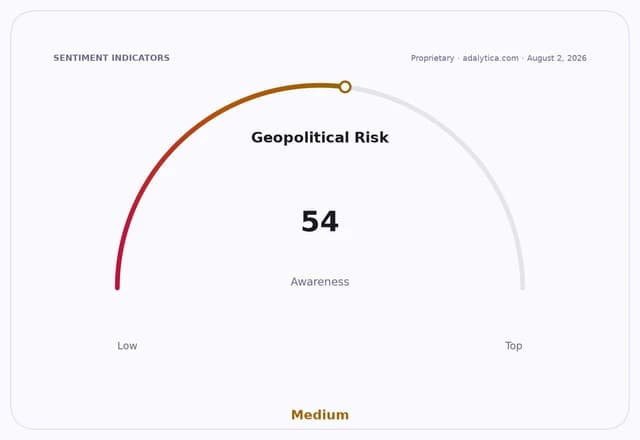
Sentiment IndicatorsⓘProprietary · adalytica.com · August 2, 2026
This is a snapshot — live sentiment, awareness and momentum for 130+ markets update continuously in the dashboard.Open AlphaPulse
The latest turbulence around Iran comes as former President Donald Trump abruptly canceled a planned large-scale attack on Iran, calling it a choice made for the “future benefit of the world.” Tehran dismissed that as psychological warfare and denied any deal over the Strait of Hormuz, the chokepoint that carries a huge share of global oil trade. For markets, that is the real pressure point. Even without a shooting war, the threat premium on energy can jump fast when Hormuz is discussed in the same breath as escalation.
Ukraine remains under heavy strain, with reports of mounting troop losses and intensifying Russian coordination with Iran. That combination matters because it ties the Black Sea war more directly to Middle East geopolitics, potentially reinforcing demand for missiles, drones, air defenses and secure logistics. In the background, the unusual warming of ties between Trump and Ukrainian President Volodymyr Zelensky adds another layer of uncertainty over future U.S. policy, which remains a key variable for aid flows and sanctions enforcement.
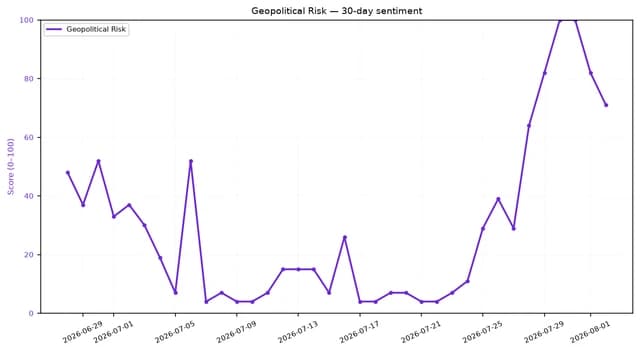
The market is still underestimating how quickly this kind of geopolitical cross-contamination can feed into prices. The Adalytica Global Stability Sentiment gauge sits at 71, in “Greed,” but it dropped 11 points in a day even after rising 32 points over the past week and 38 over the past month. That kind of swing says complacency is brittle. Geopolitical risk is not fading; it is oscillating at a higher level.
For investors, that argues for staying overweight the beneficiaries of persistent conflict and supply insecurity. Energy producers, tanker and shipping names, LNG infrastructure, missile-defense contractors, drone makers and cyber defense firms all gain when the world becomes harder to move, harder to secure and more expensive to insure. The losers are the oil-importing economies, airlines, industrials and consumer sectors that get squeezed when crude spikes and freight costs rise.
The key thesis is simple: this is no longer just a regional standoff. It is a macro catalyst that can lift oil volatility, support defense capex and keep risk premia elevated across global markets. If tensions around Iran, Russia and Ukraine keep converging, the next move may not be in headlines alone — it may be in energy, defense and transportation stocks that benefit from a world investing for instability.
| Entity | Gains | Losses |
|---|---|---|
| Oil producers | ▲Higher crude risk premium | ▼Consumers, importers |
| Defense contractors | ▲More procurement demand | ▼Fiscal hawks |
| Tankers/shipping | ▲Disruption-driven rates | ▼Global trade flows |
| Airlines/industrials | ▲— | ▼Fuel and freight costs |