Russia’s signal that it is prepared to resume trilateral talks on Ukraine has started to ripple through markets because any sustained diplomatic opening would alter the outlook for energy, European growth and the defense trade.
Ukraine Talks May Pressure Defense Stocks
The comments come as Washington and other intermediaries try to keep momentum alive around a possible negotiated framework for ending the war. That matters economically because even a partial de-escalation could ease the risk premium embedded in commodity prices, lower uncertainty for European industry and improve the chances of rebuilding activity across parts of Ukraine and the wider region. For investors, it also changes the distribution of outcomes: peace prospects tend to pressure some defense beneficiaries while supporting cyclical and reconstruction-sensitive assets.
Sentiment Indicators
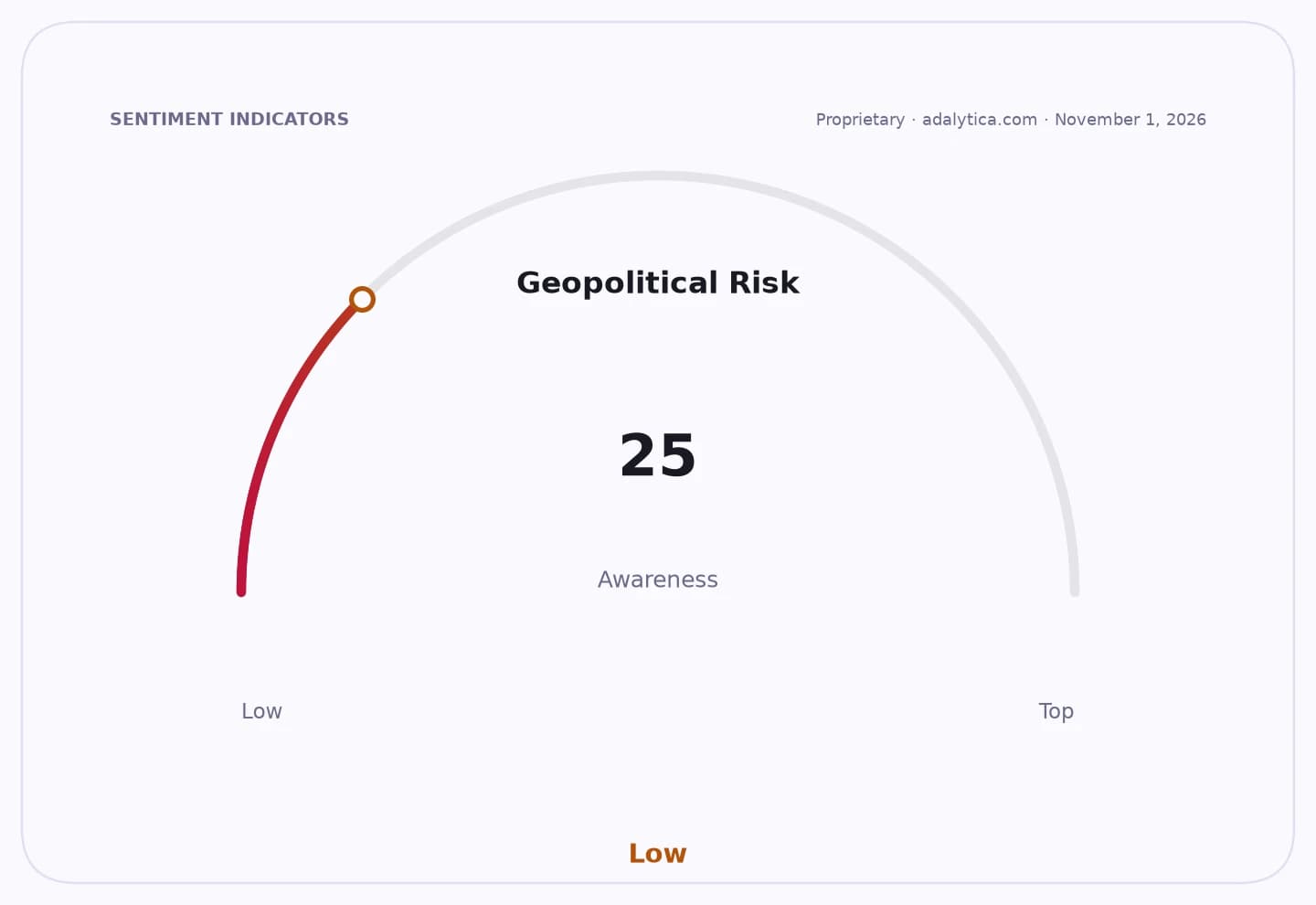
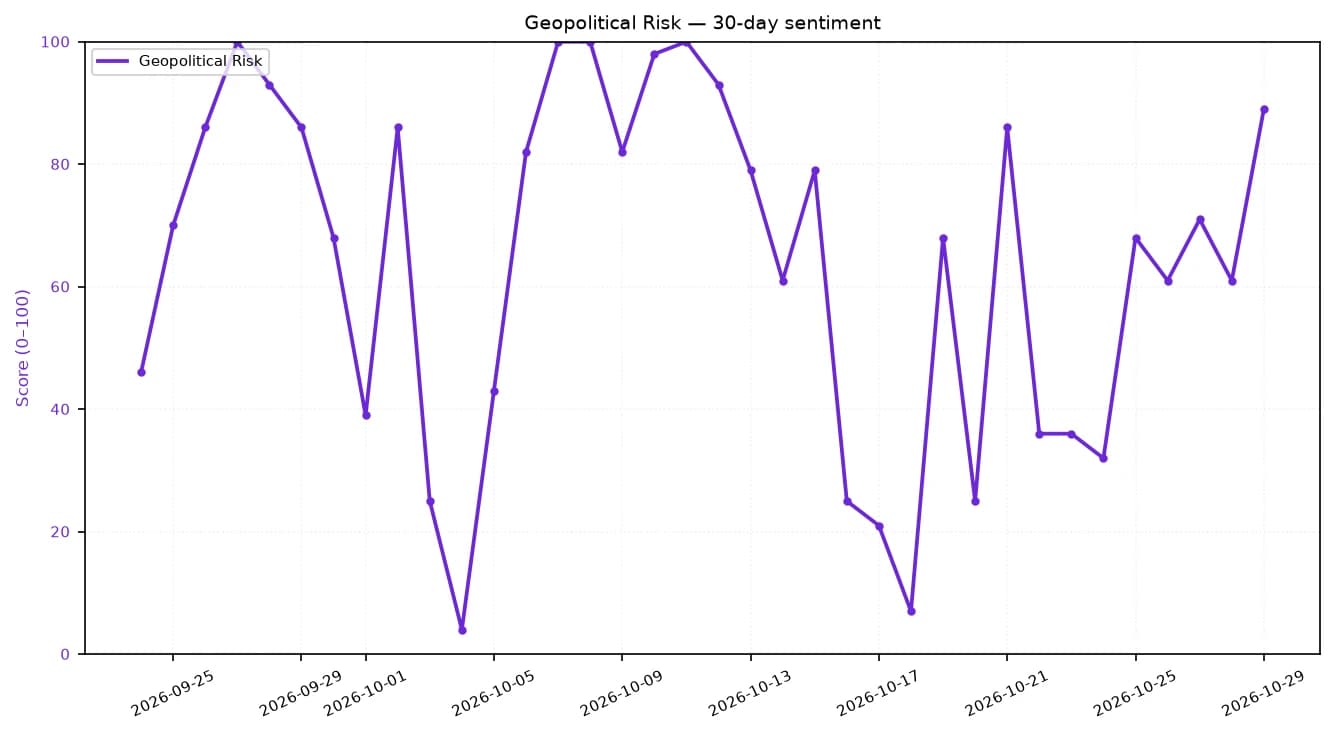
The market is not yet pricing a full breakthrough, and the data suggest investors are still treating the situation as fragile. Adalytica’s Global Stability Sentiment gauge shows extreme greed at 89, while awareness remains in extreme fear territory at 7, a combination that points to complacency about the broad backdrop but continued caution over execution risk. That tension is visible in defense names, which have already reacted sharply to the possibility that the conflict could enter a less acute phase.
Lockheed Martin is the clearest example. The stock has surged to 647.75, up from 499.22 on Oct. 7, even as its technical readings show the move has gone far beyond a typical reset. Its 14-day RSI is 87.1, a sign of overbought conditions, while the price sits well above the 50-day and 200-day moving averages. The rally reflects both strong order visibility and the market’s willingness to pay for geopolitical insurance, but it also leaves the shares vulnerable if peace talks gain traction and investors rotate away from defense exposure.
Natural gas shipping and broader energy-linked names are more mixed. Natural Gas Transporter Nat has climbed to 8.06 from 7.79 in the latest sessions, but its RSI of 42.3 suggests the move is not yet overheated and traders are still waiting for confirmation that diplomacy will materially change energy flows or shipping demand. In contrast, unionized industrial and defense suppliers that have benefited from higher military spending and replenishment demand would face a tougher comparison if the war risk premium fades.
The bond market backdrop reinforces the broader macro caution. The 10-year Treasury yield is around 4.94% to 5.00%, while the 10s-2s curve has steepened modestly to 0.38 percentage point after months of volatility. That leaves little room for a growth scare, but it also means investors are still balancing inflation pressure against slowing real activity. A credible Ukraine truce would be disinflationary at the margin through energy and shipping costs, though any relief could be offset if fiscal rebuilding and sanctions relief take longer than expected.
For now, the key issue is not whether talks are announced, but whether all sides can move from symbolic engagement to enforceable terms on security guarantees, territorial issues and sanctions. If they do, the biggest winners would likely be European cyclicals, transport and parts of industrials, while the losers would be the defense contractors and commodities trades that have been supported by prolonged instability. If they do not, the market will revert to treating diplomacy as headline risk rather than regime change.
| Entity | Gains | Losses |
|---|---|---|
| Ukraine peace advocates | ▲Lower conflict risk | ▼Slower-than-hoped breakthrough |
| Defense contractors | ▲Near-term backlog visibility | ▼Peace-driven de-risking |
| European cyclicals | ▲Easier energy outlook | ▼Persistent war premium |
| Energy shippers | ▲Continued route disruption | ▼Normalized trade flows |