Russia’s war on Ukraine is still doing what markets hate most: keeping energy, defense and haven assets permanently bid while making any peace premium look premature.
Ukraine War Keeps Energy, Defense, Gold Bid
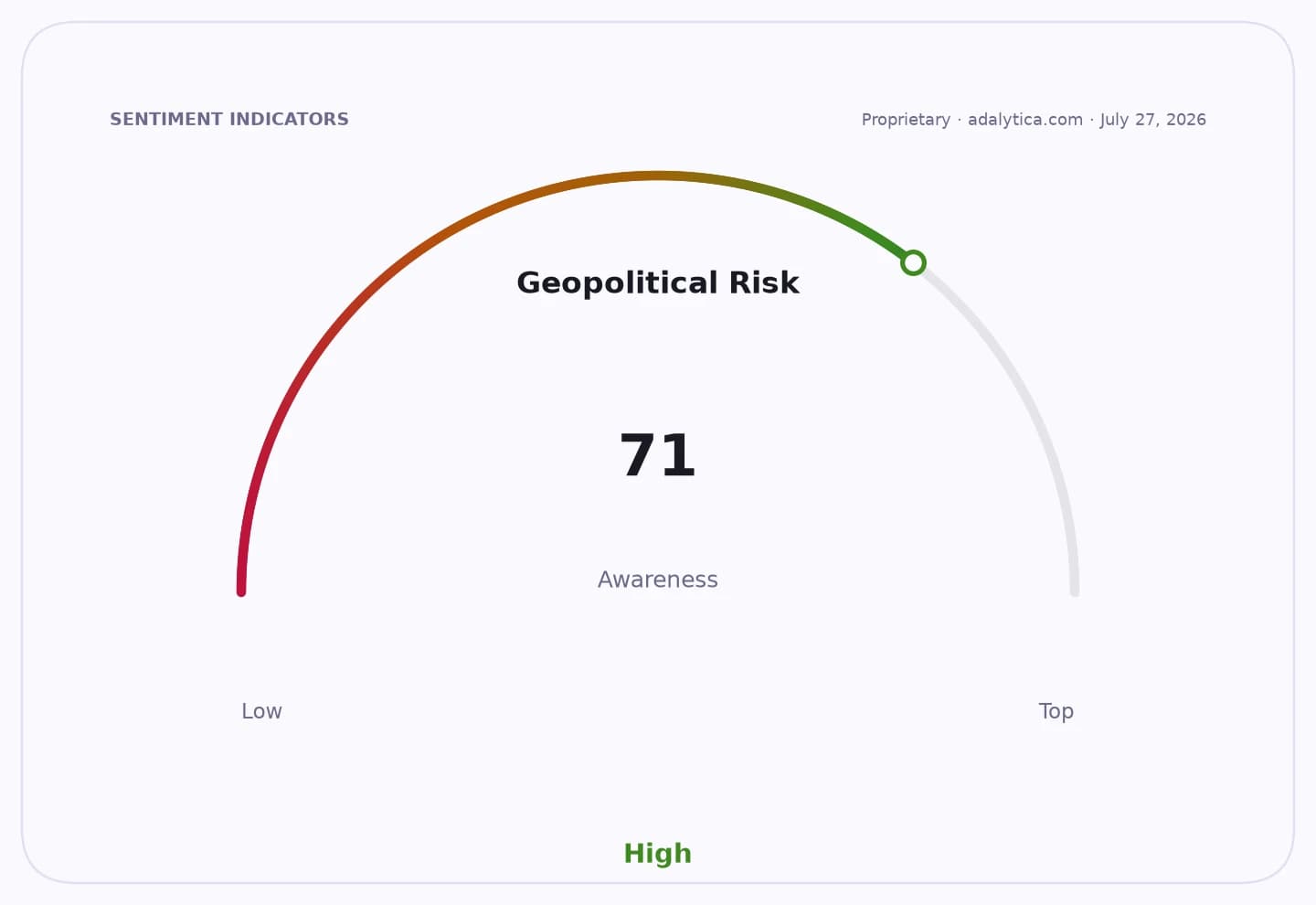
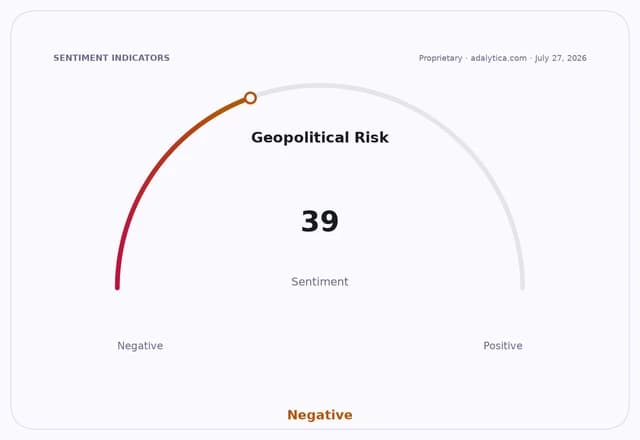
That matters because the conflict is no longer just a humanitarian catastrophe. It is a macro shock that keeps pressure on global supply chains, defense budgets and commodity pricing, and it is forcing investors to pay up for assets tied to war, sanctions and security spending. With Moscow rejecting any ceasefire and Ukrainian strikes increasingly targeting Russia’s economic base, the war is now feeding both inflation risk and rearmament demand.
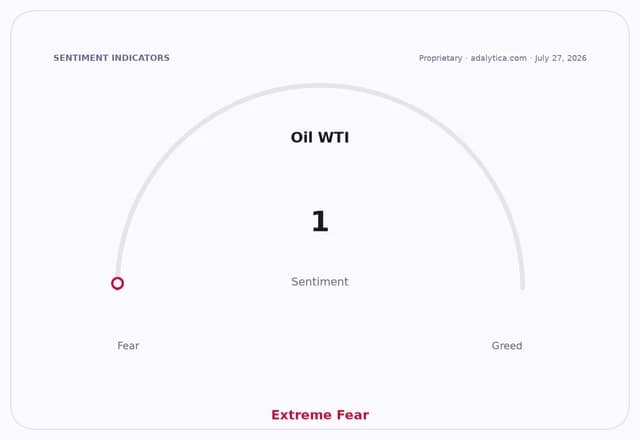
Oil is the clearest market barometer. WTI has jumped back to about $85 a barrel in the latest forecast, after a volatile summer that saw the benchmark surge above $140 on the USO proxy before sliding and then snapping higher again. That kind of price action tells you the market is not pricing peace — it is pricing persistent geopolitical disruption. Adalytica’s Oil WTI Trade Signals are flashing “Extreme Fear” on sentiment even as awareness sits at “Extreme Greed,” a classic setup for continued volatility rather than calm.
For investors, that keeps the focus on winners that benefit from sustained uncertainty. Energy producers and integrated majors have a durable tailwind if crude stays elevated, while the market underestimates the second-order effect on defense spending. The iShares U.S. Aerospace & Defense ETF has held firm near record levels, reflecting the reality that Europe’s rearmament cycle is not a one-quarter trade but a multi-year capex boom. Lockheed Martin, RTX and their peers sit in the path of that spending wave, and the latest filings continue to flag geopolitics as a core demand driver.
Geopolitical Risk vs USOadalytica.com
Explore this data interactively — full history, time series and cross-market comparisons.Open AlphaPulse
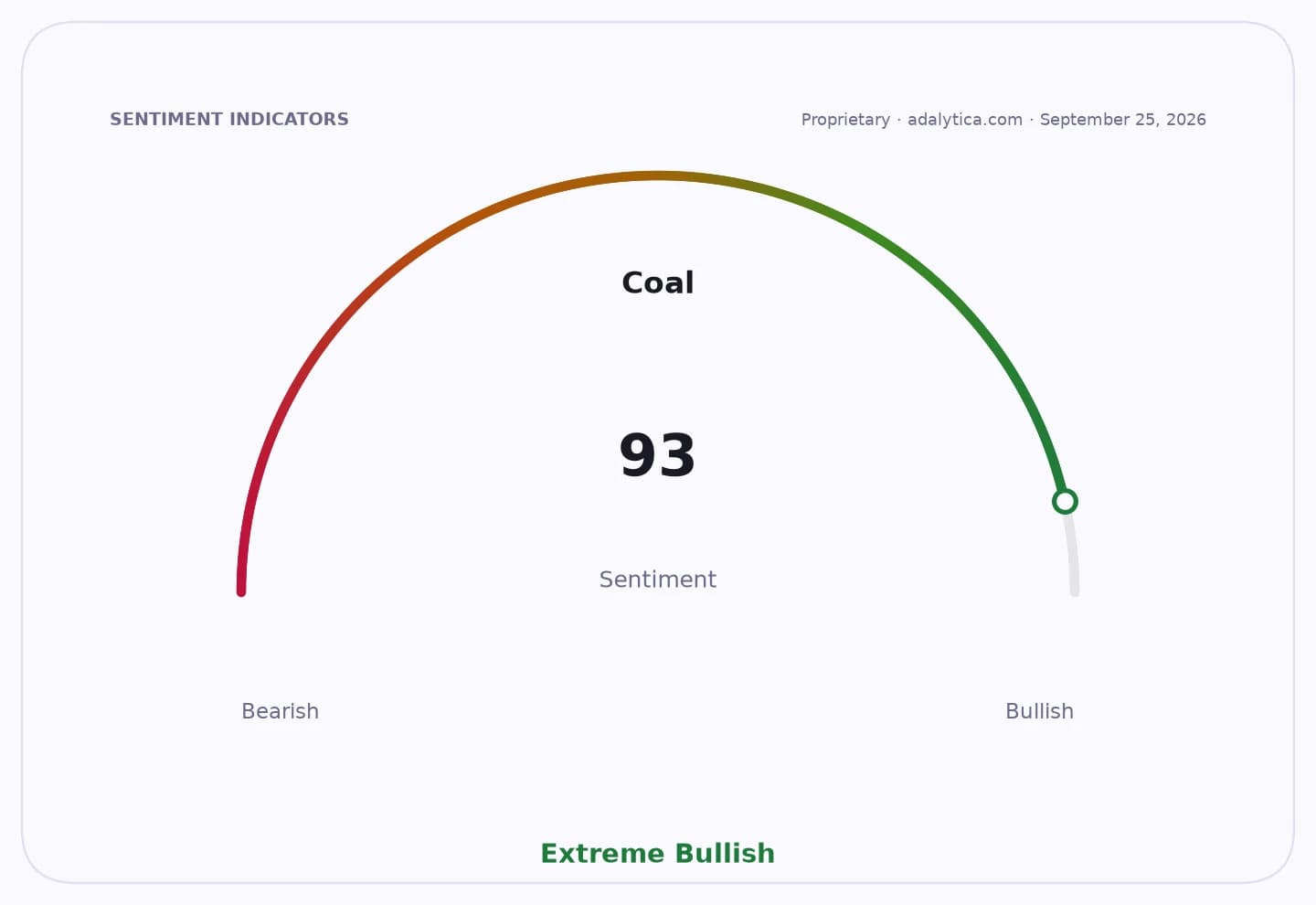
The broader positioning matters too. Chevron, Shell and BP remain exposed to a world where Russian supply risk never fully disappears and where Ukraine-related attacks can still jolt energy markets. At the same time, the war is reinforcing demand for gold and other havens. Adalytica’s Gold Fear & Greed Index is at an extreme reading, underscoring how quickly capital rotates into safety when geopolitics deteriorates.
The market is still treating Ukraine as a headline risk. I believe it is a structural allocation theme. Until the war moves toward a credible settlement — and there is little sign of that — investors should stay positioned for higher energy volatility, stronger defense demand and continued flows into hard assets. The asymmetric opportunity remains in the picks-and-shovels of security and the companies that get paid when the world gets less stable, not more.
| Entity | Gains | Losses |
|---|---|---|
| Energy producers | ▲Higher crude prices | ▼Demand destruction risk |
| Defense contractors | ▲Bigger rearmament budgets | ▼Peace dividend hopes |
| Gold and haven assets | ▲Flight-to-safety flows | ▼Lower geopolitical tension |
| Consumers/importers | ▲— | ▼Fuel and inflation pressure |