Russia’s relations with the United States will remain hostage to the war in Ukraine, and that matters far beyond diplomacy: every escalation in the conflict is tightening the screws on global energy markets, stoking safe-haven demand and keeping investors positioned for a longer stretch of geopolitical volatility.
Ukraine War Keeps Bid Under Oil and Gold
Kremlin spokesman Dmitry Peskov’s message is blunt but economically important. There is no serious thaw in Moscow-Washington ties while the battlefield remains hot, and that leaves the world’s two biggest military powers locked in a confrontation that is still feeding directly into commodities, defense spending and broader risk appetite. For markets, the key takeaway is not just that peace is distant. It is that the war remains a live macro variable, one that can reprice crude, gold, European assets and emerging-market risk in a matter of hours.
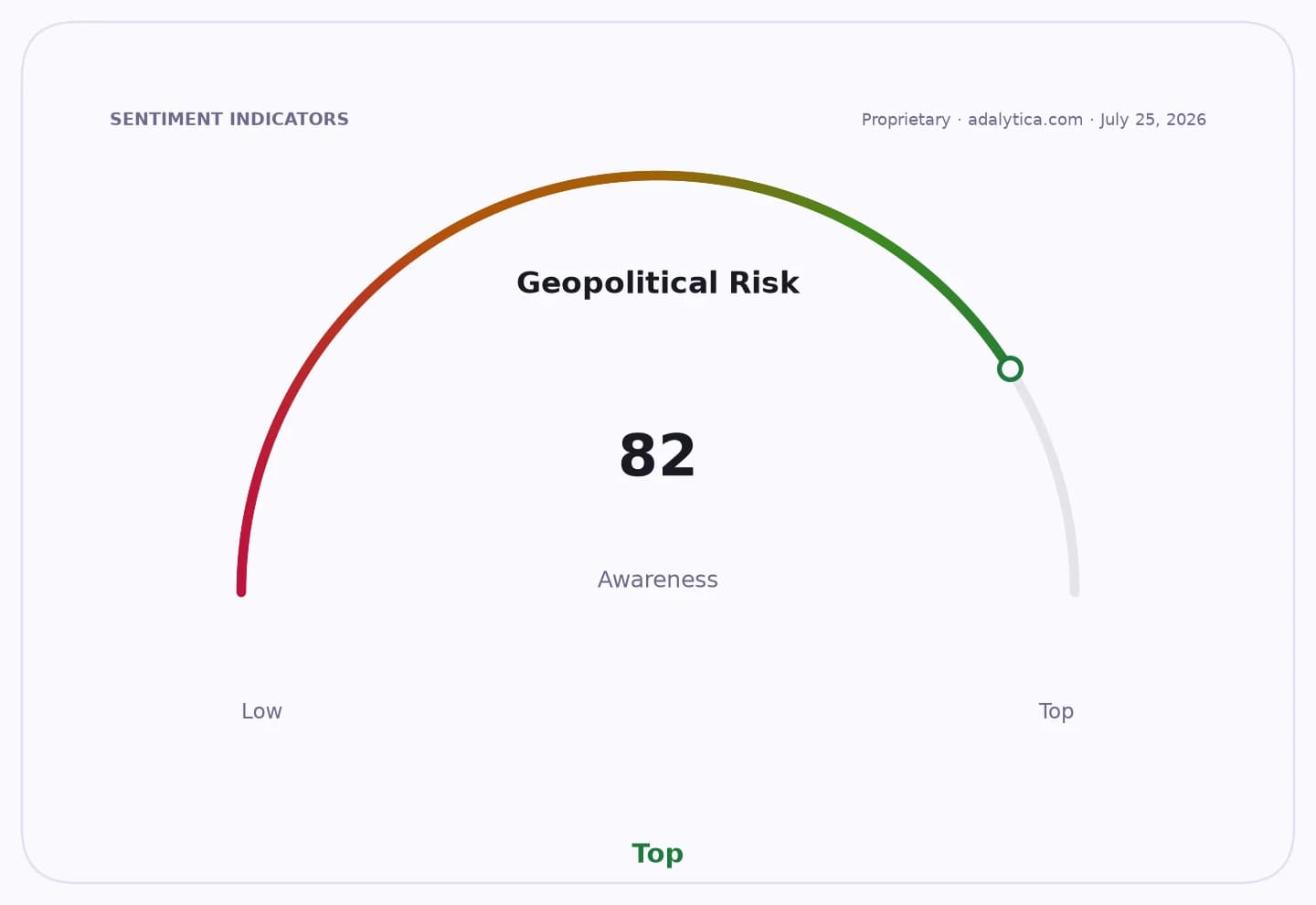
Sentiment IndicatorsⓘProprietary · adalytica.com · July 25, 2026
This is a snapshot — live sentiment, awareness and momentum for 130+ markets update continuously in the dashboard.Open AlphaPulse
That is already showing up in price action. USO, the oil ETF, has surged from around 106 in late June to 136.69 on July 24, with its 50-day moving average now well below the current price and momentum readings still elevated. The move reflects how quickly traders are reassessing supply risk as Ukraine intensifies strikes on Russian energy infrastructure and Moscow responds with barrages of its own. When oil is being pulled higher by war premium rather than demand alone, the beneficiaries are the upstream producers, oilfield services names and energy-heavy equities that can absorb volatility and still generate cash.
Gold is sending the same message from a different angle. GLD remains near 372, far above its 200-day moving average, even after a pullback from earlier highs. The gold fear-and-greed gauge from Adalytica.com sits at 99, or Extreme Greed, underscoring how aggressively investors are seeking protection from geopolitical shocks. That is important because it suggests the market is not treating the conflict as a temporary headline risk, but as a durable source of uncertainty that can support bullion, miners and defensive positioning.
Geopolitical Risk — 30-day sentimentadalytica.com
Explore this data interactively — full history, time series and cross-market comparisons.Open AlphaPulse
The broader economic significance is straightforward: a prolonged Russia-Ukraine war keeps Europe vulnerable, complicates energy pricing and raises the odds of fresh sanctions, retaliation and supply disruptions. For central banks and governments, that can keep inflation stickier than expected just as growth remains fragile. For investors, it means the old playbook still works — own assets tied to scarcity, security and strategic autonomy. That includes defense contractors, energy infrastructure plays, LNG-related names and select gold exposure, while import-dependent industries and Europe-facing cyclicals remain exposed to every new spike in tension.
The most underappreciated part of this story is that the conflict is not just a military contest but a capital-allocation event. Russia’s economy is absorbing the cost of prolonged war, Ukraine is leaning harder on external support, and Western governments are being pushed toward higher defense and energy security budgets. That is a multi-year tailwind for aerospace, missile defense, cyber and industrial supply chains built around resilience rather than efficiency.
The market is still underpricing how long this can last. Until the Ukraine file changes, U.S.-Russia relations are unlikely to improve, and investors should treat every flare-up as a reminder that geopolitical risk is not a side story — it is an investment theme. Positioning early in the winners of higher oil, persistent gold demand and defense spending remains the asymmetric trade.
| Entity | Gains | Losses |
|---|---|---|
| Oil producers | ▲Higher crude prices | ▼Demand-sensitive refiners |
| Gold miners | ▲Safe-haven buying | ▼Risk assets |
| Defense contractors | ▲Higher military budgets | ▼Diplomacy hopes |
| Europe-facing importers | ▲— | ▼Energy-cost pressure |