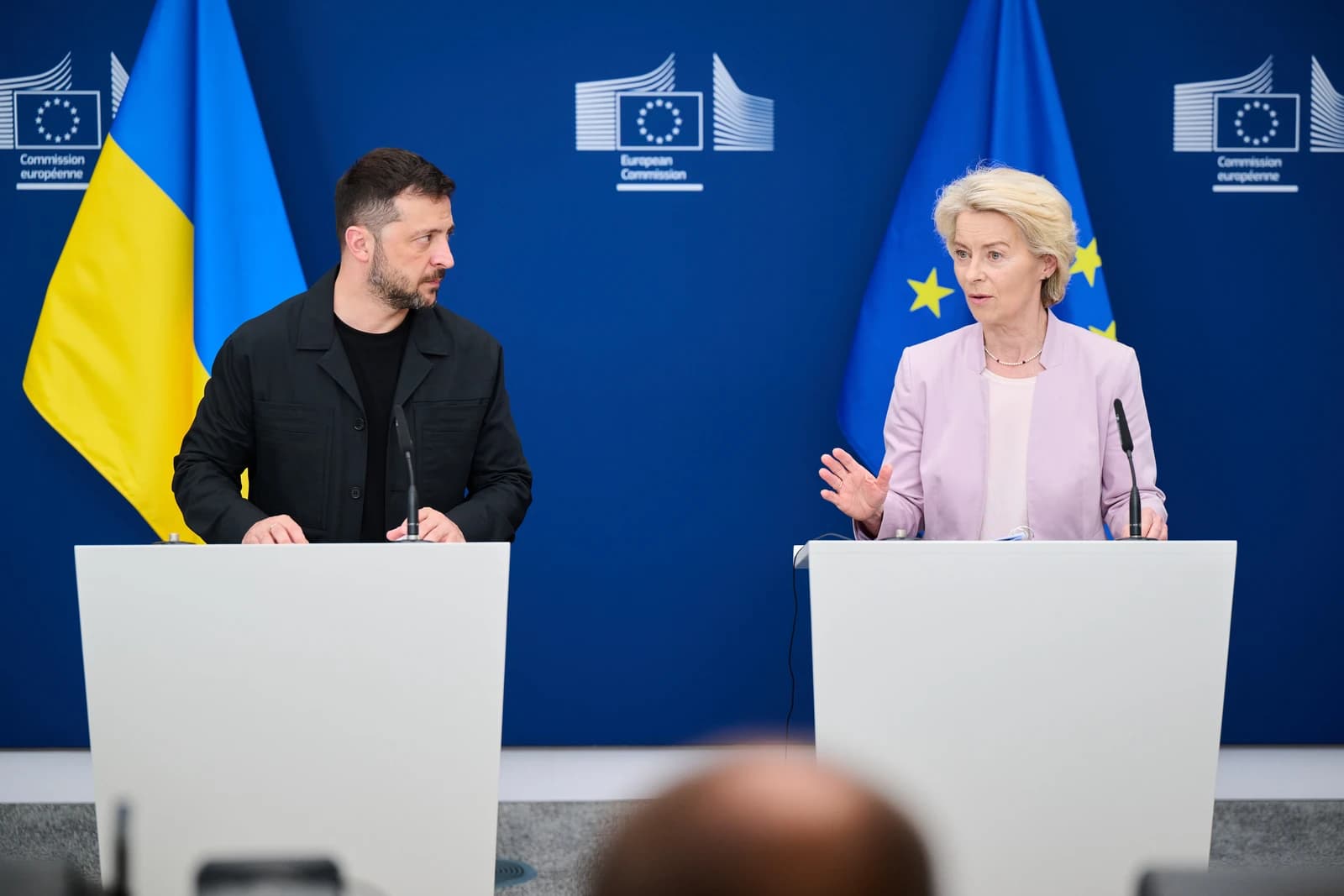
Ukrainian President Volodymyr Zelenskyy said Russia’s main mistake was underestimating Ukraine’s readiness to fight, a reminder that the war is now being fought as much through endurance, industrial capacity and outside support as on the battlefield itself.
Ukraine War Risks Keep Pressure on Europe Assets

That matters economically because a conflict that was expected in Moscow to end quickly has instead become a long-duration drain on Russian resources, a persistent test of European security and a standing risk premium for energy, defense and regional assets. The latest comments fit a broader pattern of escalation: heavier Russian strikes on civilian infrastructure, Ukrainian counterstrikes deep into Russian territory and renewed warnings from European leaders that Moscow is absorbing losses while still retaining the ability to disrupt markets.
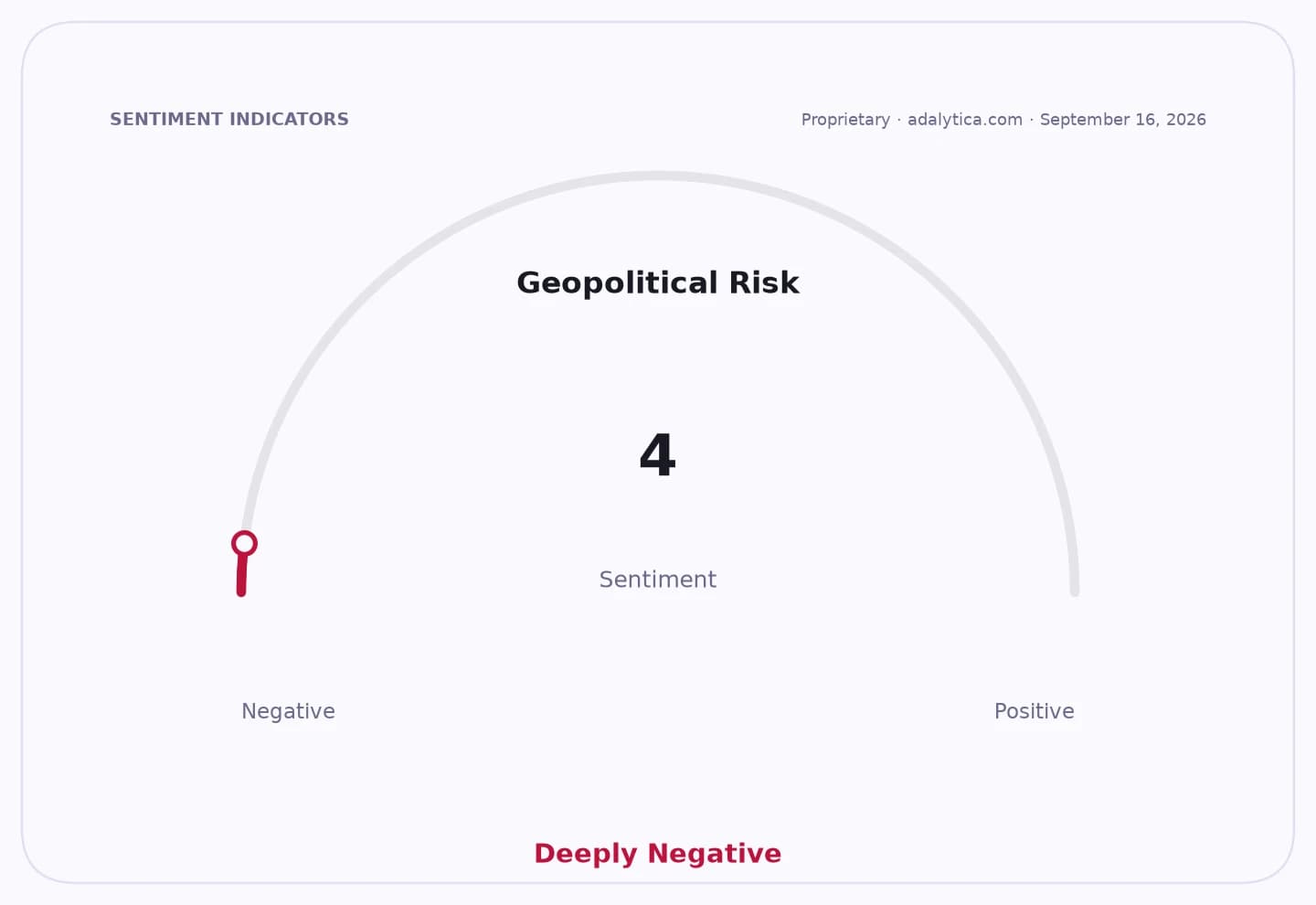
Sentiment IndicatorsⓘProprietary · adalytica.com · August 24, 2026
This is a snapshot — live sentiment, awareness and momentum for 130+ markets update continuously in the dashboard.Open AlphaPulse

For investors, the key issue is not Zelenskyy’s rhetoric but what it implies about the war’s timeline. A faster resolution would ease pressure on European sentiment, lower tail risks for energy supply and reduce the need for emergency defense outlays. A prolonged war keeps defense spending elevated, supports demand for missiles, drones and air-defense systems, and sustains volatility in currencies, rates and commodity-linked assets tied to the region. It also keeps sanctions enforcement, insurance costs and shipping routes in focus.
The market backdrop reflects that split. Adalytica’s Global Stability Sentiment gauge jumped to 79, a “Greed” reading, after a sharp increase over the past week, suggesting investors are more willing to price risk across geopolitics even as the conflict remains unresolved. By contrast, Adalytica’s euro trade signal is in “Extreme Fear” at 15, underscoring how quickly Europe-facing assets can swing when the war intensifies and the prospect of spillover rises.
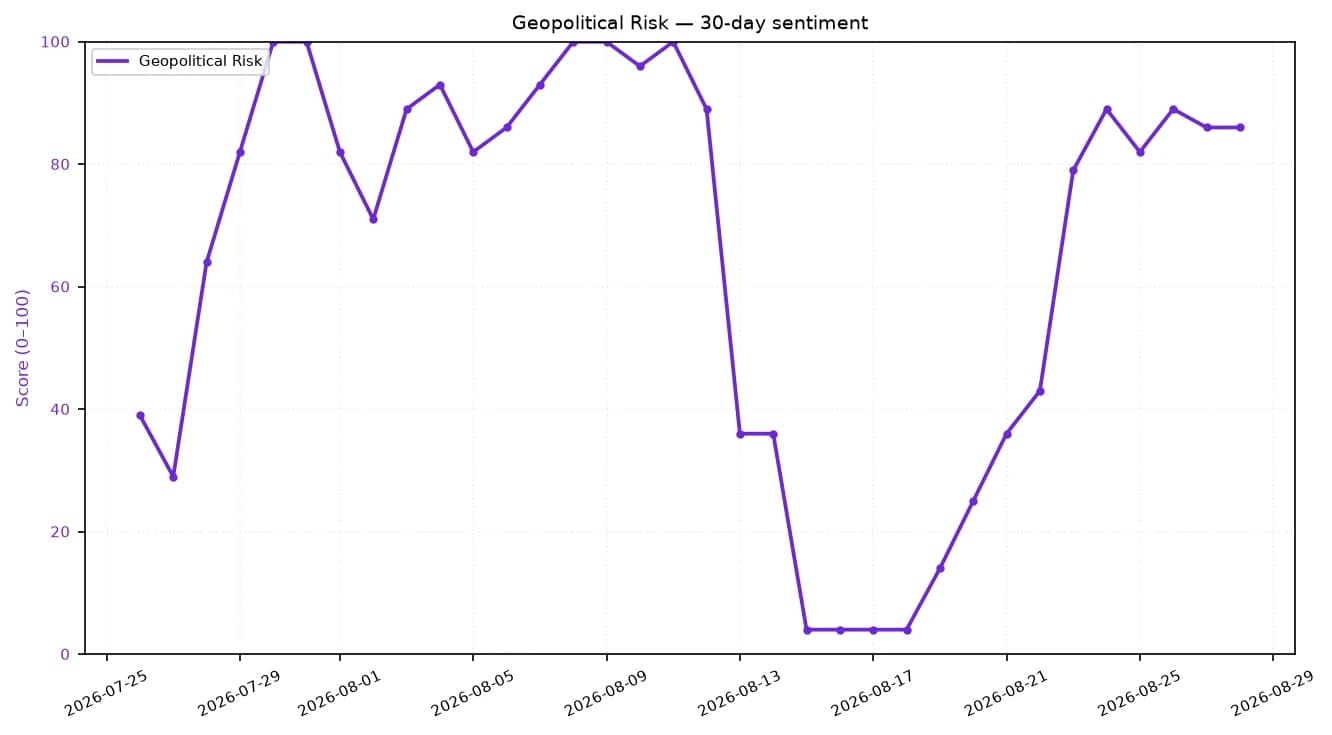
Geopolitical Risk — 30-day sentimentadalytica.com
Explore this data interactively — full history, time series and cross-market comparisons.Open AlphaPulse

Technical readings on Kyiv-linked market data also point to a fragile setup rather than a clean breakout. The KYIV instrument recovered to 13.25 after a recent slide from 16.14 in early July, but it remains below its 50-day moving average of 14.13. RSI at 40.9 shows the move has stabilized without regaining strong momentum, while MACD is still slightly negative, a sign that traders are not yet convinced the latest rebound marks a durable shift.
The bull case for risk assets is that Ukraine’s ability to absorb pressure and strike back deep inside Russia raises the cost of escalation for Moscow and increases the odds that Western support stays intact. The bear case is that neither side can force a decisive outcome quickly, leaving Europe with a grinding conflict that keeps energy, defense and political risk elevated into the autumn.
For investors, the lesson is that every new wave of attacks or counterattacks should still be read as a macro event, not just a military one. The war continues to shape the outlook for European growth, defense procurement, Russian fiscal strain and sentiment across regional markets, and there is little evidence yet that Moscow’s original calculation about Ukraine’s resistance has changed.
| Entity | Gains | Losses |
|---|---|---|
| Ukraine / Kyiv | ▲stronger support case | ▼prolonged destruction |
| Russia / Kremlin | ▲limited battlefield pressure relief | ▼higher war costs |
| European defense contractors | ▲sustained demand | ▼peace dividend delayed |
| Euro-linked assets | ▲better if escalation eases | ▼hit by renewed war fear |