The United Nations is pushing governments to build a global AI risk framework within a year, putting fresh political pressure on the world’s most valuable technology companies as investors weigh whether the artificial intelligence boom can keep compounding without tighter rules.
UN pushes global AI risk framework
UN Secretary-General Antonio Guterres said member states should coordinate to create “an inclusive, principle-based and independently credible” multilateral system to manage AI risks by next year. For investors, that matters because the industry’s biggest winners — from Nvidia to Microsoft and Alphabet — are still priced on the assumption that AI adoption keeps accelerating faster than regulation can restrain it.
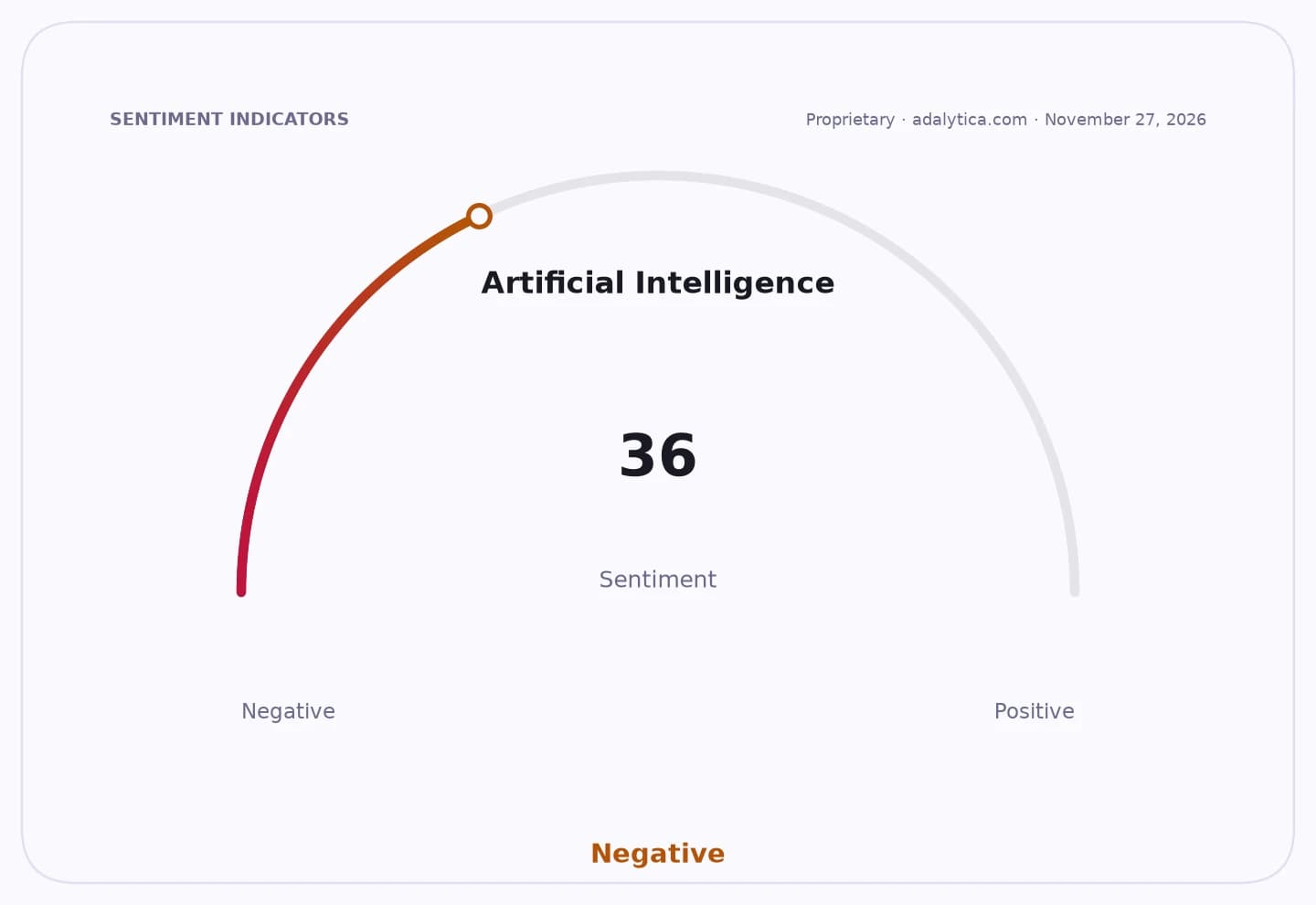
Sentiment Indicators
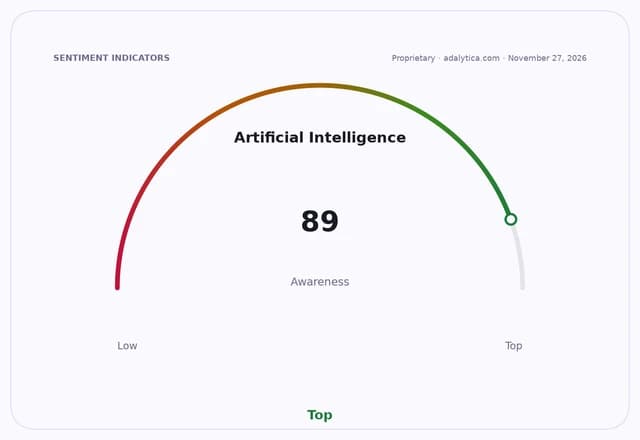
The timing is important. AI has become one of the market’s most powerful narratives, but the policy backdrop is shifting from voluntary guardrails to explicit international oversight. That raises the odds of compliance costs, product delays, liability exposure and limits on some uses of the technology, especially in sensitive areas such as autonomous weapons, data use and high-stakes decision-making. Companies can still grow fast, but the era of unchecked deployment is looking less likely.
That tension is already visible in the stock prices. Nvidia, the chipmaker at the center of the AI buildout, has swung sharply in recent months, falling to $149.30 on Nov. 25 from a peak above $235 in May, even as its shares still trade well above their 200-day moving average. Microsoft has also pulled back to $489.93 from above $550 earlier this month, while Alphabet slid to $273.10 from more than $380 in May. Those moves do not change the long-term AI investment case, but they do show how quickly sentiment can cool when investors start factoring in valuation, regulation and execution risk at the same time.
For long-term investors, the bigger lesson is that AI is moving from a pure growth story to a policy story as well. The companies best positioned to win over the next decade are likely to be the ones that can build trusted systems, work with regulators and still convert AI demand into durable free cash flow. That usually favors firms with deep moats, massive scale and the balance sheets to absorb compliance costs.
The risk is not that AI disappears. It is that the economics of AI become more layered, with governments asking for more transparency, more accountability and more control. That could slow some applications, but it may also strengthen the competitive position of incumbents that can afford to meet those standards. For investors, the right response is not to chase every headline, but to keep a long horizon, stay diversified and watch which companies turn AI leadership into lasting earnings power. The stocks remain worth watching, but patience will matter.
| Entity | Gains | Losses |
|---|---|---|
| Governments and UN regulators | ▲More oversight | ▼Less policy lag |
| Nvidia, Microsoft, Alphabet | ▲Trusted AI scale | ▼Faster compliance costs |
| Smaller AI startups | ▲Clearer rules | ▼Higher barriers to entry |
| Investors in AI leaders | ▲Longer-term durability | ▼Short-term valuation pressure |