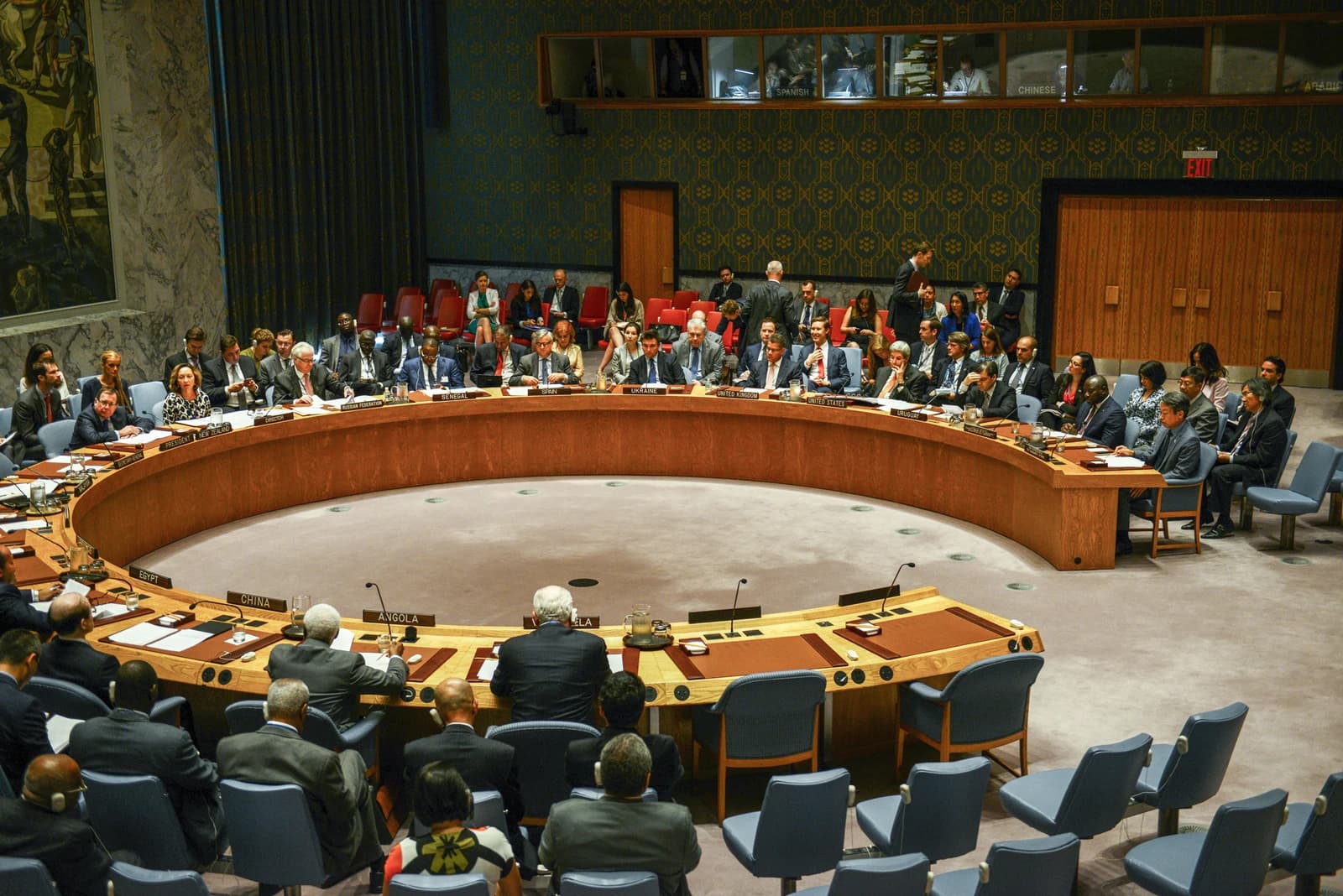
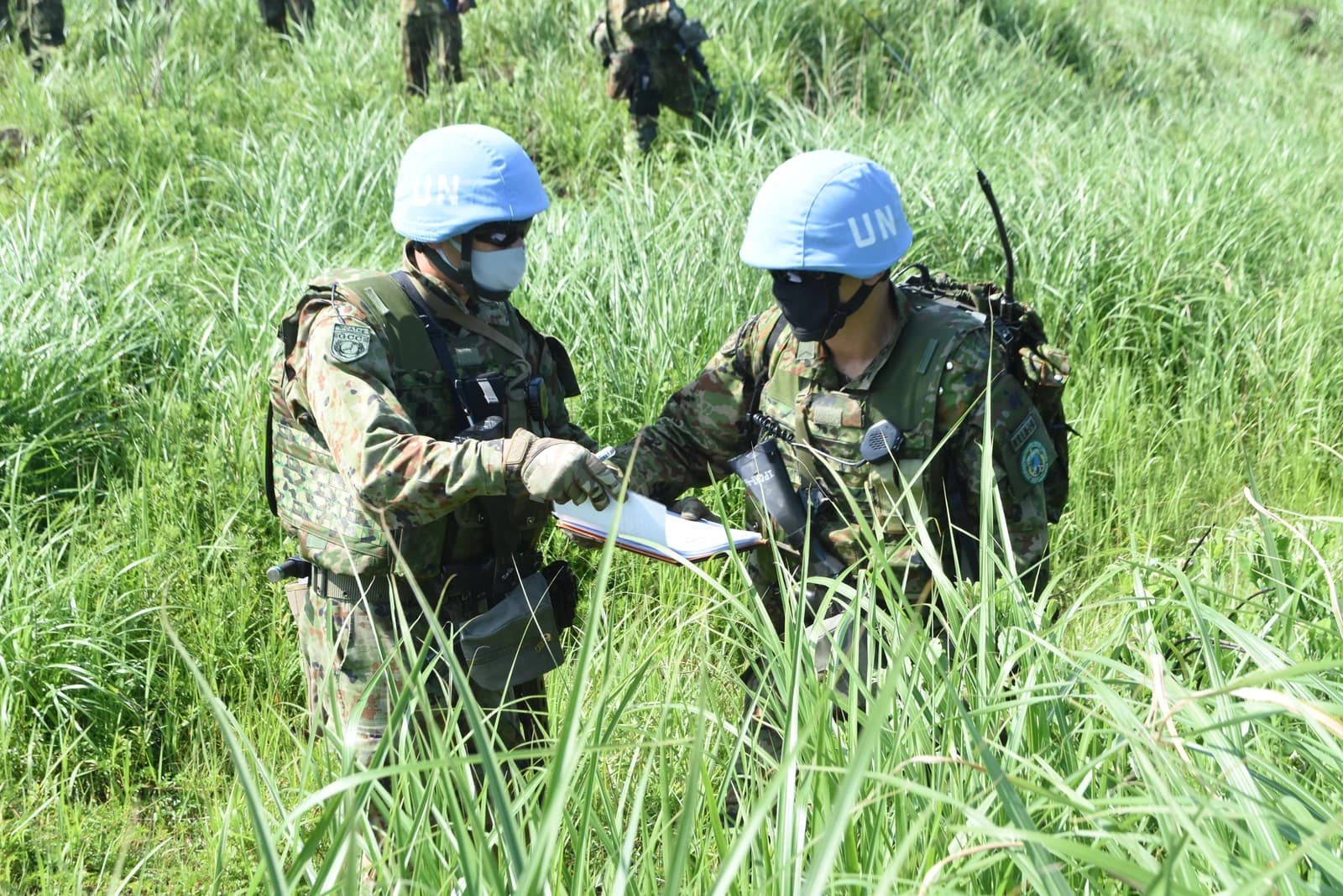
The United Nations’ latest global risk survey says fear of a major war is rising fast, with 76% of respondents seeing the possibility of a large-scale conflict within seven years and 36% saying it could happen within 12 months.
UN survey shows rising major war risk
That shift matters because it captures a marked deterioration in the world’s policy and security backdrop at a time when governments, companies and markets are already contending with war in Europe and the Middle East, strained supply chains, and rising pressure on public finances. The report, compiled with the University of Denver’s Pardee Center from more than 40 studies and 1,300 responses across government, business, civil society and academia, is not a probability forecast. It is, however, a useful measure of how profoundly global risk perception has changed.
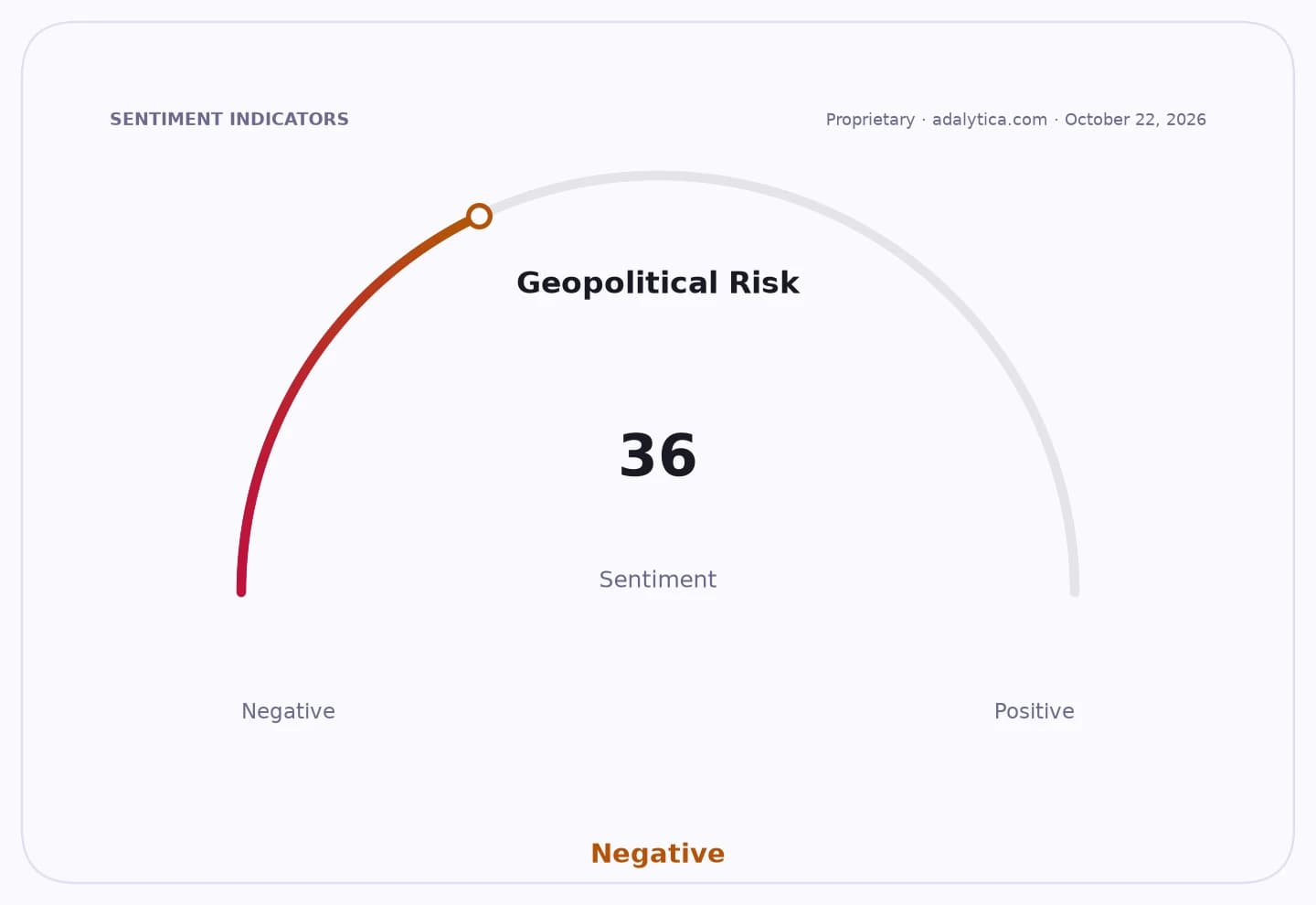
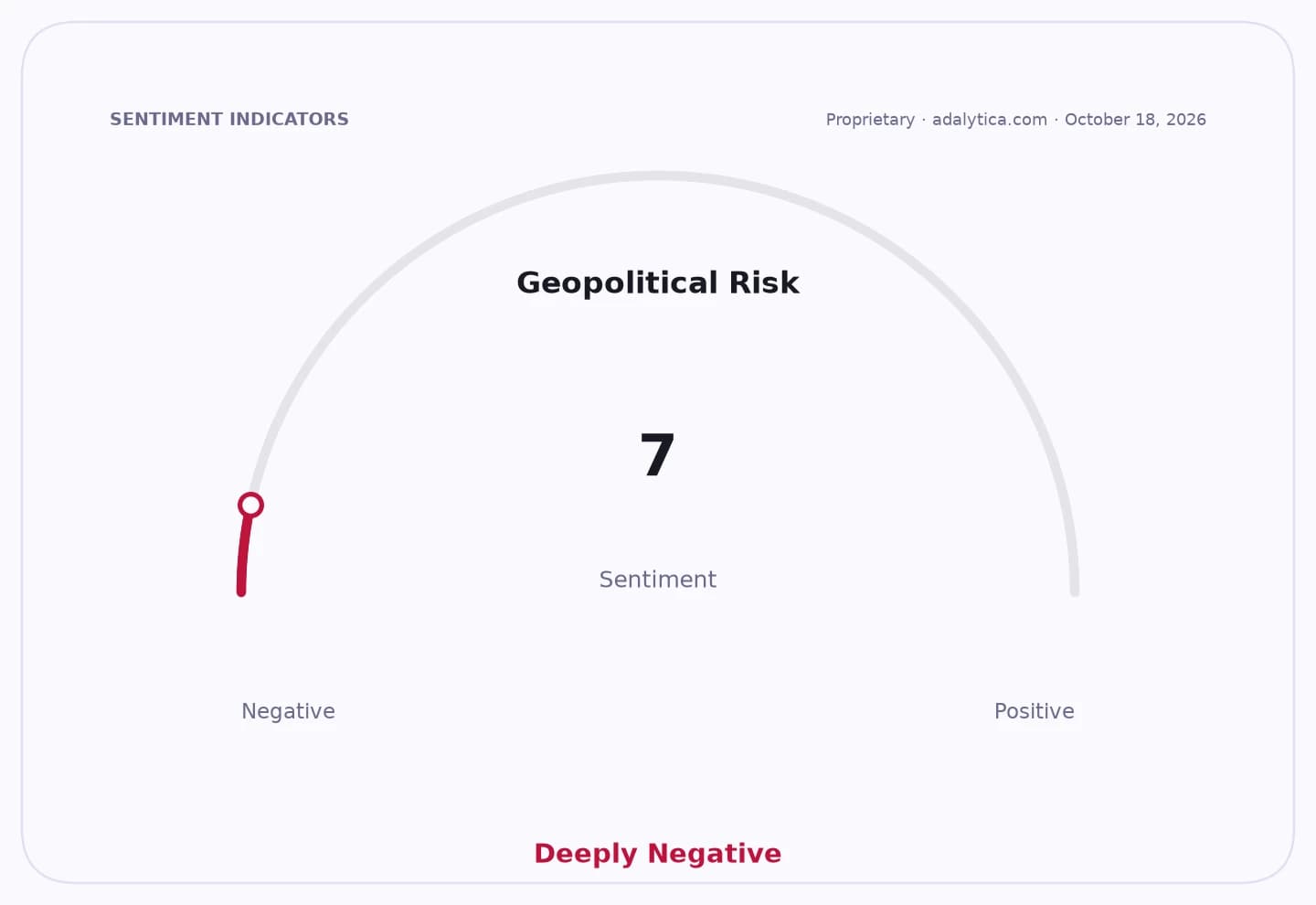
Sentiment IndicatorsⓘProprietary · adalytica.com · October 23, 2026
This is a snapshot — live sentiment, awareness and momentum for 130+ markets update continuously in the dashboard.Open AlphaPulse
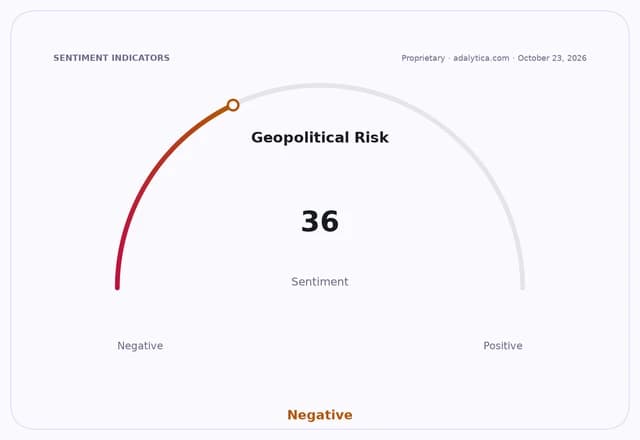
The most striking finding is the speed of the reassessment. Compared with the UN’s first survey in 2024, the risk of major war climbed 16 places, the biggest upward move in the ranking. Geopolitical tension also emerged as the strongest link in the report’s risk network, feeding through to disinformation, weakening rule of law, resource scarcity, economic fragmentation and a loss of confidence in multilateral institutions.
That interdependence is important economically because conflict rarely stays confined to the battlefield. War risk tends to transmit through energy prices, shipping routes, food and fertilizer supplies, defense budgets, currency volatility and higher sovereign risk premiums. The report’s respondents also flagged a global financial crisis and supply-chain collapse among the key near-term threats, underscoring how military and economic risks are now viewed as intertwined rather than separate.
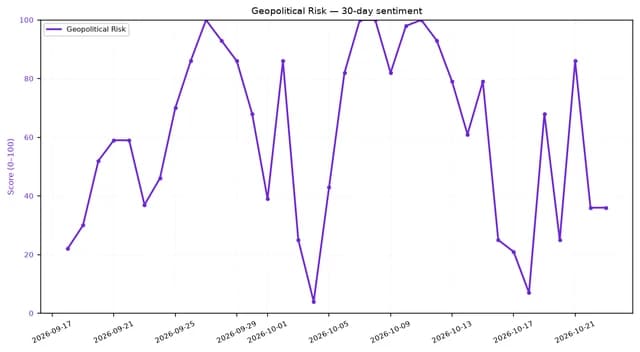
For investors, the report reinforces a familiar but increasingly central trade-off: assets that benefit from stress are drawing more attention, while exposure to global trade, cyclical growth and cross-border supply chains looks more vulnerable. Gold has been one of the clearest beneficiaries of that anxiety. The SPDR Gold Shares ETF, GLD, has climbed to $366.18 from $369.00 a day earlier, but remains well above its 200-day moving average of $414.21 after a volatile year; the conventional technical indicators show RSI at 37.2 and MACD still below its signal line, suggesting the recent pullback has not erased the broader flight-to-safety bid. Oil has also remained sensitive to the risk premium, with the United States Oil Fund, USO, closing at $166.94, above both its 50-day and 200-day moving averages and with RSI at 89.7, a sign the market has already priced in substantial geopolitical tightness.
The report’s message is broader than one-on-one trade between risk assets and havens. It says the global system is becoming less resilient just as the capacity to absorb shocks is weakening. Eighty-six percent of respondents said funding to prevent and reduce global risks is inadequate, and they rated preparedness lowest for technological threats, including artificial intelligence and the concentration of technological power in a small number of hands. That makes the current moment especially awkward for policymakers: the biggest threats are increasingly linked, but the institutions designed to manage them are seen as underpowered.
Regionally, the risk map is equally revealing. Europe and North America see major war, geopolitical tension and AI-related threats as the leading concerns; Central and South Asia place war, strategic rivalry and weapons of mass destruction near the top; East and Southeast Asia worry more about financial crises and technological concentration. In Africa and Latin America, conflict, inequality, misinformation and climate risk dominate. The pattern suggests no single shock, but a global environment in which local tensions can scale quickly.
For markets, the key implication is that geopolitical risk is no longer a background variable. It is increasingly a driver of capital allocation, commodity pricing and portfolio hedging. Investors will watch whether the recent improvement in risk appetite, visible in U.S. equities, can coexist with a world in which security fears are climbing and the odds of policy miscalculation appear to be rising.
| Entity | Gains | Losses |
|---|---|---|
| Gold | ▲Safe-haven demand | ▼Risk-on rotation |
| Energy producers | ▲Higher risk premium | ▼Consumers and importers |
| Defense contractors | ▲Higher spending outlook | ▼Fiscal discipline advocates |
| Global trade/EM assets | ▲— | ▼War-risk and fragmentation |