UPS is rewarding investors for walking away from low-margin Amazon volume, lifting its full-year outlook as the mix shift toward higher-return shipments begins to show up in profit rather than just in theory.
UPS lifts outlook after reducing Amazon volume

The package carrier’s latest update matters because it marks a cleaner test of a strategy Wall Street has debated for more than a year: whether giving up scale can improve economics. UPS has argued that reducing exposure to Amazon, its largest customer but also a relatively thin-margin one, would improve network efficiency and support earnings quality. The market is starting to see that case play out. UPS shares were under pressure earlier in the year when the Amazon reduction was still a cost and growth headwind, but the stock has since recouped much of that damage as the company sharpened guidance and investors looked past volume loss toward margin recovery.
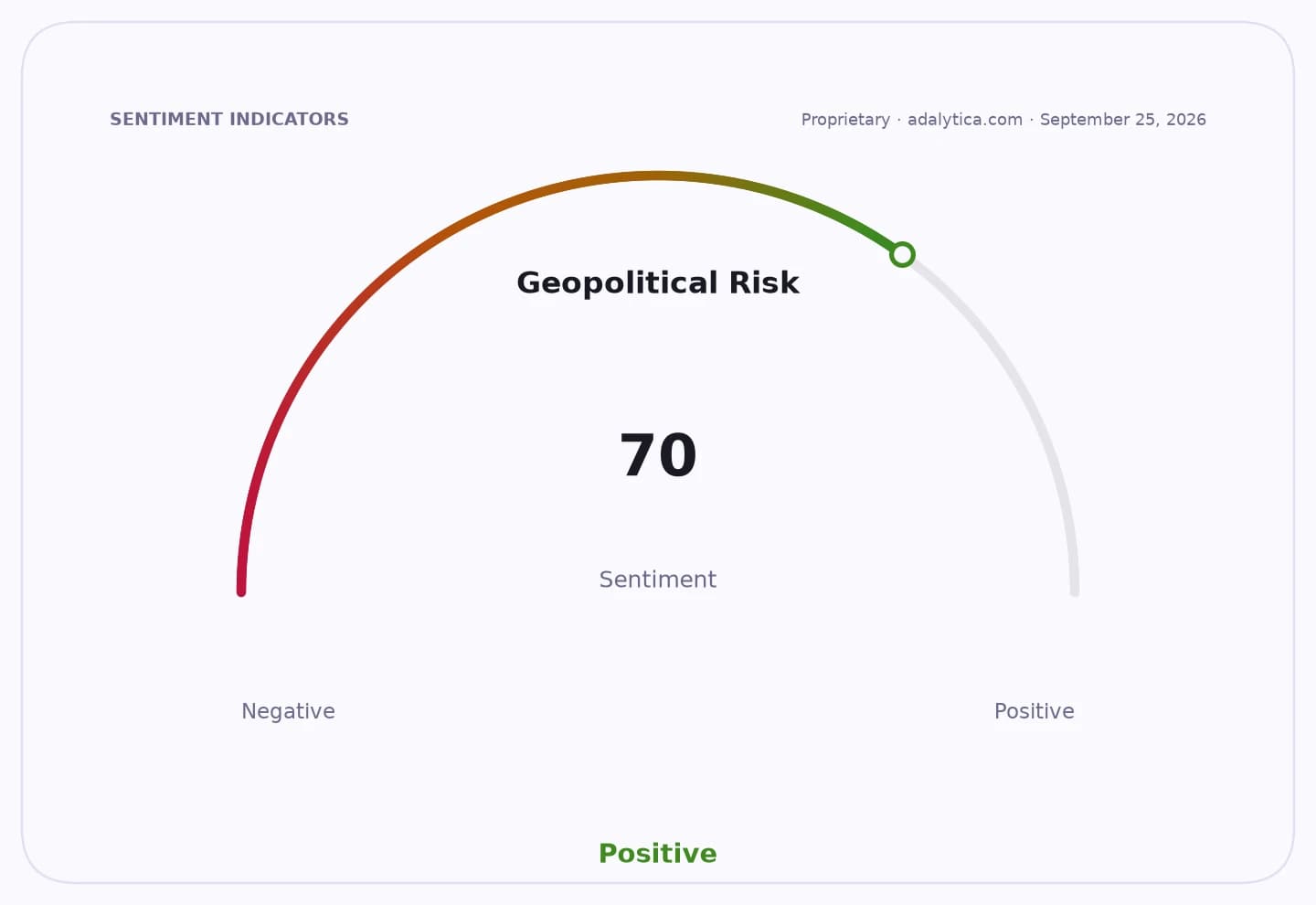
Sentiment IndicatorsⓘProprietary · adalytica.com · July 30, 2026
This is a snapshot — live sentiment, awareness and momentum for 130+ markets update continuously in the dashboard.Open AlphaPulse
The sequencing is important for the broader logistics industry. In parcel delivery, size alone has often been treated as a competitive advantage, but the UPS story shows that not all volume is created equal. When a carrier is carrying less profitable freight, more volume can actually worsen returns by filling trucks, planes and hubs with low-yield business that crowds out better-priced shipments. By trimming Amazon dependence, UPS is effectively redesigning its network around more profitable customers and lanes, a move that can support operating income even if headline parcel counts grow more slowly.
That trade-off is also visible in the stock. UPS closed at $103.31 on July 30, below its 50-day moving average of $108.54 and well under the recent July 20 peak of $113.15, suggesting investors are still weighing execution risk against the improved outlook. The share price is above the 200-day moving average of $101.18, however, indicating the longer-term trend remains constructive even after the latest pullback. Momentum gauges have cooled as the stock retreated, with the relative strength index falling to 34.1 from overbought levels earlier in June, while the MACD has slipped below its signal line, a sign the near-term rally has lost steam.
Amazon, by contrast, remains a much harder read for investors because the market is now focused on its retail and logistics economics from the other side. Shares of Amazon ended at $236.95 on July 30, still well above the 200-day moving average of $234.76 but below the 50-day average of $246.41, as the company digests a volatile stretch. The stock’s recovery and retreat in recent sessions suggests investors are still reassessing the profitability of its delivery network and the implications of relying less on outside carriers like UPS.
The wider backdrop also supports UPS’s pivot. Adalytica’s consumer spending gauge shows sentiment at 86, or “Extreme Greed,” while its retail goods spending signal is stuck at 11, or “Extreme Fear,” underscoring a split between broad risk appetite and a weak reading on discretionary goods demand. For parcel carriers, that combination tends to reward disciplined capacity and pricing over sheer network expansion. It also helps explain why a leaner, higher-margin UPS can outperform a larger but lower-quality mix if demand is uneven.
FedEx is another beneficiary of that narrative. Its shares closed at $305.45 on July 30, below the 50-day moving average of $319.75 but still far above the 200-day average of $274.01, reflecting a logistics sector that is being judged less on top-line growth and more on whether management can defend margins through network rationalization. The competitive question now is not who moves the most packages, but who moves the most profitable ones.
For investors, UPS’s raised outlook turns the Amazon pullback from an overhang into evidence that management’s capital discipline is working. The key watchpoint from here is whether the margin gains hold as volume comparisons normalize and whether pricing discipline can offset any weakness in retail shipping demand. If they do, UPS’s choice to scale back Amazon may become a template for a more selective, higher-return logistics model rather than a one-off customer loss.
| Entity | Gains | Losses |
|---|---|---|
| UPS | ▲Higher-margin mix | ▼Less Amazon volume |
| Amazon | ▲More control of delivery network | ▼Greater internal logistics burden |
| FedEx | ▲Better pricing environment | ▼Tougher margin competition |
| Low-yield parcel volume | ▲Less network crowding | ▼Reduced carrier priority |