US and Chinese military officials met in Shanghai this week to review safety rules for encounters at sea and in the air, a small but economically important step toward lowering the odds of an accident that could jolt global markets.
US and China hold Shanghai military safety talks
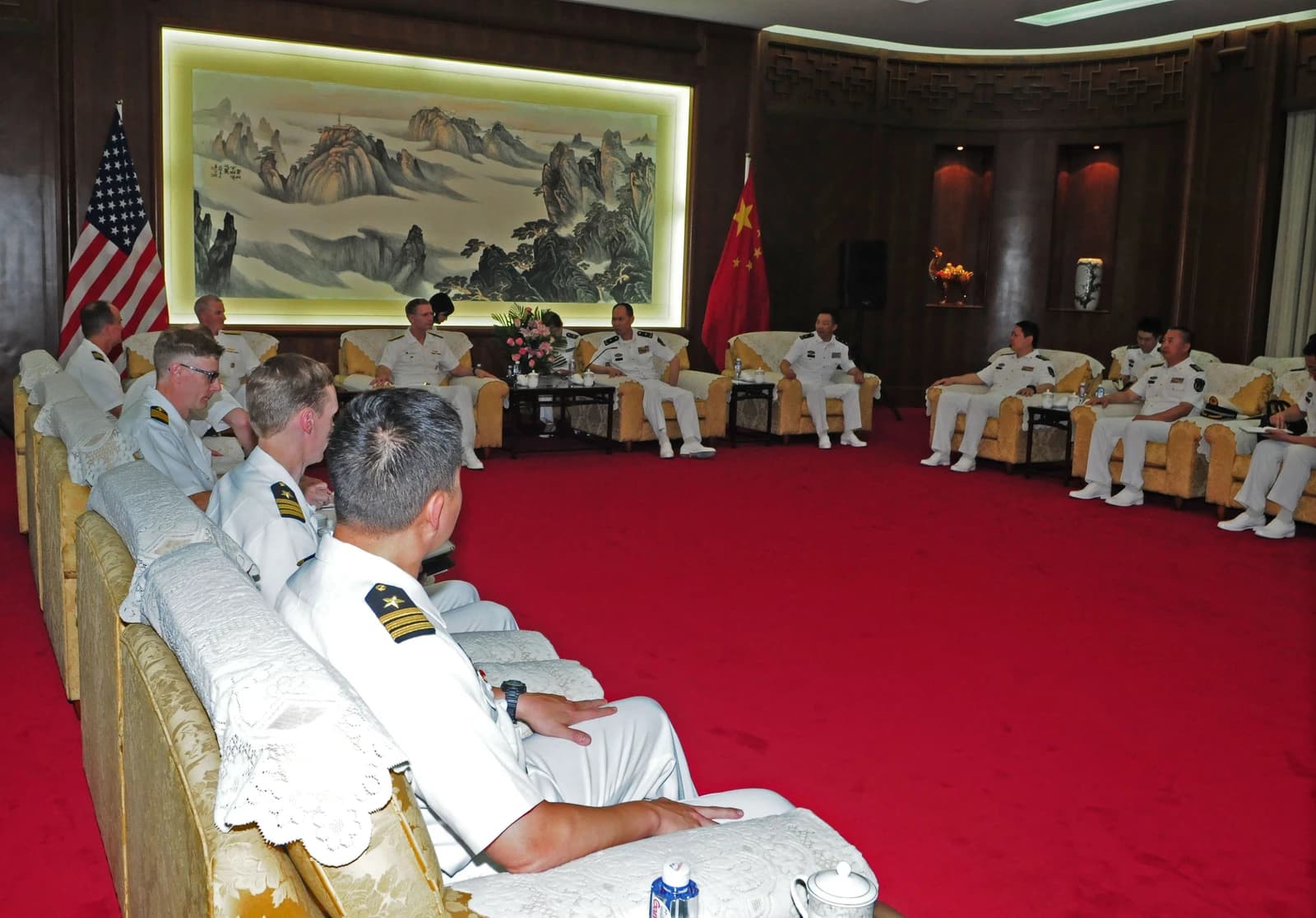
The talks matter because the world’s two largest economies remain locked in strategic rivalry even as they try to keep the relationship from slipping into crisis. Any miscalculation in the South China Sea, the Taiwan Strait or adjacent airspace could quickly spill beyond diplomacy, unsettling supply chains, defense spending plans and risk appetite across Asian assets.
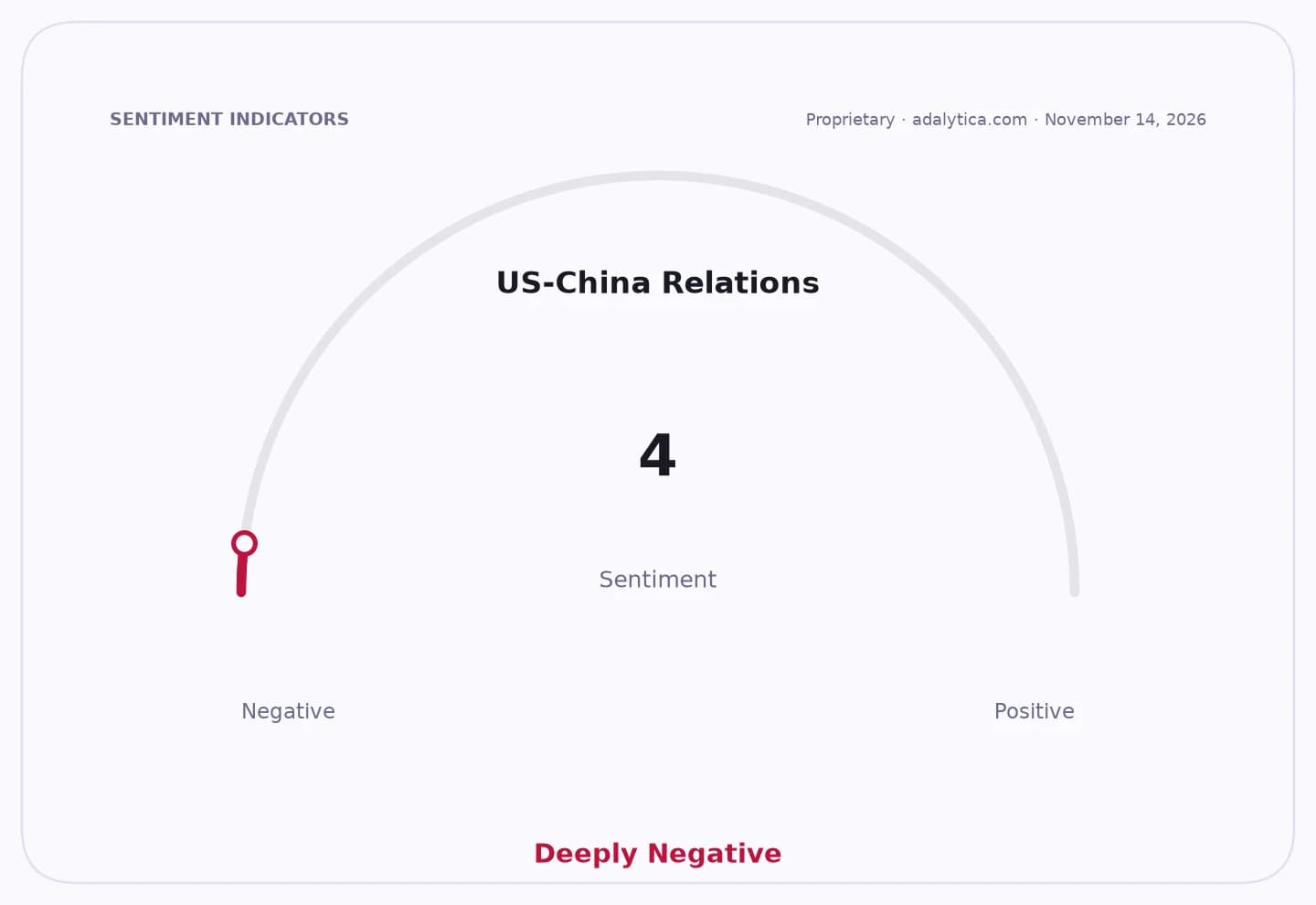
Sentiment Indicators
Geopolitical Risk
According to China’s defense ministry, the meetings ran from Nov. 18 to 20 and covered “security on the sea and in the air,” a review of codes of conduct for safe close encounters, and an agreement on the agenda for the 2027 working-group session. The sides also held what Beijing described as frank and constructive exchanges on maritime and aerial security.
That kind of contact does not resolve the deeper US-China contest, but it does create a channel for crisis management at a time when both militaries are operating in crowded, high-stakes waters. The mechanism, created in 1998, exists precisely because the cost of a mistake is so high: a collision, near miss or misunderstood maneuver could trigger retaliation, sanctions or a sudden hardening in trade and investment policy.
Geopolitical Risk — 30-day sentimentadalytica.com
Explore this data interactively — full history, time series and cross-market comparisons.
Geopolitical Risk
For investors, the immediate takeaway is not a trade deal or a détente, but a modest reduction in tail risk. That helps the case for staying positioned in sectors that benefit from a more orderly geopolitical backdrop even as tensions persist: defense, cybersecurity, satellite communications, shipping logistics and select Asia-exposed equities. It also matters for broad market volatility, which tends to rise when US-China friction becomes uncontained.
The message from Shanghai is that neither side wants the military relationship to spin out of control, even if strategic competition continues. The real market implication is that diplomacy is now part of the risk premium: when dialogue holds, the market can focus on earnings and capex; when it breaks down, investors are forced to price in a wider geopolitical shock.
| Entity | Gains | Losses |
|---|---|---|
| US and Chinese militaries | ▲Lower accident risk | ▼Fewer coercive leverage points |
| Global markets | ▲Reduced tail risk | ▼Less volatility premium |
| Defense and security firms | ▲Steady demand for readiness | ▼Less crisis-driven urgency |
| Shipping and Asia-exposed equities | ▲Smoother trade routes | ▼Geopolitical disruption risk |