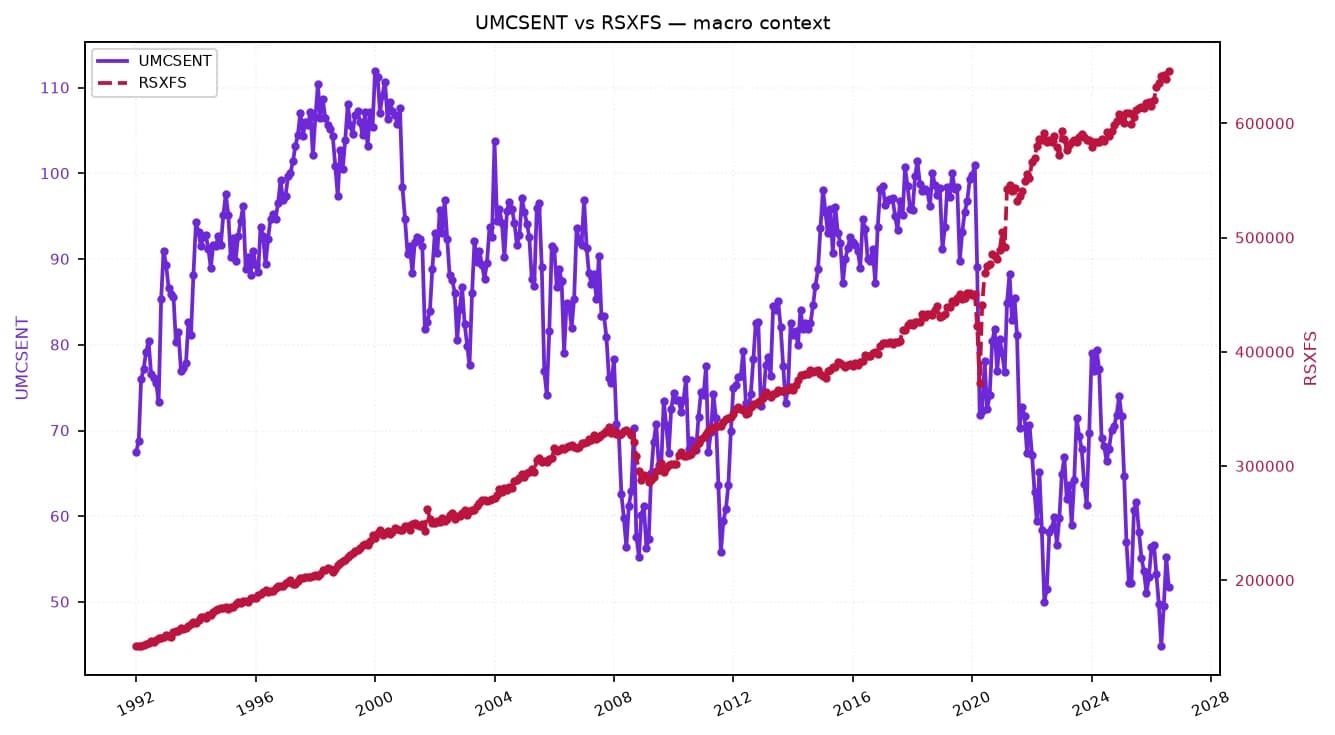
Consumers may be nervous, but they are still opening their wallets — and that is the key reason the U.S. economy continues to look sturdier than many feared.
U.S. Consumers Keep Spending Despite Weak Sentiment
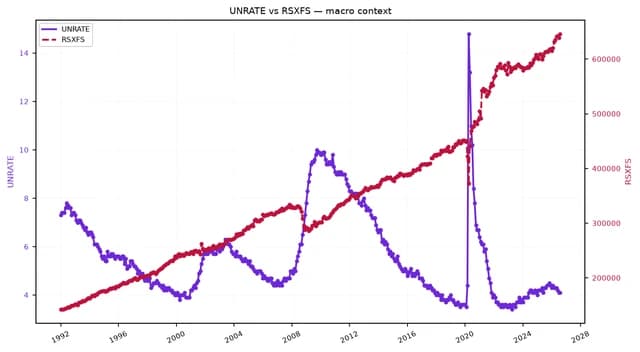
That tension matters because household spending drives roughly two-thirds of U.S. economic activity. When sentiment sours without a corresponding collapse in employment, the economy can keep growing longer than the headlines suggest. That is exactly what the latest data imply: the unemployment rate is still near 4.2%, close to what many economists would consider a healthy level, while real consumer spending remains elevated at about $646.3 billion, according to the data context.
Sentiment IndicatorsⓘProprietary · adalytica.com · October 8, 2026
This is a snapshot — live sentiment, awareness and momentum for 130+ markets update continuously in the dashboard.Open AlphaPulse
The bigger message for investors is that fear alone does not equal a recession. Americans have been pessimistic before and still spent anyway, especially when jobs are available and paychecks keep coming. The University of Michigan sentiment reading, at 51.7 in August, remains weak by historical standards, but it has not translated into a collapse in spending. That disconnect is often the most bullish setup for retailers, consumer brands and payment companies, because it means demand can stay resilient even when survey data look ugly.
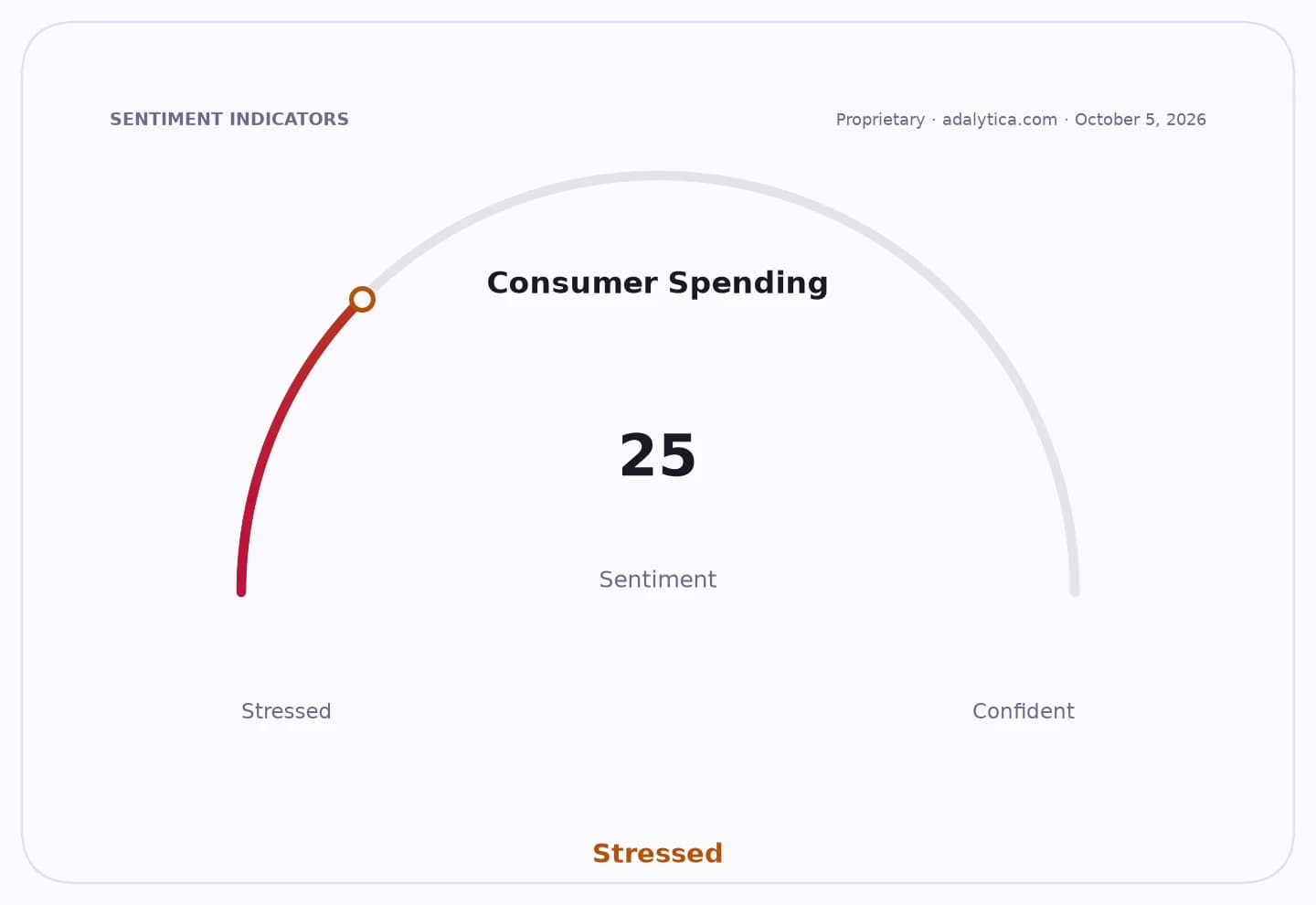
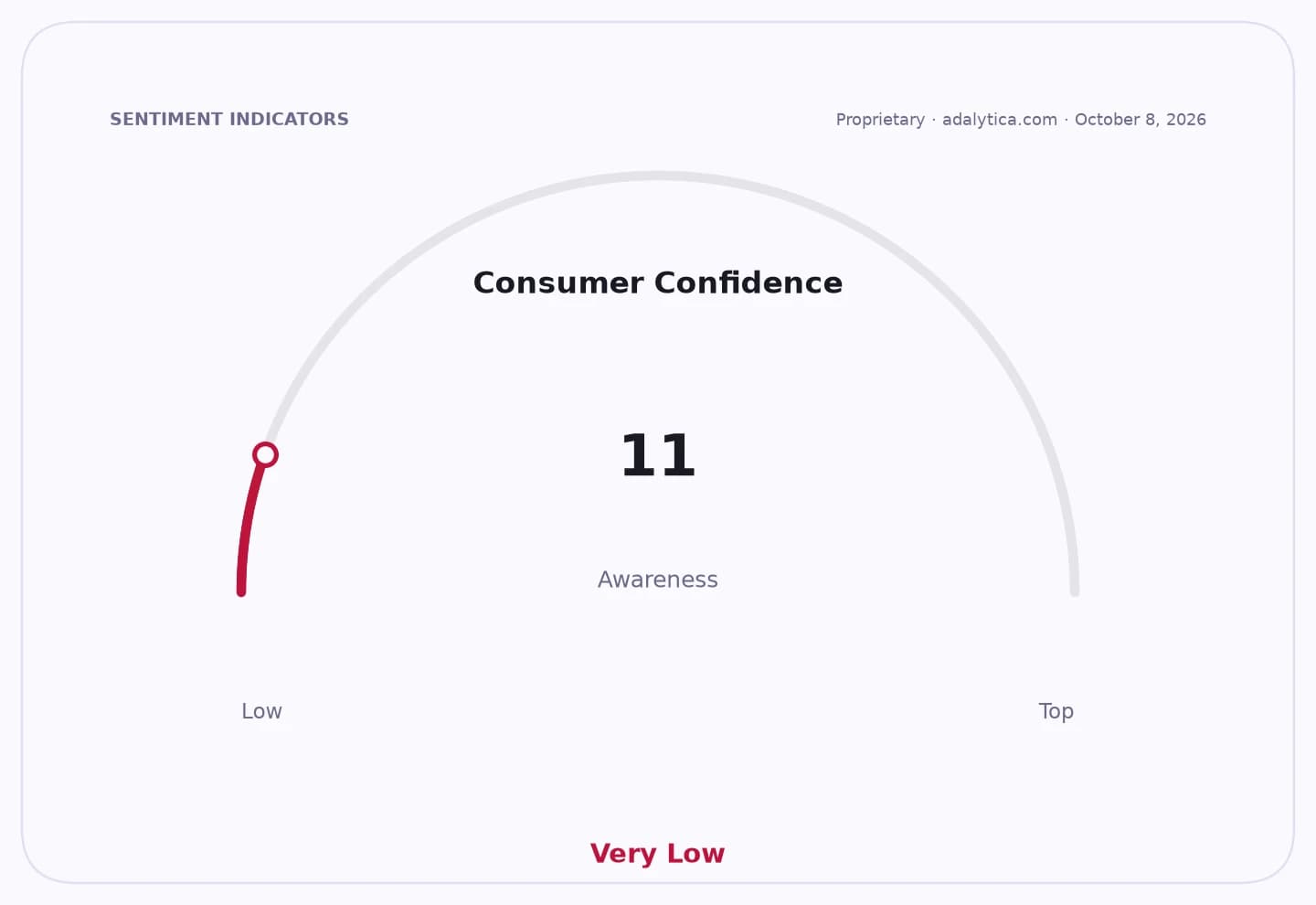
There is also a useful distinction between how consumers feel and how they behave. Adalytica’s Consumer Confidence Recession Sentiment gauge shows an extreme-greed reading of 96, while Retail Goods Spending Sentiment sits at a neutral 50 and broader Consumer Spending Sentiment is at 36. In other words, sentiment is noisy, but the actual spending pulse has not broken. For long-term investors, that matters more than any single gloomy headline.
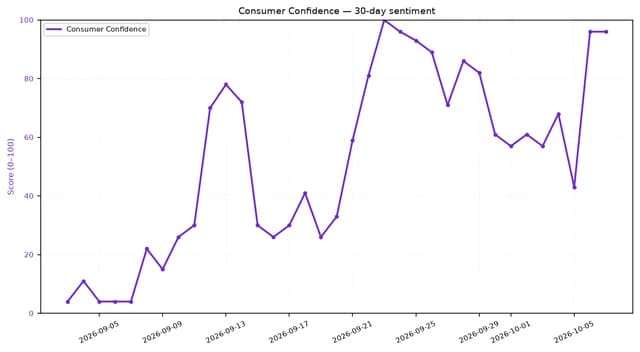
The employment backdrop helps explain why. Unemployment has edged up only modestly to 4.2% from 4.1%, with a forecast of 4.09% next month. That is hardly the kind of deterioration that usually forces consumers to slam the brakes. As long as layoffs stay contained, households can keep financing everyday consumption, even if they are more selective about big-ticket purchases.
Still, the setup is not risk-free. Consumers are clearly more cautious, and if the labor market weakens further, spending can cool quickly. That would hit discretionary retailers first, then ripple into freight, advertising, payments and broader cyclicals. But for now, the evidence points to resilience, not retreat.
For investors, the takeaway is straightforward: this is a market where pessimism has not yet become a spending recession. That tends to favor durable consumer businesses, diversified ETFs and companies with pricing power, strong free cash flow and the ability to weather slower patches. The prudent move is to stay invested, keep a long horizon and watch the labor market more closely than the mood surveys.
| Entity | Gains | Losses |
|---|---|---|
| Consumers with jobs | ▲Keep spending power | ▼None yet |
| Retailers and payment firms | ▲Steady demand | ▼Slower sentiment tailwind |
| Discretionary stocks | ▲Resilient sales outlook | ▼Margin pressure if caution deepens |
| Recession bears | ▲Weak spending thesis delayed | ▼Narrative misses real economy |