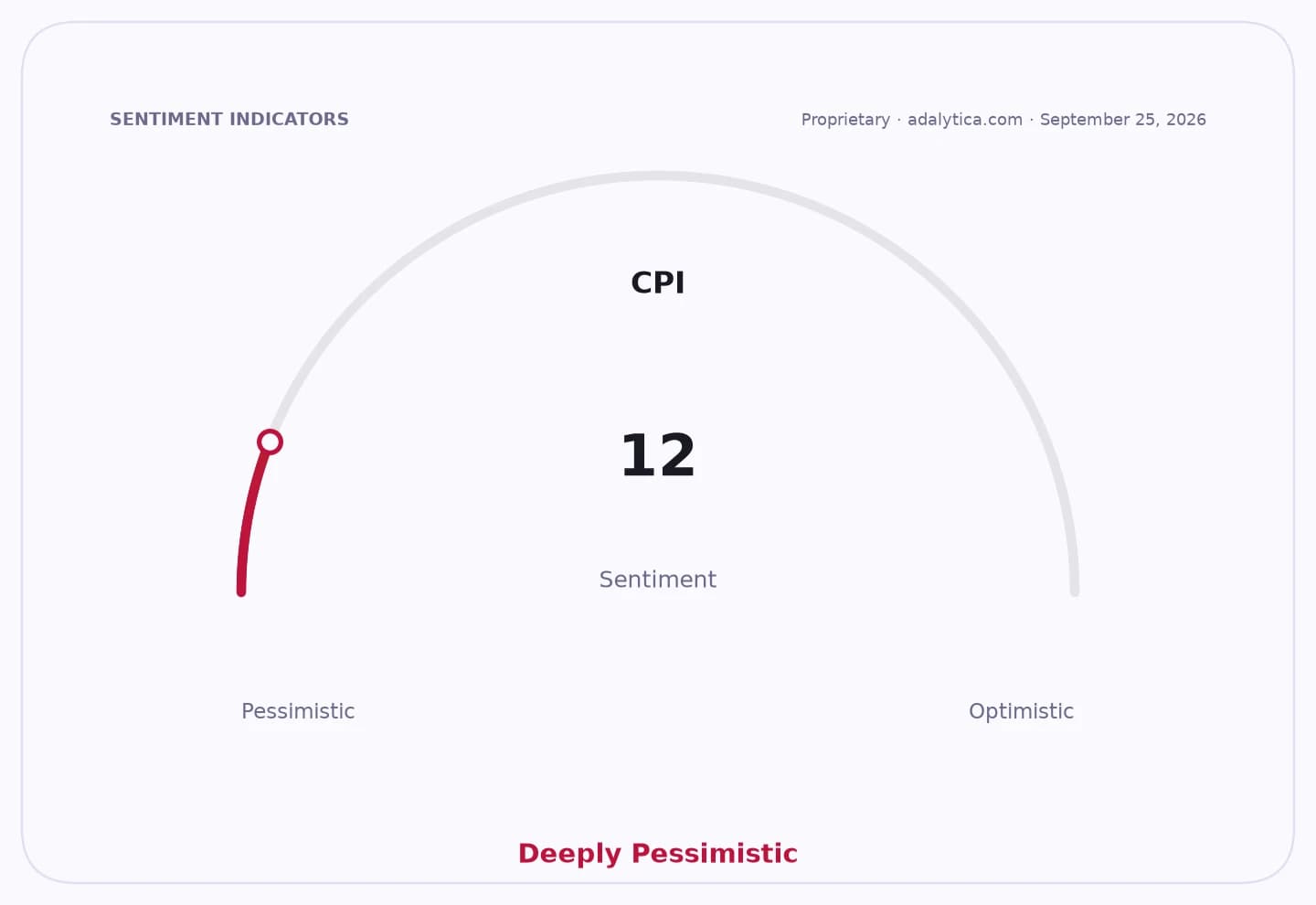
American households are carrying more than $4,350 in credit card debt per person, a sign that consumer spending is increasingly being financed on borrowed money just as funding costs remain elevated and delinquency pressure stays visible across the credit market.
U.S. credit card debt tops $4,350 per household
That matters because revolving debt is the most expensive form of consumer borrowing, and when balances rise alongside still-sticky Treasury yields, the squeeze lands directly on discretionary spending, loan performance and bank earnings. The 10-year Treasury yield is hovering around 4.6%, a reminder that even if the labor market is still intact, the cost of carrying balances is far from benign. The latest unemployment rate of 4.2% suggests the economy is not in recession, but it is also not giving households much cushion.
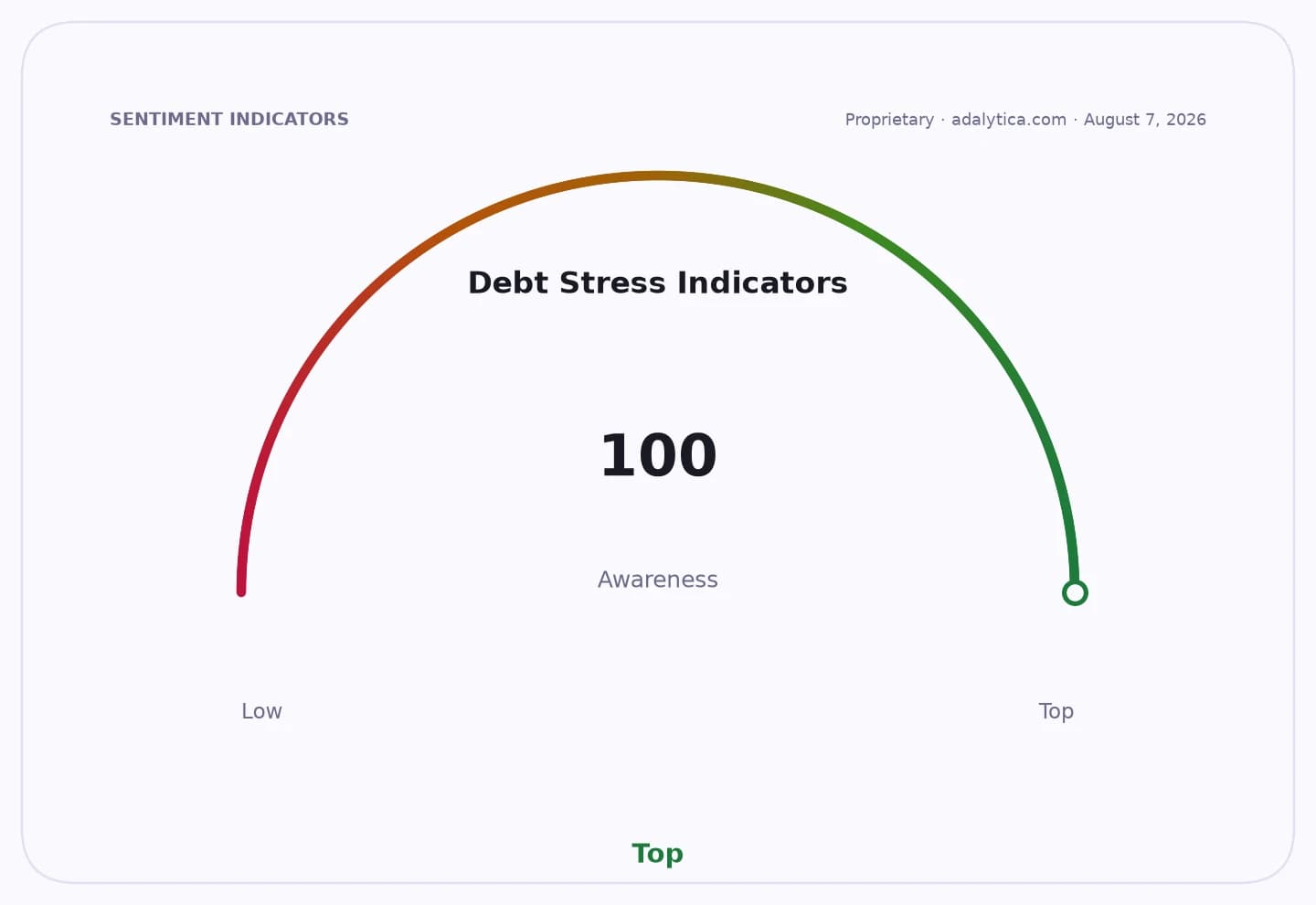
Sentiment IndicatorsⓘProprietary · adalytica.com · August 7, 2026
This is a snapshot — live sentiment, awareness and momentum for 130+ markets update continuously in the dashboard.Open AlphaPulse
The real story is the strain building underneath a labor market that looks stable on the surface. Credit counseling demand is climbing, household debt delinquency is running at 13%, and policymakers are still debating debt forgiveness and relief programs, including student-loan cancellations and a $23 billion settlement tied to borrower claims. That mix tells investors the consumer is not breaking all at once; it is fraying in the areas that are least resilient to high rates and persistent inflation.
For banks and card lenders, this is a margin-versus-credit-quality tradeoff. Higher rates help keep loan yields firm, but they also raise the risk that balances turn into charge-offs. Capital One, American Express and Discover-style consumer lenders all live closer to this tension than the broader market does. American Express has already flagged roughly $530 billion of unused credit available to customers, and big banks such as JPMorgan and Bank of America continue to show the scale of credit-card exposure on their balance sheets. If households keep leaning on plastic, lenders may see more interest income first — and more delinquencies later.
The market is underestimating how this becomes a second-order macro story. Rising card debt supports short-term consumption, which delays the slowdown equity investors are waiting for, but it also makes that spending less durable. That is why the best opportunities are not in plain-vanilla consumer lenders alone, but in the picks-and-shovels around stress management: debt-servicing platforms, payments networks, and selective lenders with strong underwriting and pricing power. The losers are the most rate-sensitive households and the lenders with the weakest reserve discipline.
If the 10-year yield stays above 4.5% and the jobless rate drifts higher, this debt burden will stop being a statistic and start becoming a margin event for banks and a spending event for the real economy. Investors should position for a slower, more fragile consumer — and favor balance-sheet strength over balance-sheet growth.
| Entity | Gains | Losses |
|---|---|---|
| Large banks | ▲Higher interest income | ▼Rising charge-off risk |
| Cardholders | ▲Short-term spending access | ▼Heavier debt burden |
| Payments firms | ▲More transaction volume | ▼Credit stress spillover |
| Consumer lenders | ▲Balance growth | ▼Reserve pressure |