The Trump administration plans to unveil a budget consolidation package after November’s congressional elections as the US national debt pushes toward $40.3 trillion, a move that could determine whether Treasury yields, the dollar and risk appetite get relief from Washington’s swelling borrowing needs.
US Debt Plan Eyed After November Elections

Treasury Secretary Scott Bessent said President Donald Trump and the White House were working on measures to reduce the deficit, centering on spending restraint and broader fiscal consolidation. The timing matters because the debt burden is growing into a period when investors are already sensitive to the amount of Treasury supply required to finance persistent deficits, keeping upward pressure on long-term funding costs.
Sentiment IndicatorsⓘProprietary · adalytica.com · October 10, 2026
This is a snapshot — live sentiment, awareness and momentum for 130+ markets update continuously in the dashboard.Open AlphaPulse
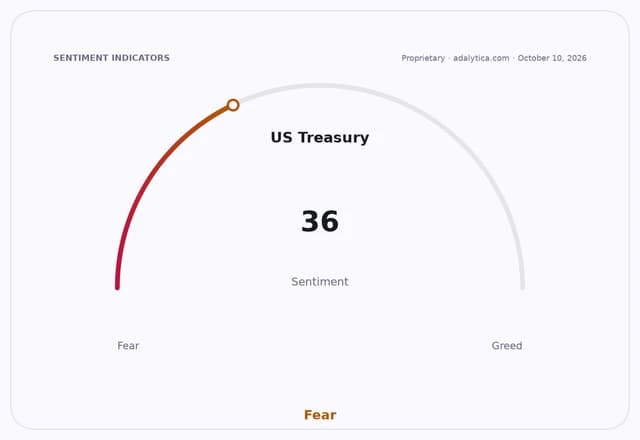
For markets, the promise of a plan is less important than the credibility of the eventual math. A real deficit-reduction program could slow the pace of debt accumulation, ease some pressure on the bond market and support demand for longer-dated Treasuries. But if the package amounts to political positioning ahead of a divided Congress, investors may treat it as another signal that Washington is still unwilling or unable to confront the arithmetic behind record borrowing.
That tension is already visible in prices. The iShares 20+ Year Treasury Bond ETF, TLT, fell to 77.98 on Oct. 9, well below its 50-day moving average of 80.65 and 200-day average of 83.55, while its RSI reading of 20.8 points to oversold conditions. The 10-year Treasury yield has also stayed elevated at about 5.23%, a level that keeps mortgage rates, corporate borrowing costs and equity valuation multiples under pressure.
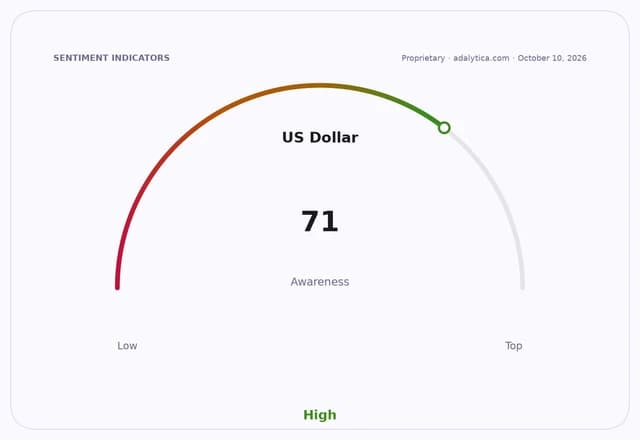
The dollar has remained firm as well, with the U.S. Dollar Index ETF, UUP, at 29.02 and above both its 50-day and 200-day moving averages. A stronger dollar can help cap imported inflation, but it also tightens global financial conditions and raises the cost of servicing dollar debt abroad, reinforcing the spillover from US fiscal policy to international markets.
Equities have been more resilient, with the S&P 500 ETF, SPY, closing at 778.57 and sitting above both its 50-day and 200-day moving averages. But that strength comes with a warning: Adalytica’s trade signals show extreme greed in SPY, suggesting investors are leaning into risk even as bond markets and fiscal politics point to unresolved pressure beneath the surface.
The key question now is whether the administration can turn a post-election pledge into legislation that slows the deficit without choking growth. Spending cuts can improve the debt path, but they are politically difficult and can weigh on near-term demand. If the plan leans instead on optimistic growth assumptions or one-off savings, bond investors are likely to look through it quickly. The next catalyst will be the shape of the proposal itself, and whether it offers enough restraint to matter in a market increasingly focused on who will fund the US government’s rising bill.
| Entity | Gains | Losses |
|---|---|---|
| Treasury and White House | ▲Fiscal credibility if plan is real | ▼Political blowback from cuts |
| Bond investors | ▲Better debt outlook | ▼Higher supply if plan disappoints |
| U.S. Dollar | ▲Support from tighter policy | ▼Risk if fiscal doubts deepen |
| Equity investors | ▲Relief if yields fall | ▼Valuation pressure from higher rates |