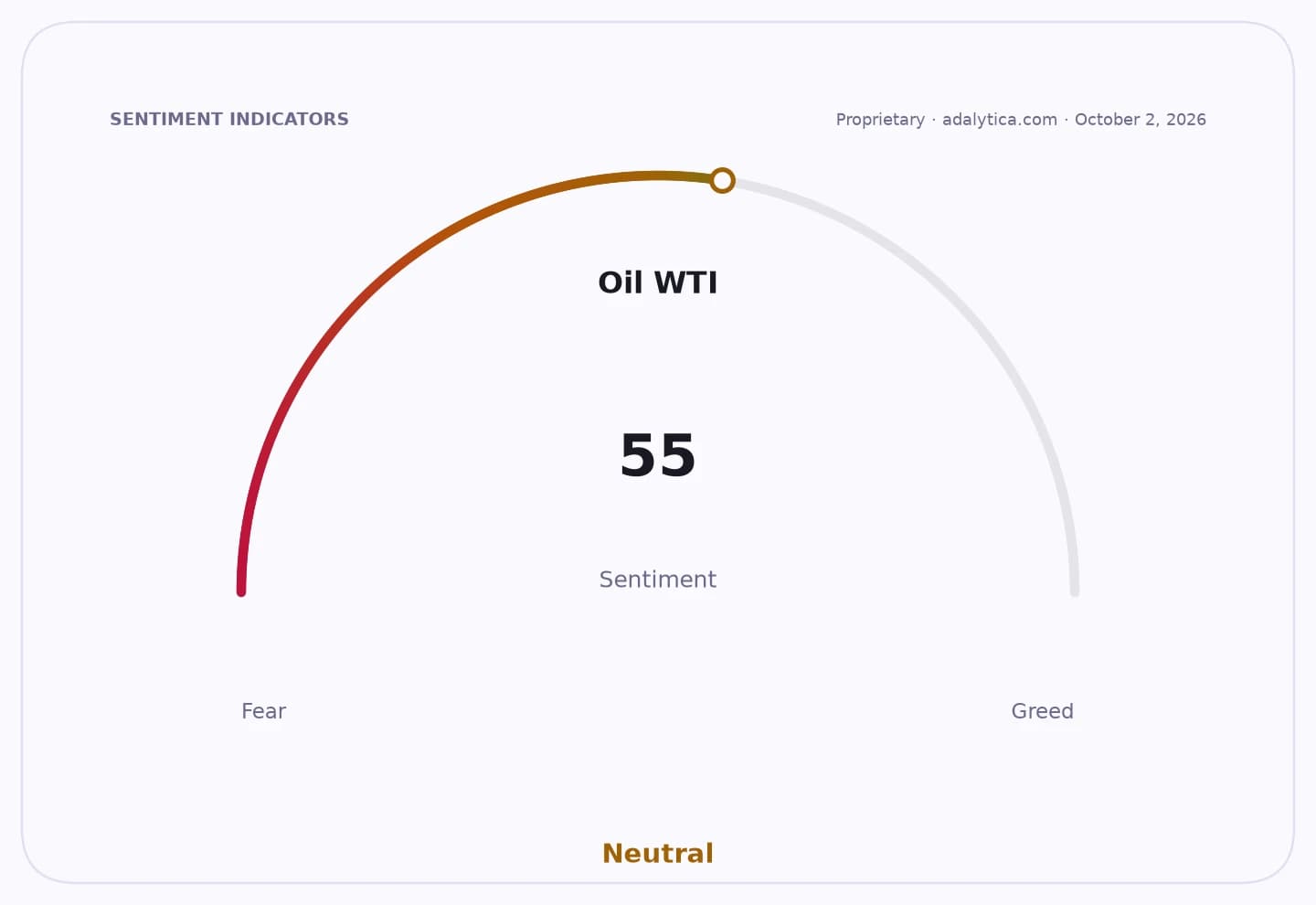
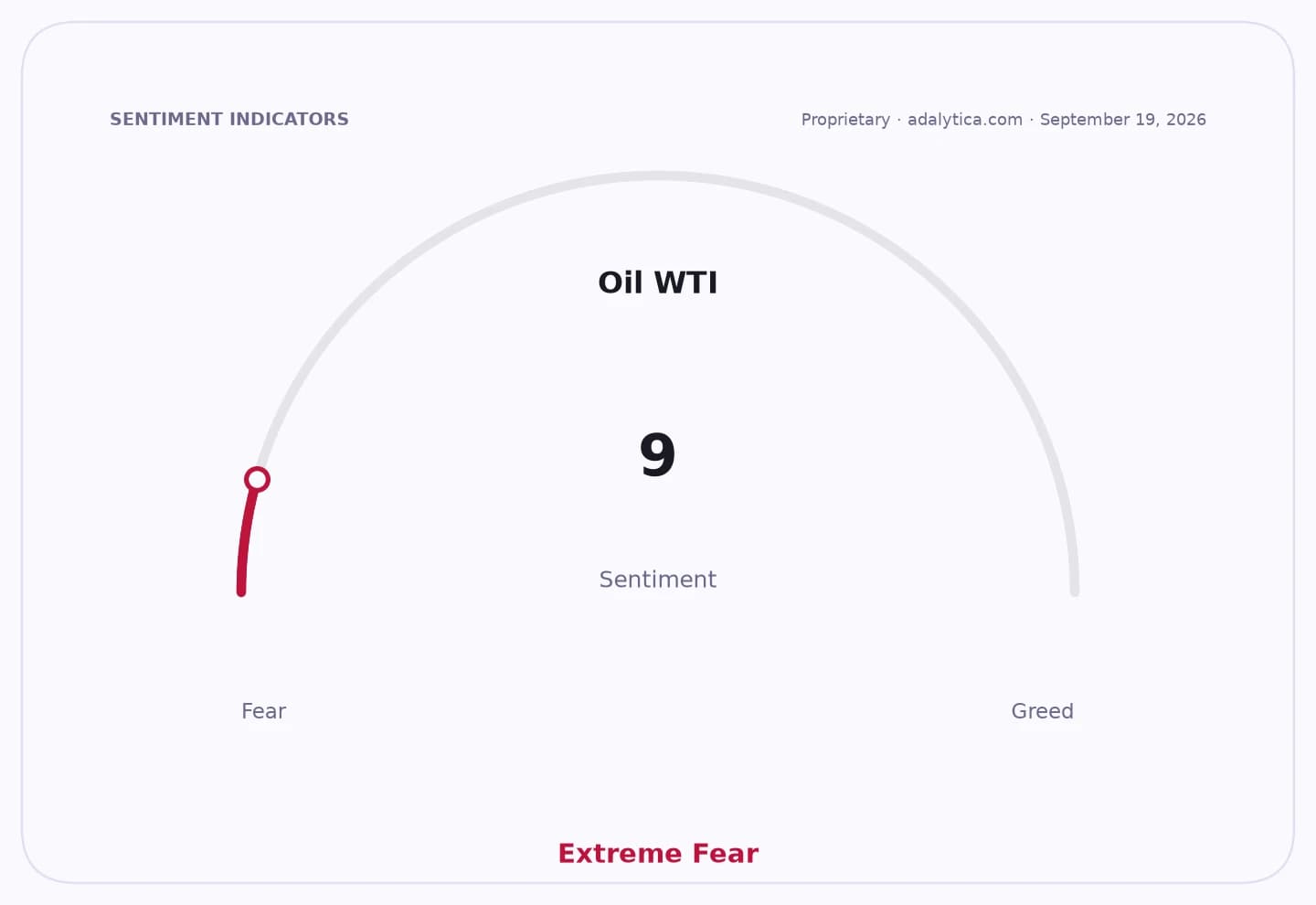
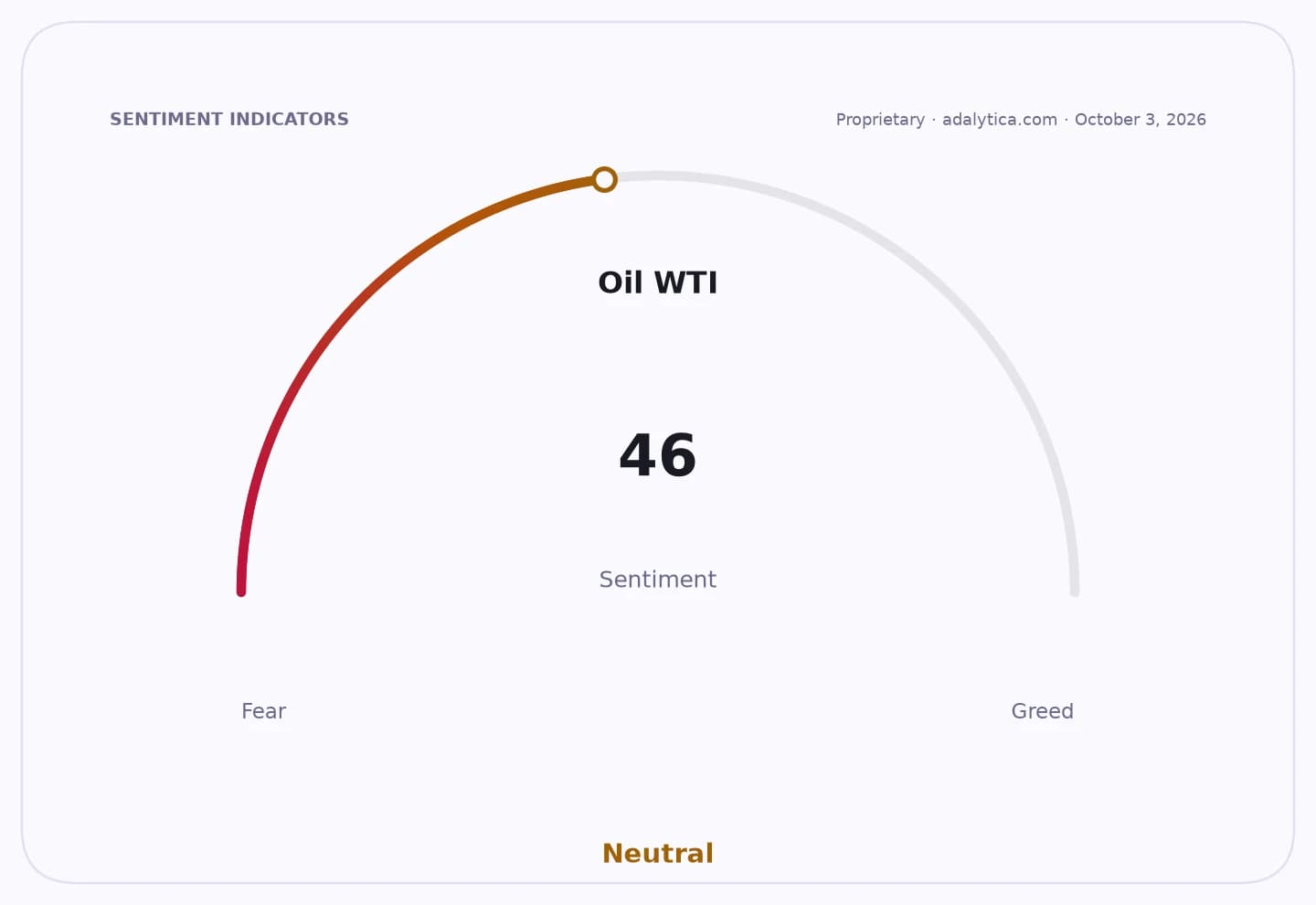
Talk of a U.S. diesel export ban is roiling the fuel market because it would hit the most fragile part of the global energy system first: middle distillates, the diesel that keeps freight, farming and industry moving. Even without a formal order, the mere prospect of restrictions has already widened stress in refined products, driven up U.S. fuel prices and raised the odds of a sharp squeeze in Europe.
U.S. Diesel Export Ban Talk Hits Fuel Markets
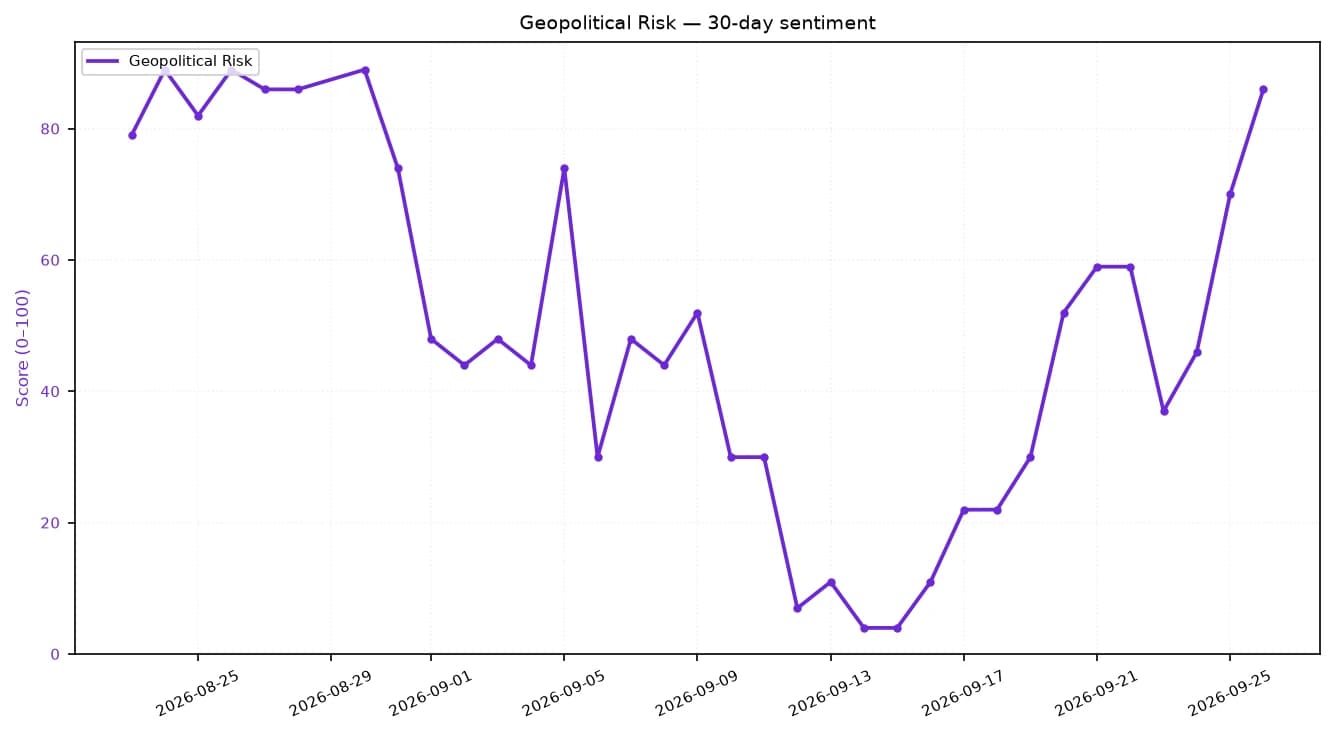
That matters far beyond the oil patch. The U.S. sends roughly 300,000 barrels a day of diesel to Europe, and the continent does not have enough refining capacity to replace that flow quickly. If Washington were to interfere with exports — whether through an outright ban, licensing delays or emergency measures dressed up as energy security — European diesel prices would jump, transport costs would rise and the inflation fight would get harder again just as major central banks are trying to normalize policy.
Sentiment IndicatorsⓘProprietary · adalytica.com · September 27, 2026
This is a snapshot — live sentiment, awareness and momentum for 130+ markets update continuously in the dashboard.Open AlphaPulse
For investors, the market is starting to price the policy risk before the policy itself exists. U.S. crude and fuel benchmarks can decouple fast when traders fear government intervention, and that’s exactly what makes this kind of rumor dangerous: it can distort margins long before barrels physically move. Refiner stocks are the obvious first-order beneficiaries if domestic diesel tightens, but the trade is not as simple as “good for refiners, bad for everyone else.” A ban would likely punish export-oriented barrels, create logistical bottlenecks and invite political retaliation from allies that depend on U.S. supply.
The bigger investment point is that this is not just an oil story. It is a reminder that energy markets are now a geopolitical instrument, and that policy risk can overpower fundamentals in a heartbeat. The same administration pressure that could be used to manage gasoline and diesel prices ahead of elections would also reinforce the market’s broader fear that governments are willing to intervene directly in strategic commodities when inflation or polling gets uncomfortable.
That is why the second-order winners are the companies and assets tied to domestic throughput, storage and captive supply chains, while the losers are the import-dependent end users in Europe and any investor assuming global fuel trade will remain frictionless. I believe the market underestimates how quickly a diesel export restriction could ripple through freight, chemicals, manufacturing and inflation expectations.
The actionable takeaway: own the infrastructure and refining names that benefit from tighter U.S. product markets, but treat the rally with caution if policy rhetoric escalates, because the real trade is not just higher diesel — it is higher uncertainty.
| Entity | Gains | Losses |
|---|---|---|
| U.S. refiners | ▲stronger domestic diesel pricing | ▼export volumes |
| Europe importers | ▲none | ▼diesel supply, margins |
| Freight and industry | ▲short-term inventory hoarding | ▼fuel costs, inflation |
| Energy investors | ▲volatility opportunities | ▼policy certainty |