The U.S. dollar rose sharply at Monday’s close as traders priced in a more hawkish Federal Reserve path, with the move reinforced by the 10-year Treasury yield holding above 5% and the dollar index resuming its climb after a brief pullback.
U.S. Dollar Rises as Treasury Yield Stays Above 5%
The dollar’s recovery matters because it tightens global financial conditions at a moment when inflation remains sticky and markets are still debating how much further the Fed can keep policy restrictive. A stronger dollar typically raises funding costs for borrowers outside the United States, pressures emerging-market currencies and can weigh on commodities priced in dollars.
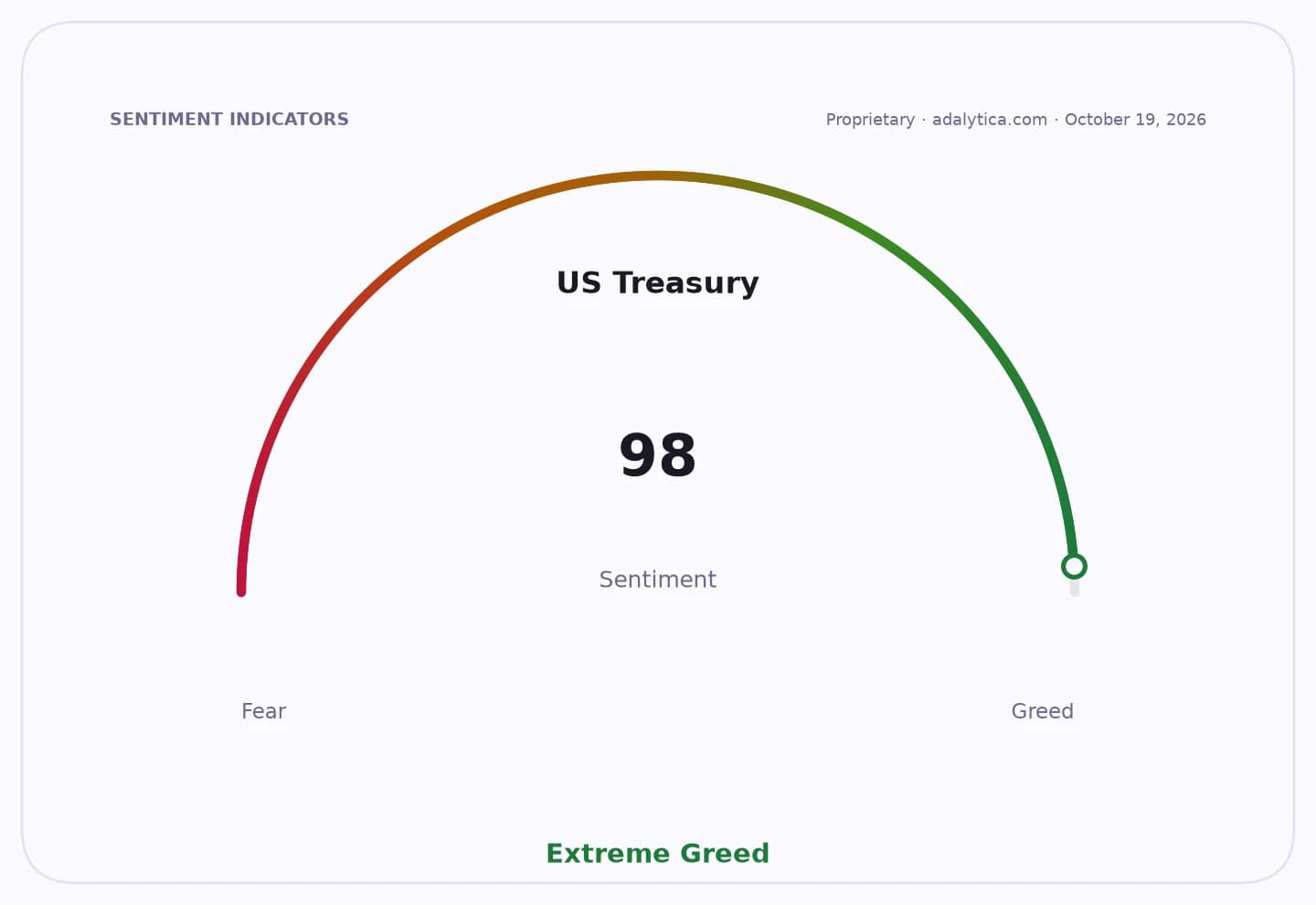
Sentiment IndicatorsⓘProprietary · adalytica.com · October 24, 2026
This is a snapshot — live sentiment, awareness and momentum for 130+ markets update continuously in the dashboard.Open AlphaPulse
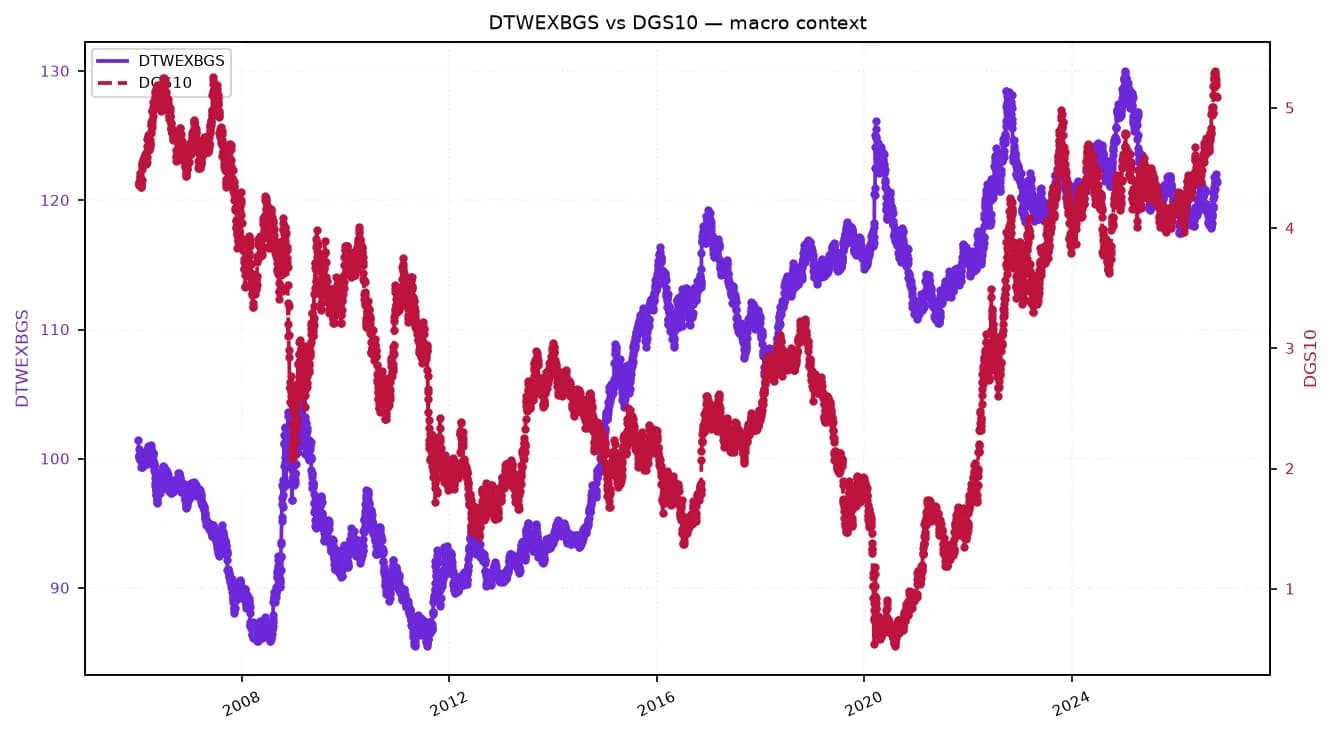
That is exactly the backdrop in the latest price action. The dollar index, which tracks the greenback against a basket of peers, was forecast to end Monday at 121.524, up 0.1% from the prior session, after slipping to 121.405 at the end of last week. The move was modest on the day but significant in context: the index had already rebounded from 121.40 on Oct. 16 and was back near its recent range highs, while Adalytica’s U.S. dollar trade signals showed sentiment at 32, described as neutral, but awareness at 4, an “extreme fear” reading, with the 30-day change down 61 points.
The rally in the greenback came alongside sustained pressure on longer-term U.S. yields. The 10-year Treasury note was forecast at 5.12% for Oct. 20 and 5.13% the following day before easing to 4.96% on Oct. 22, levels that keep the dollar supported by widening rate differentials versus lower-yielding currencies. The euro remained soft at 1.12 against the dollar in the latest trading data, while the UUP dollar ETF closed at 28.96 on Oct. 23, above its 50-day and 200-day moving averages, a sign the uptrend remains intact despite some near-term consolidation.
For investors, the key question is whether this is a cyclical bounce or the start of a broader dollar leg higher. The bull case is that U.S. rates stay elevated for longer than peers, keeping capital flowing into dollar assets and reinforcing demand for the currency. The bear case is that any shift in Fed rhetoric or a turn lower in yields could quickly unwind the move, especially with technical momentum indicators on UUP and the broader dollar index no longer showing the same overbought conditions seen earlier this month.
The next catalyst is Fed communication, followed by inflation prints that will test whether markets can keep pricing a delayed easing cycle. Until then, the dollar’s renewed strength is likely to remain a headwind for importers, emerging-market borrowers and commodities, while extending a tailwind to U.S. assets and cash holders seeking yield.
| Entity | Gains | Losses |
|---|---|---|
| U.S. dollar | ▲Higher relative yields | ▼Overseas borrowers |
| Treasury market | ▲Demand for yield-bearing assets | ▼Rate-sensitive sectors |
| U.S. exporters | ▲— | ▼Weaker foreign demand competitiveness |
| Emerging-market currencies | ▲— | ▼Dollar funding pressure |