The U.S. military has begun permanently stationing F-15EX Eagle II fighters at Kadena Air Base in Okinawa, restoring a front-line air superiority presence at its closest major base to China after more than 47 years. The move matters because Kadena sits within reach of the Taiwan Strait, where any regional conflict would likely begin with an air and missile fight, making the type and survivability of aircraft based there central to Washington’s deterrence posture.
U.S. Stationing F-15EX Fighters at Kadena
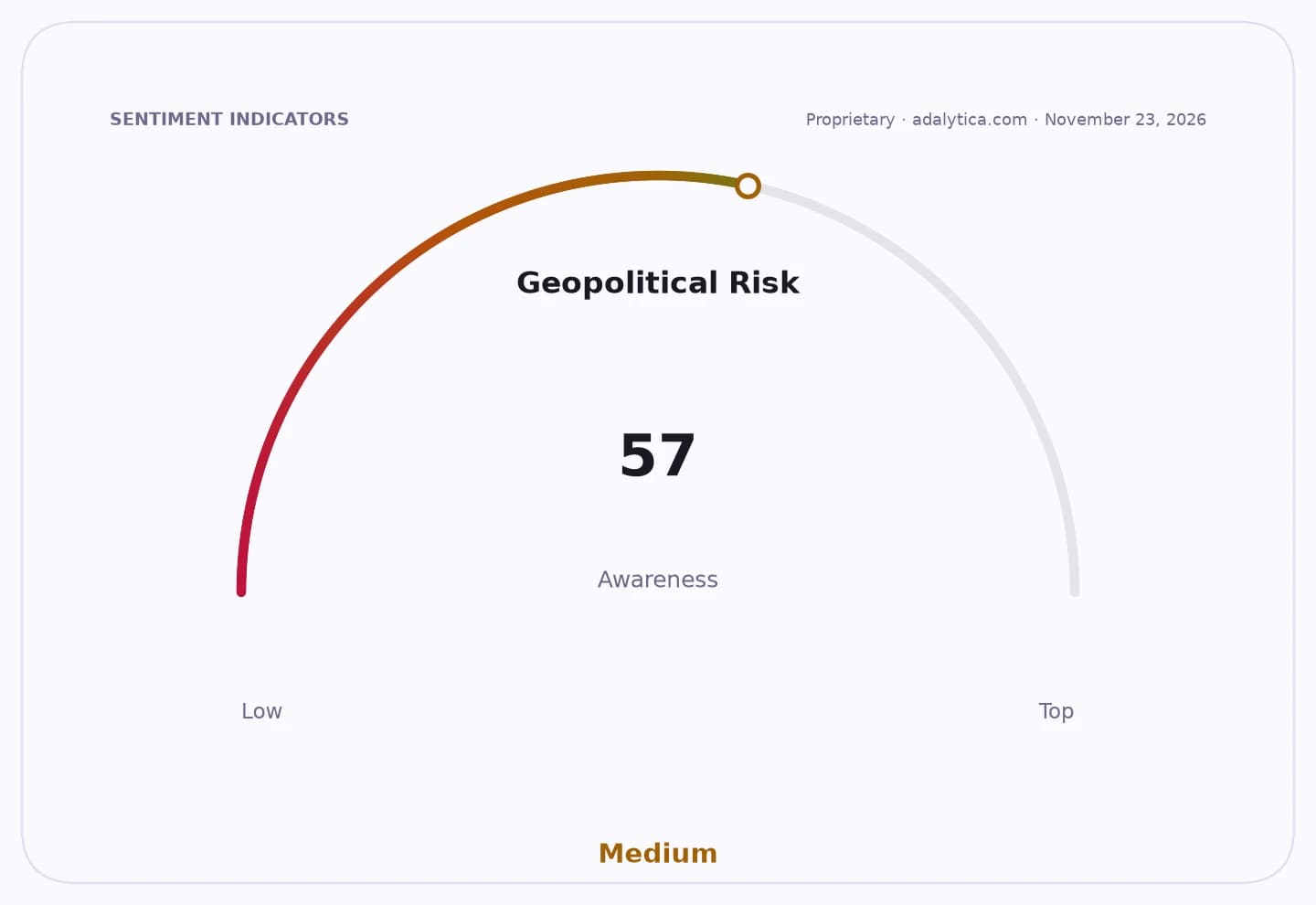
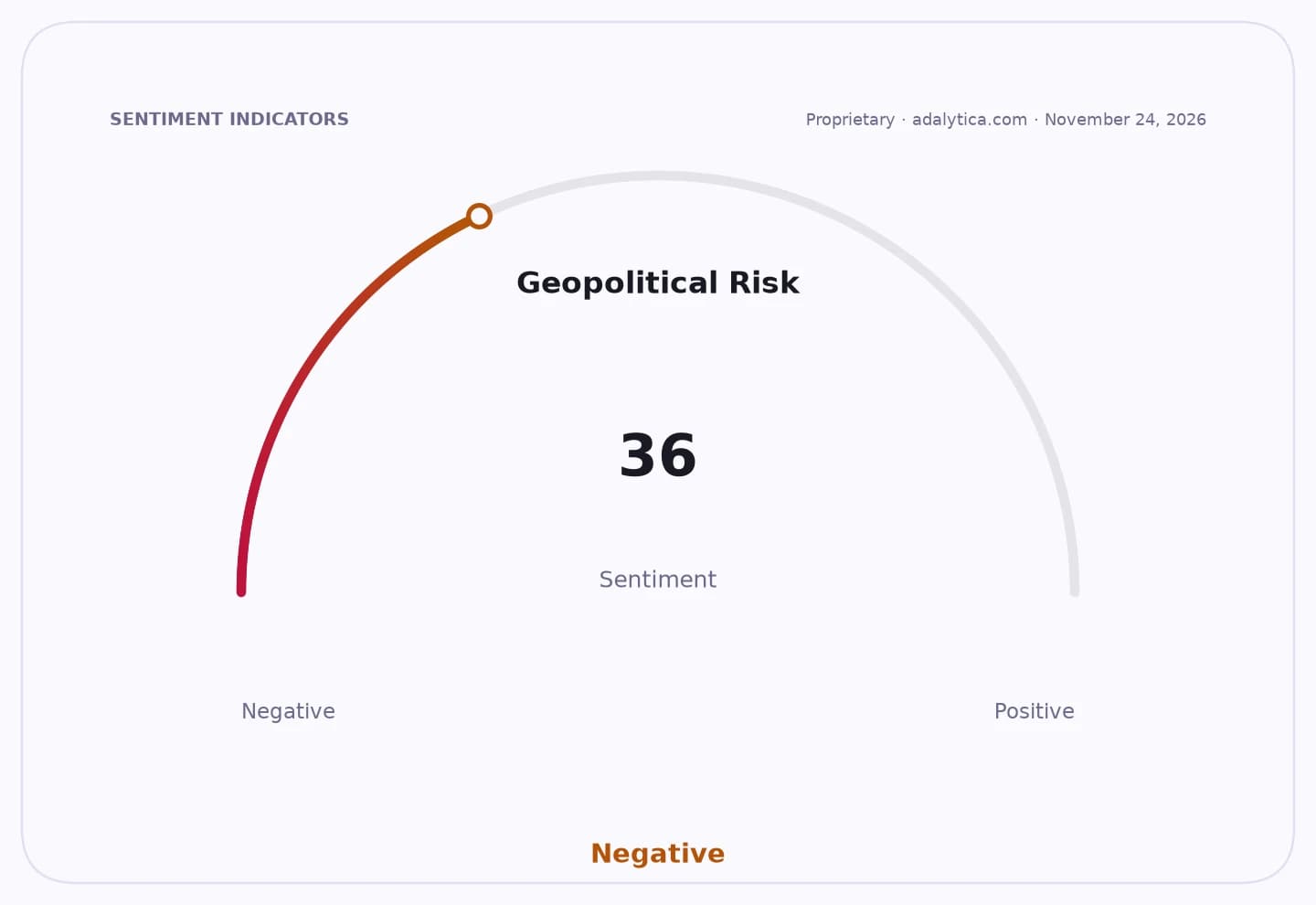
Geopolitical Risk
The deployment underscores how the Pentagon is adapting to a more contested Pacific rather than expanding into a new one. Kadena long served as a symbol of U.S. air power in Asia, but the older F-15C/D fleet that had been based there since 1979 was increasingly outmatched by China’s growing air force and missile arsenal. Replacing those aircraft with the F-15EX offers a longer-range platform, newer avionics and lower maintenance demands, but it is also a sign of compromise: the U.S. is leaning on an upgraded version of a Cold War design because a fully new, widely deployable successor has not arrived.
Sentiment Indicators
That tension is why the development matters for both geopolitics and markets. For the U.S. and its allies, the decision suggests Washington wants a larger forward fighter presence without waiting for next-generation aircraft to reach scale. For China, it signals that the U.S. is still prepared to reinforce one of the most sensitive nodes in the Western Pacific, even if the platform itself is not stealthy. The base’s proximity to Taiwan also means the fighters would be among the first assets targeted in any conflict, raising the value of range, electronic warfare support and survivability over simple headline counts of aircraft.
The F-15EX is a meaningful upgrade over the F-15C/D it replaces, with modern sensors and the ability to carry more advanced weapons. Yet analysts have long noted that it lacks the low-observable characteristics of China’s J-20 and could be technologically behind if Beijing fields sixth-generation fighters around 2030. That leaves Kadena in a familiar but more dangerous position: a forward base built to reassure allies and deter aggression, but one that would be operating under the shadow of China’s expanding air and missile reach.
For defense contractors, the story is a reminder that U.S. Pacific posture is increasingly tied to sustainment and incremental modernization rather than entirely new procurement cycles. Lockheed Martin, RTX and Northrop Grumman all stand to benefit indirectly from the broader push to harden U.S. air defenses, extend fighter readiness and replenish munitions across the theater. But the market implication is not just about one order or one base; it is about a durable strategic shift that keeps demand elevated for upgraded fighters, sensors, missile defense and logistics support across the Indo-Pacific.
Investors should watch whether Kadena becomes the template for other forward deployments or a stopgap until more advanced aircraft arrive. If tensions around Taiwan intensify, the economic logic favors further spending on survivable platforms, distributed basing and air-defense networks. If the U.S. is forced to keep relying on legacy-derived fighters for another decade, that would also reinforce the case that defense outlays in the Pacific are becoming a structural, not cyclical, source of demand.
| Entity | Gains | Losses |
|---|---|---|
| U.S. Air Force | ▲stronger forward deterrence | ▼exposure at a vulnerable base |
| Lockheed Martin | ▲F-15EX demand | ▼pressure to field stealth alternatives |
| China’s PLA Air Force | ▲clearer U.S. target set | ▼less room to contest Kadena unopposed |
| Japan and Taiwan | ▲added U.S. reassurance | ▼higher regional escalation risk |