The United States is starting to regain leverage over China as Washington restores Hong Kong’s trade privileges, easing one pressure point in a relationship that has been defined by tariffs, sanctions and retaliation.
US Gains Leverage as Hong Kong Trade Tension Eases

That shift matters because it suggests the two economies are not locked in a one-way slide toward decoupling. Instead, the Trump-era trade fight is giving way to a more tactical balance in which Washington can grant relief selectively while still keeping broader pressure on Beijing. For investors, that is important: it lowers the risk of an immediate escalation, but it also reinforces the idea that China remains more exposed to policy decisions made in Washington than the reverse.
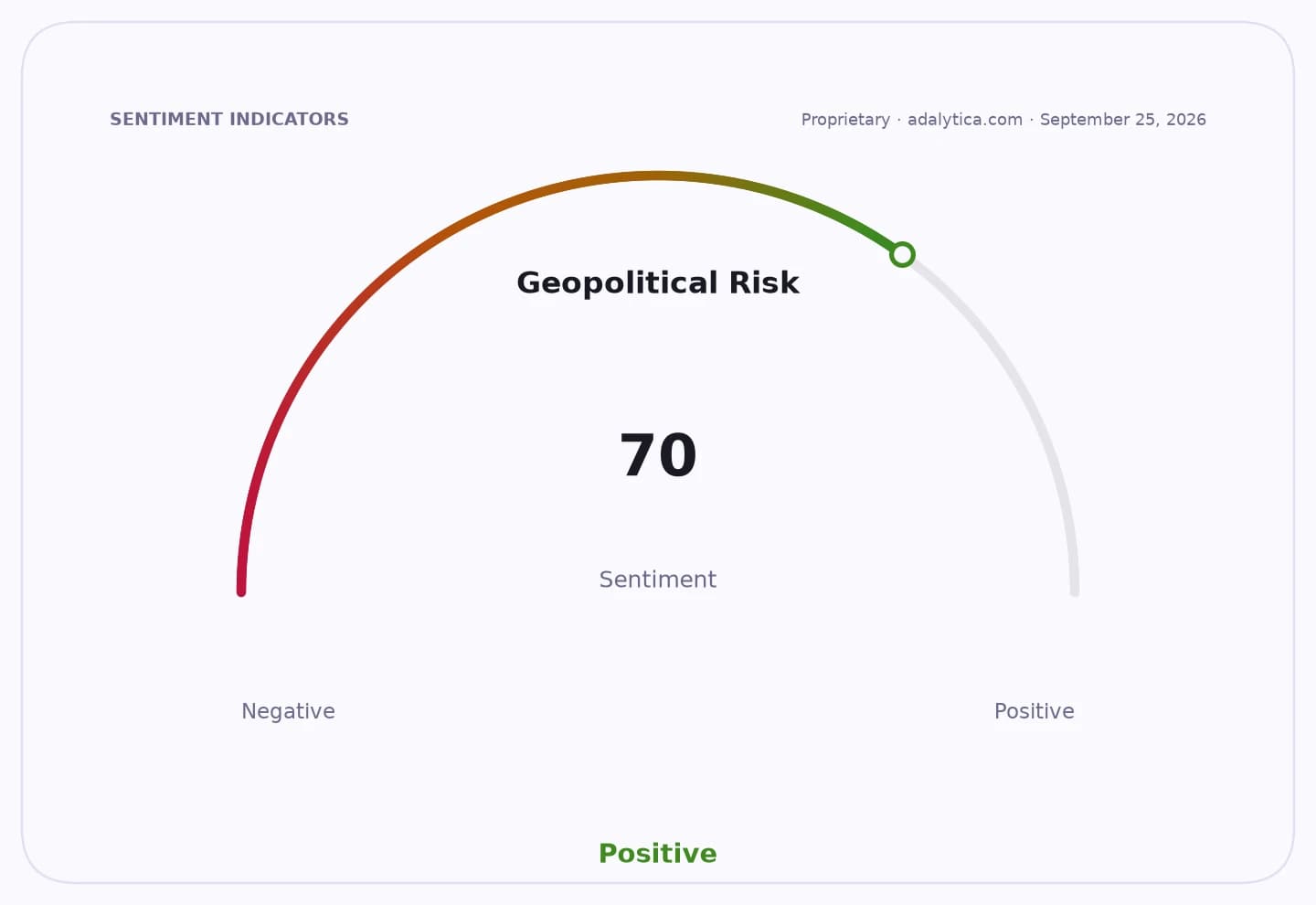
Sentiment IndicatorsⓘProprietary · adalytica.com · July 24, 2026
This is a snapshot — live sentiment, awareness and momentum for 130+ markets update continuously in the dashboard.Open AlphaPulse
The market backdrop reflects that asymmetry. The dollar has steadied, with the DXY near 101.4 and above both its 50-day and 200-day moving averages, while US equities, as measured by the S&P 500, remain close to record levels despite recent volatility. The 10-year Treasury yield is around 4.7%, underscoring that US assets still command global capital even as policy rates remain elevated. That combination — stronger financial markets, higher yields and a resilient dollar — gives the US room to absorb trade friction in a way China cannot easily match.
Beijing’s response to the Hong Kong decision was notably cautious and constructive, welcoming the move as a sign of possible stabilization. That is telling in itself. China has little incentive to escalate when its own economy is still managing weak external demand, property strain and periodic supply disruptions. The news flow around typhoon damage in Guangxi and ferry suspensions across the Taiwan Strait only adds to the picture of a region vulnerable to shocks that can disrupt logistics, industrial output and consumer activity.
The broader narrative is not that tensions are disappearing. It is that Washington appears to be setting the pace. On issues ranging from trade privileges to technology restrictions and strategic containment, the US still controls some of the most consequential policy levers. China can retaliate, but its options remain narrower, especially when it wants to preserve access to export markets and avoid further pressure on growth.
That is why the latest thaw in Hong Kong trade status matters beyond symbolism. It hints at a possible de-escalation that could support Asian risk assets and improve visibility for multinational supply chains. But it also suggests the US is comfortable calibrating pressure and relief from a position of relative strength. For investors, that favors US assets over China-sensitive exposures until Beijing shows it can convert diplomatic relief into a more durable economic rebound.
The near-term catalyst is whether the détente extends beyond Hong Kong into broader trade and technology policy. If it does, the case for a short-term rally in China-linked assets improves. If it does not, the market is likely to keep pricing a world in which America still has the upper hand.
| Entity | Gains | Losses |
|---|---|---|
| US policymakers | ▲More leverage in talks | ▼Need to manage escalation risk |
| China/Hong Kong | ▲Trade relief, lower friction | ▼Still dependent on US policy |
| US equities | ▲Lower trade-war tail risk | ▼Some upside capped by geopolitics |
| China-sensitive assets | ▲Hope for stabilization | ▼Vulnerable to renewed pressure |