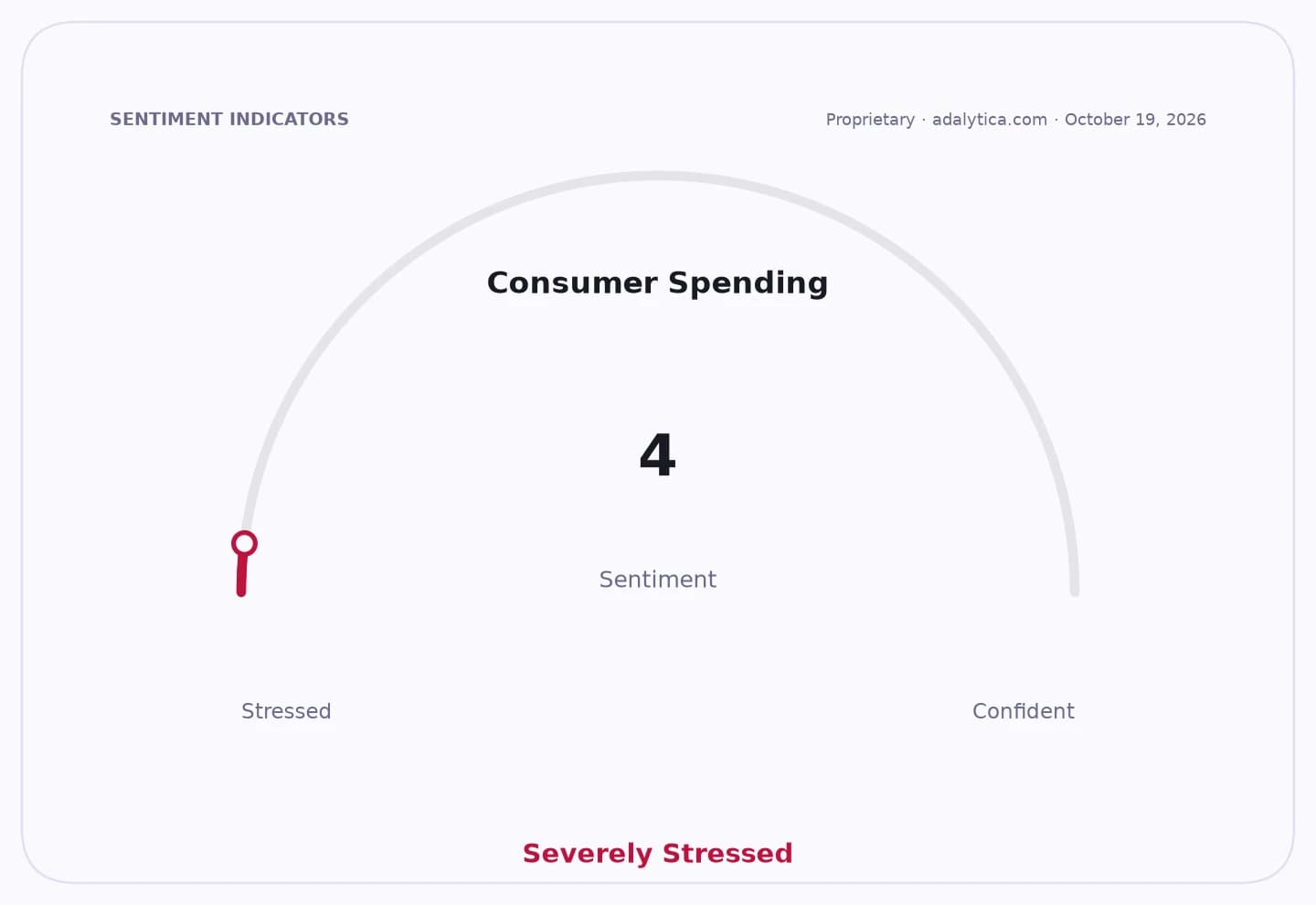
The U.S. grocery industry weakened in September, with Supermarket News’ monthly Grocery Gauge falling to 52.2, a reading that sits at the low end of fair and underscores how thin the sector’s operating cushion has become.
U.S. grocery gauge falls as margins stay under pressure
That matters because grocery is one of the economy’s clearest demand barometers: volumes are stable, but profits are being squeezed by rising costs, softer traffic and intensifying price competition. For investors, the message is not that Americans stopped buying food — they did not — but that the industry’s earnings leverage is deteriorating just as consumers keep trading down and looking for value.
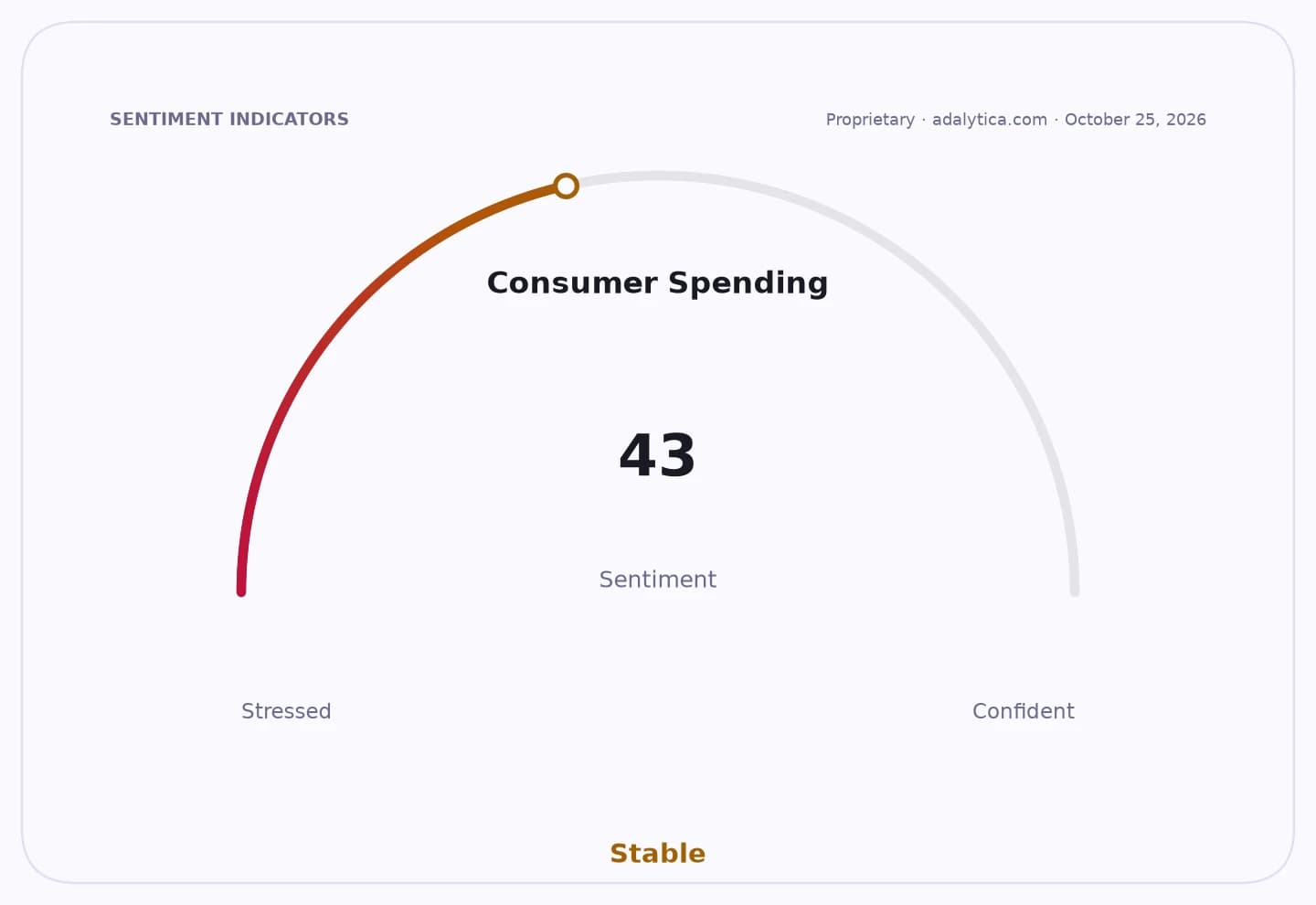
Sentiment IndicatorsⓘProprietary · adalytica.com · October 25, 2026
This is a snapshot — live sentiment, awareness and momentum for 130+ markets update continuously in the dashboard.Open AlphaPulse
The September score was dragged lower by a poor earnings backdrop and still-sluggish inflation dynamics. Grocery store earnings scored just 48 after Albertsons said it had launched a comprehensive review of operations following a quarter in which revenue slipped 0.1% from a year earlier to $18.89 billion, adjusted net income fell about 28% to $179 million and identical-store sales declined 0.8%. Village Super Markets also reported profit pressure from higher operating and administrative costs even as sales rose.
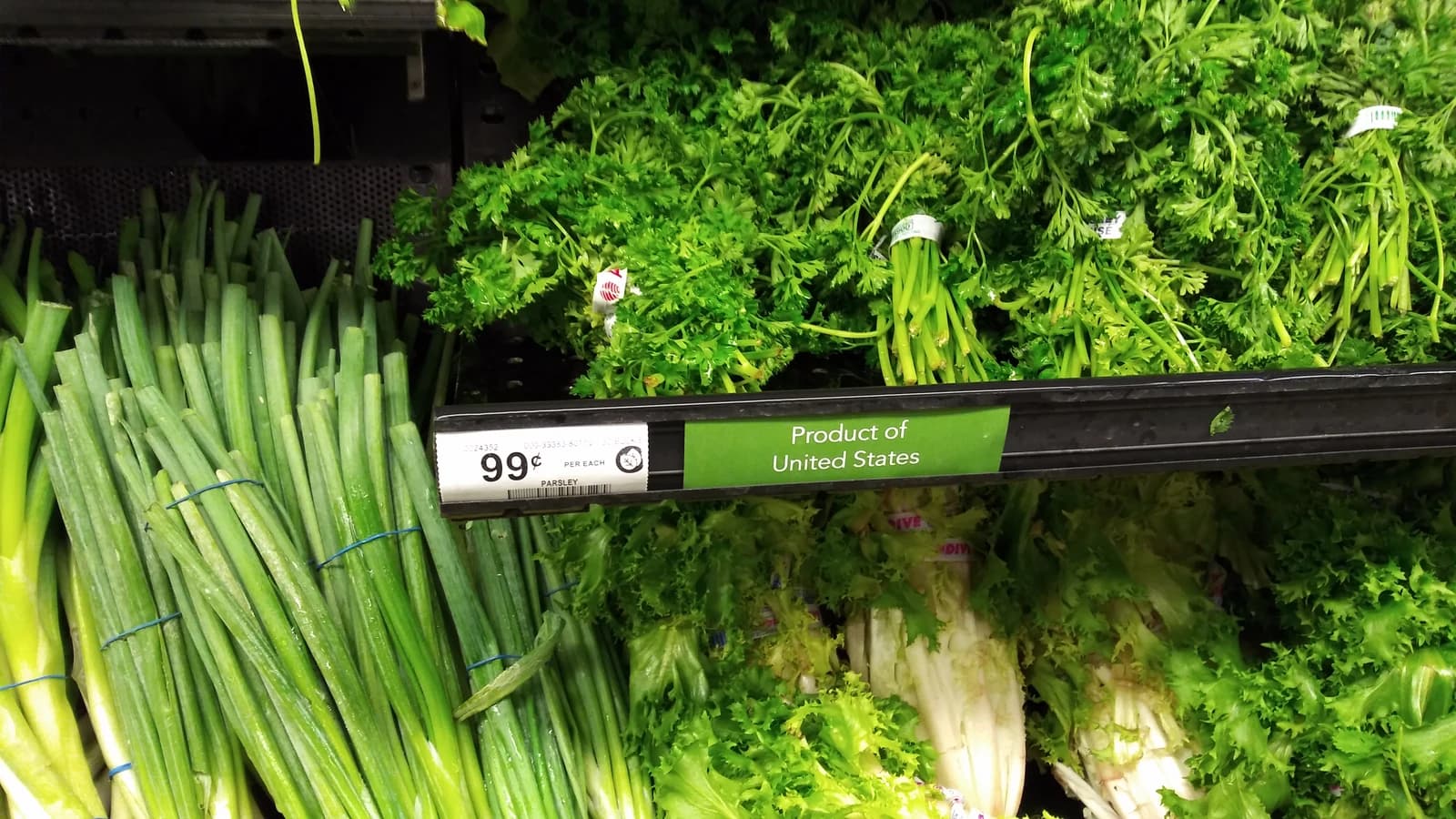
Pricing power remains weak. The Consumer Price Index for food at home fell 0.1% in September, while grocery inflation over the past 12 months ran at just 1.8%. That is a tough setup for supermarket chains, which are still absorbing wage, freight and shrink costs without much help from price increases. Food and beverage retailers also shed about 4,100 jobs in September, a sign that operators are protecting margins where they can.
Traffic was mixed but hardly strong enough to offset the squeeze. Store visits were flat year over year overall and down in three of four grocery categories versus August. Traditional supermarkets posted a second straight month of negative year-over-year visits, while value grocers and fresh-format chains cooled from prior months. Even where visits improved, the gains were modest.
The clearest market takeaway is that the sector is separating into winners and laggards. Big, scale-driven chains with strong digital and loyalty ecosystems can still defend share, but the industry’s weaker operators are facing a harsher environment of low inflation, price-sensitive shoppers and little room to absorb cost shocks. That is why the market is already rewarding defensive leaders like Kroger and Walmart while punishing names exposed to margin compression and slow traffic.
For investors, this is not a reason to avoid grocery altogether — it is a reason to be selective. The best-positioned companies are those with scale, pricing data, omnichannel reach and the ability to squeeze more productivity out of every square foot and labor hour. The weaker players may need restructuring, asset sales or deeper markdowns before the business improves.
The next catalyst will be holiday demand and whether shoppers keep favoring value, private label and larger chains. If inflation stays subdued and traffic remains choppy, the sector’s operating leverage will stay under pressure, keeping the investment case concentrated in the most efficient operators and away from the businesses still fighting for margin.
| Entity | Gains | Losses |
|---|---|---|
| Kroger | ▲value-trading shoppers | ▼regional weak operators |
| Walmart | ▲traffic and share gains | ▼margin-constrained grocers |
| Albertsons | ▲strategic review optionality | ▼earnings and sentiment |
| Consumers | ▲lower grocery inflation | ▼grocery workers and suppliers |