U.S. growth is still expanding at a near-$33 trillion pace, but investors are now more focused on whether higher-for-longer rates and shifting policy priorities can keep that momentum intact without choking risk assets.
US growth and yields pressure SPY, QQQ, and ICLN
Gross domestic product is estimated to reach 32.93 trillion in the July quarter, up 1.11% from the prior reading, after rising to 32.56 trillion in April and 31.91 trillion in January, according to the data context. Industrial production is also projected to edge up to 104.05 in October from 103.95 in September, suggesting the economy is holding together even as the 10-year Treasury yield sits near 5.01%, a level that keeps pressure on borrowing costs across housing, corporate credit and equity valuations.
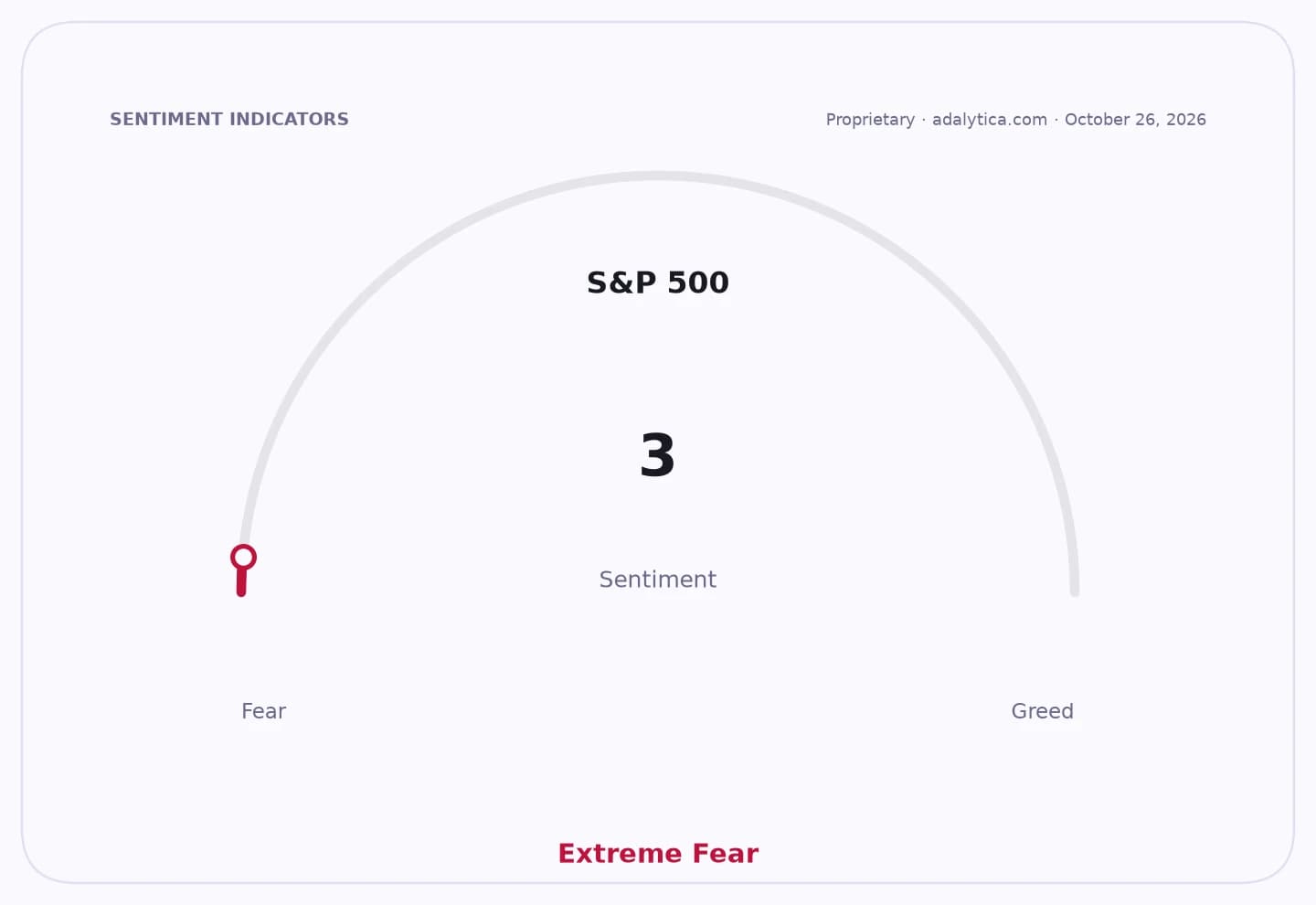
Sentiment IndicatorsⓘProprietary · adalytica.com · October 26, 2026
This is a snapshot — live sentiment, awareness and momentum for 130+ markets update continuously in the dashboard.Open AlphaPulse

That backdrop helps explain the split in the market. The S&P 500 ETF SPY closed at 759.97, above its 50-day moving average of 766.90? Actually it remains just below that level after slipping from 773.09 two sessions earlier, while the Nasdaq 100 ETF QQQ finished at 704.40, well under its 50-day average of 725.44 and with its RSI at 23.7, a reading that points to deeply oversold conditions by standard technical measures. Adalytica’s S&P 500 trade signals show “Extreme Fear,” even as awareness remains elevated, underscoring how quickly sentiment has swung negative.
The narrative is especially important for rate-sensitive and policy-linked sectors. The clean-energy ETF ICLN fell to 16.02, below both its 50-day average of 17.32 and its 200-day average of 18.81, as policy uncertainty and weaker risk appetite continue to weigh on renewables. Solar manufacturers and suppliers have already warned in SEC filings that market development remains dependent on policy support, tariffs and tax incentives, making any change in the regulatory backdrop a direct earnings and cash-flow issue rather than a political footnote.

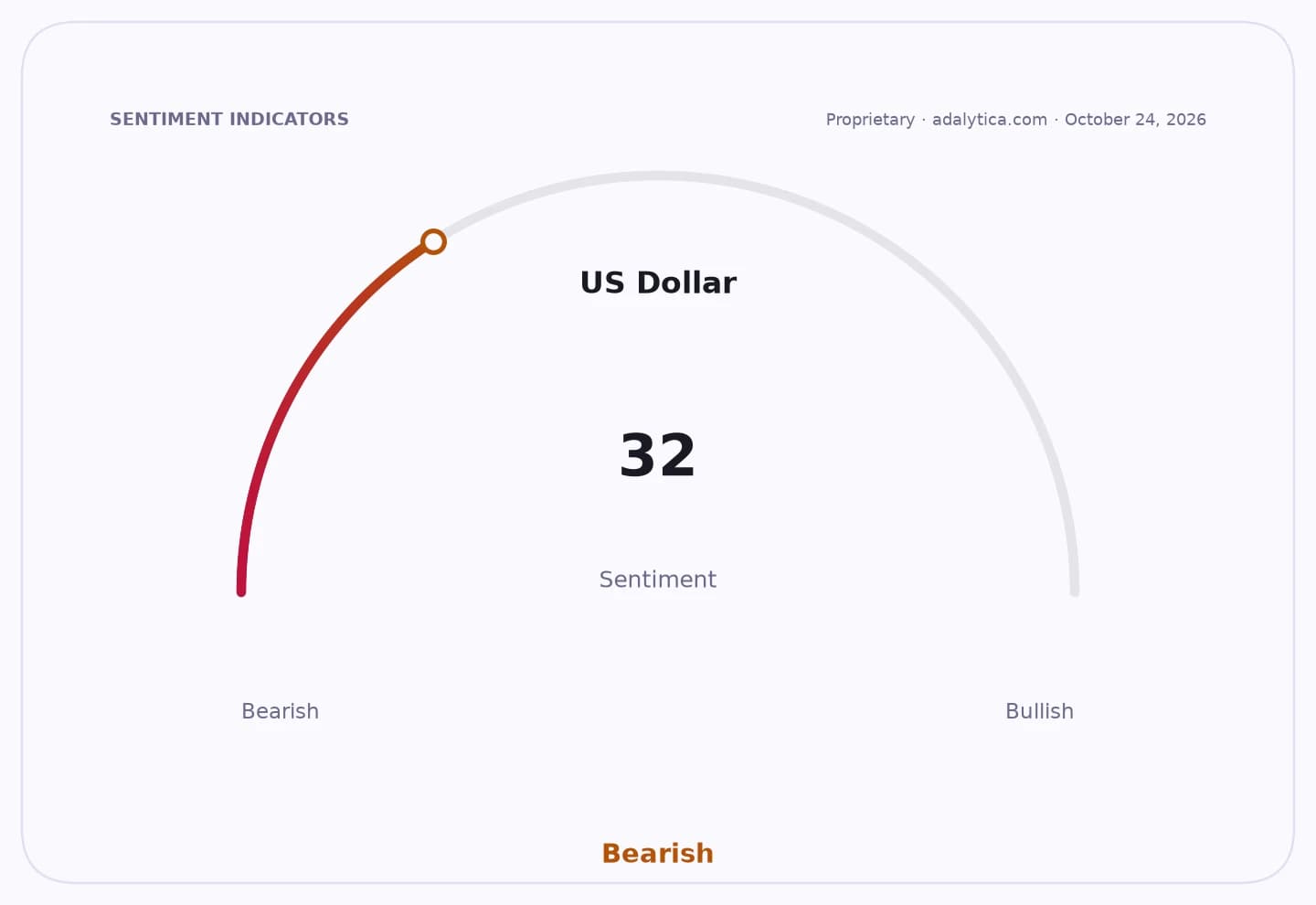
Federal Reserve credibility remains a second-order market driver. Adalytica’s Federal Reserve Policy Credibility Sentiment is at 64, still neutral but down 7 points on the day, while the dollar trade signal sits at 52 and the 10-year yield has stayed above 5%, leaving investors to judge whether policymakers can protect growth without reigniting inflation. That mix usually favors select defensives, cash-rich megacaps and exporters over duration-heavy growth names and highly levered cyclicals.
The key near-term test is whether stronger data can keep supporting equities without pushing yields even higher. If growth continues to hold and policy credibility stabilizes, the market can broaden beyond a handful of megacaps; if not, the current rotation into fear, lower valuations and policy hedges likely has further to run.
| Entity | Gains | Losses |
|---|---|---|
| Cash-rich megacaps | ▲Better relative safety | ▼Valuation multiple risk |
| Rate-sensitive growth stocks | ▲Lower funding pressure if yields ease | ▼Higher discount rates |
| Clean-energy ETFs and solar names | ▲Policy support and incentives | ▼Regulatory uncertainty |
| Bond bulls | ▲Slower growth can cap yields | ▼10-year near 5% |