U.S. homebuilders are struggling to turn softer demand into lower prices, as elevated borrowing costs and a shift toward smaller, more affordable homes keep pressure on sales and margins rather than triggering a broad discounting cycle.
U.S. Homebuilders Face Weak Demand and Thin Margins
The disconnect matters because housing is one of the most interest-rate-sensitive corners of the economy. With the Fed funds rate around 3.75% and the 10-year Treasury near 5%, financing remains expensive enough to keep many would-be buyers on the sidelines even as builders lean harder into affordability. That has left the market in a familiar but uncomfortable position: demand is weak, but pricing power is not returning in a clean way because the mix of homes being built has shifted toward lower-priced product.
Sentiment Indicators
Housing
The latest data point to that squeeze. U.S. housing starts were running at a 1.221 million annualized pace in September, down from 1.369 million in July and 1.609 million in May, underscoring a cooling in new construction activity. The iShares U.S. Home Construction ETF, or ITB, has also reflected that volatility, falling to 88.99 on Oct. 28 before recovering to 91.35 on Oct. 29, still below its 200-day moving average of 95.33. The SPDR S&P Homebuilders ETF, XHB, has held up better at 100.57, but it too remains beneath its 200-day average of 104.53, a sign investors are not yet pricing in a decisive turn.
The strain is visible in company disclosures. Lennar said in its latest 10-Q that it remains focused on affordable housing for an affordability-constrained customer base, even though that strategy is weighing on near-term margin. The company also pointed to little sign of near-term interest rate relief, while noting that resales are rising in some markets, adding competition for buyers. NVR separately said second-quarter demand for new homes continued to be hurt by affordability issues and elevated inventory in some markets.
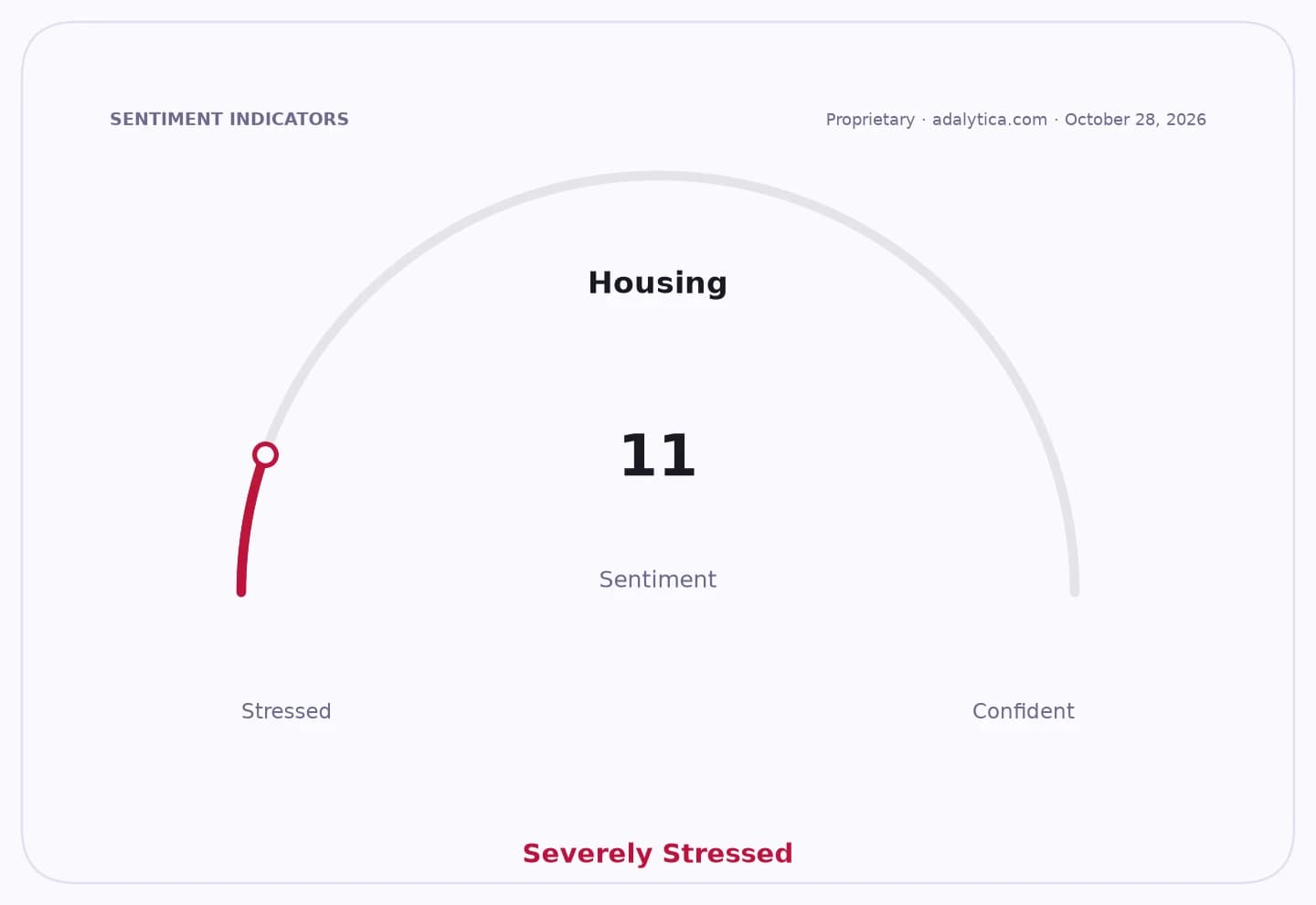
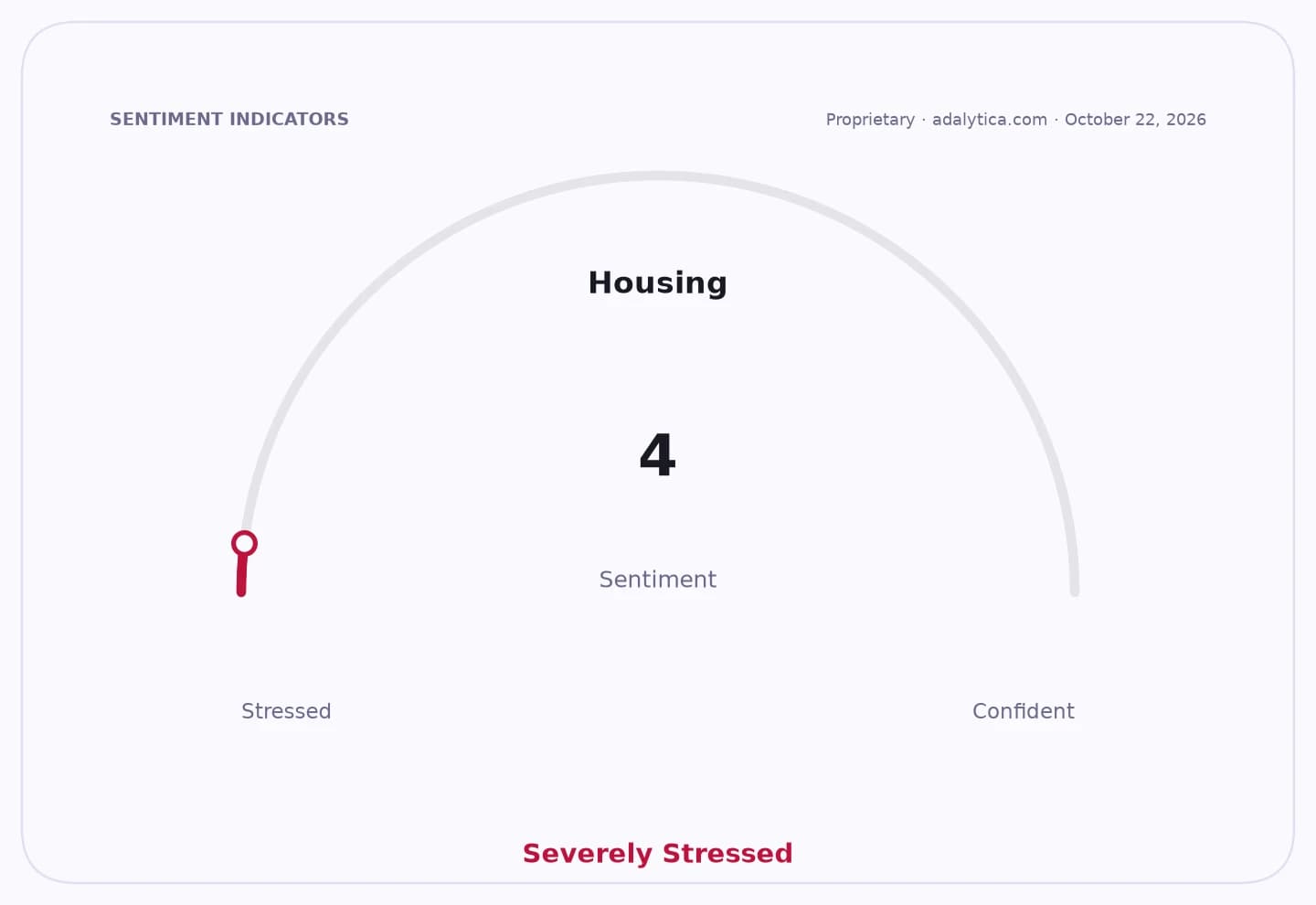
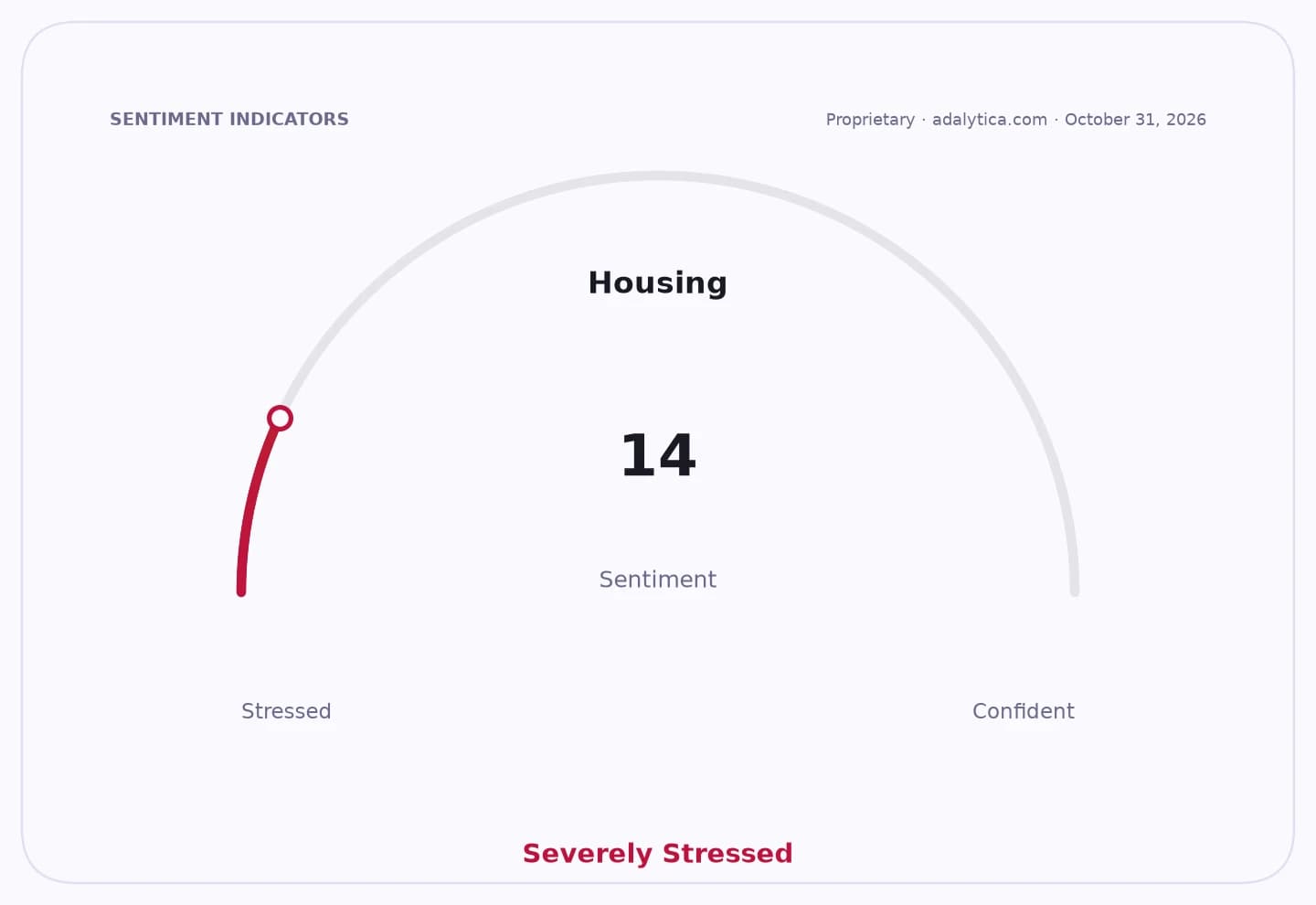
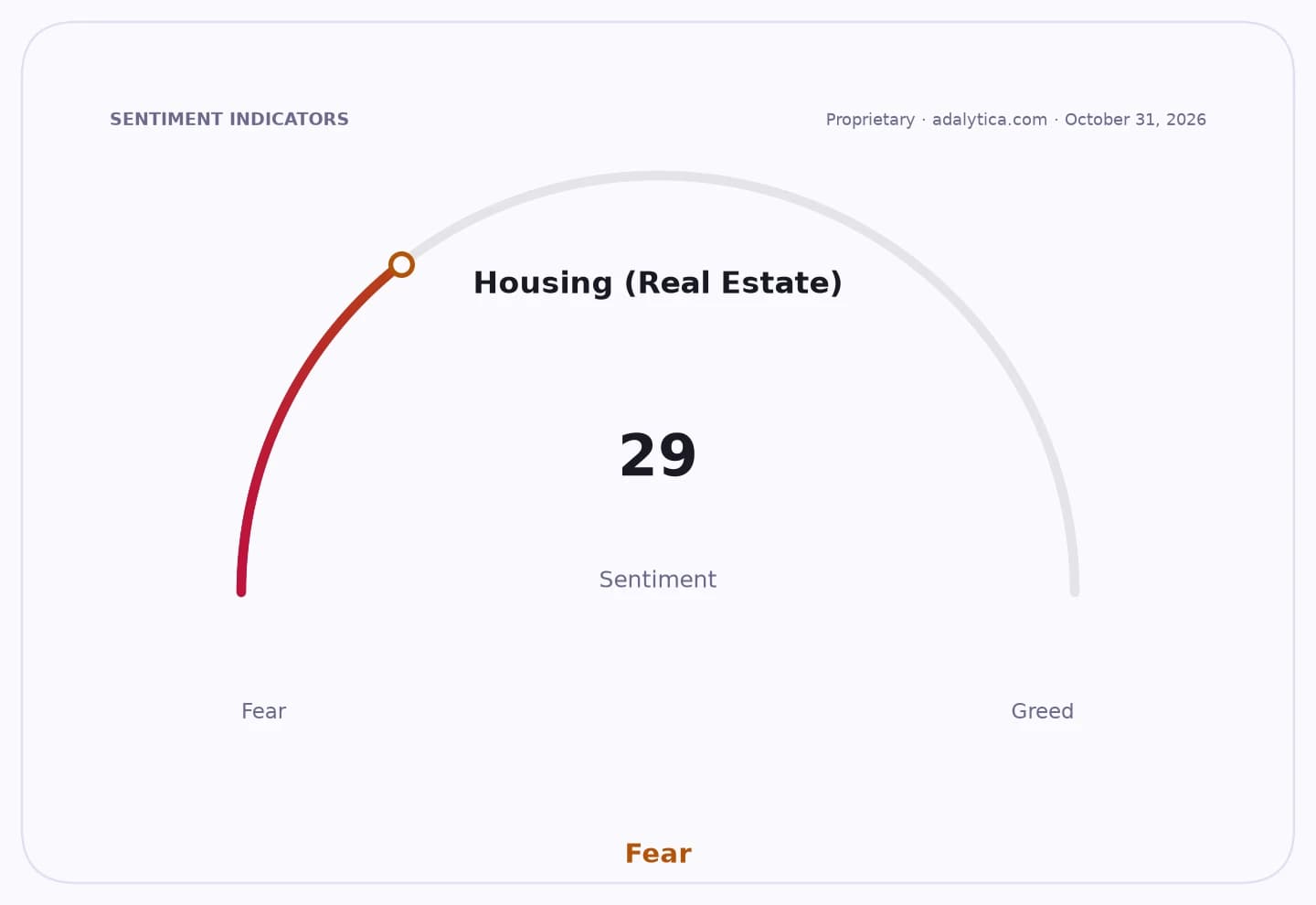
Housing — 30-day sentimentadalytica.com
Explore this data interactively — full history, time series and cross-market comparisons.
Housing
That combination is important for the broader economy. Builders can boost sales volume by cutting mortgage rates, offering incentives or shrinking home sizes, but those tactics tend to compress margins faster than they revive industry pricing. If homes are getting smaller, the industry may be able to keep monthly payments in reach without slashing headline prices, which helps preserve valuation but also limits revenue growth per unit sold.
For investors, the setup is a trade-off between resilience and downside risk. Homebuilder shares have rebounded from spring lows, and technical indicators on ITB and XHB show they have stabilized above shorter-term averages. But both ETFs remain below longer-term trend lines, suggesting the market is still waiting for either a meaningful drop in mortgage rates or a clearer rebound in housing starts before assigning a stronger growth premium.
The near-term catalyst remains the same: lower rates. Until borrowing costs ease materially, builders may keep favoring smaller homes, incentives and select price discipline over outright cuts, leaving the sector trapped between weaker demand and only limited affordability relief.
| Entity | Gains | Losses |
|---|---|---|
| Homebuyers | ▲Smaller entry points | ▼Limited price relief |
| Homebuilders | ▲Volume from affordable product | ▼Margins and pricing power |
| Existing-home sellers | ▲More competitive listings | ▼Less advantage on supply |
| ITB/XHB investors | ▲Defensive valuation support | ▼Upside until rates fall |