Inflation alone no longer explains why millions of Americans feel under pressure: the more immediate strain is that debt servicing, wage erosion and tighter household credit are colliding at the same time.
U.S. households face debt and inflation squeeze
Price growth is still running above the Federal Reserve’s long-run target, with the consumer price index forecast to rise 0.35% in November and extend a year of persistent monthly gains. But the bigger economic story is that inflation is not easing household finances enough to offset the drag from borrowing costs, while debt-servicing burdens are rising across the broader economy.
Sentiment Indicators
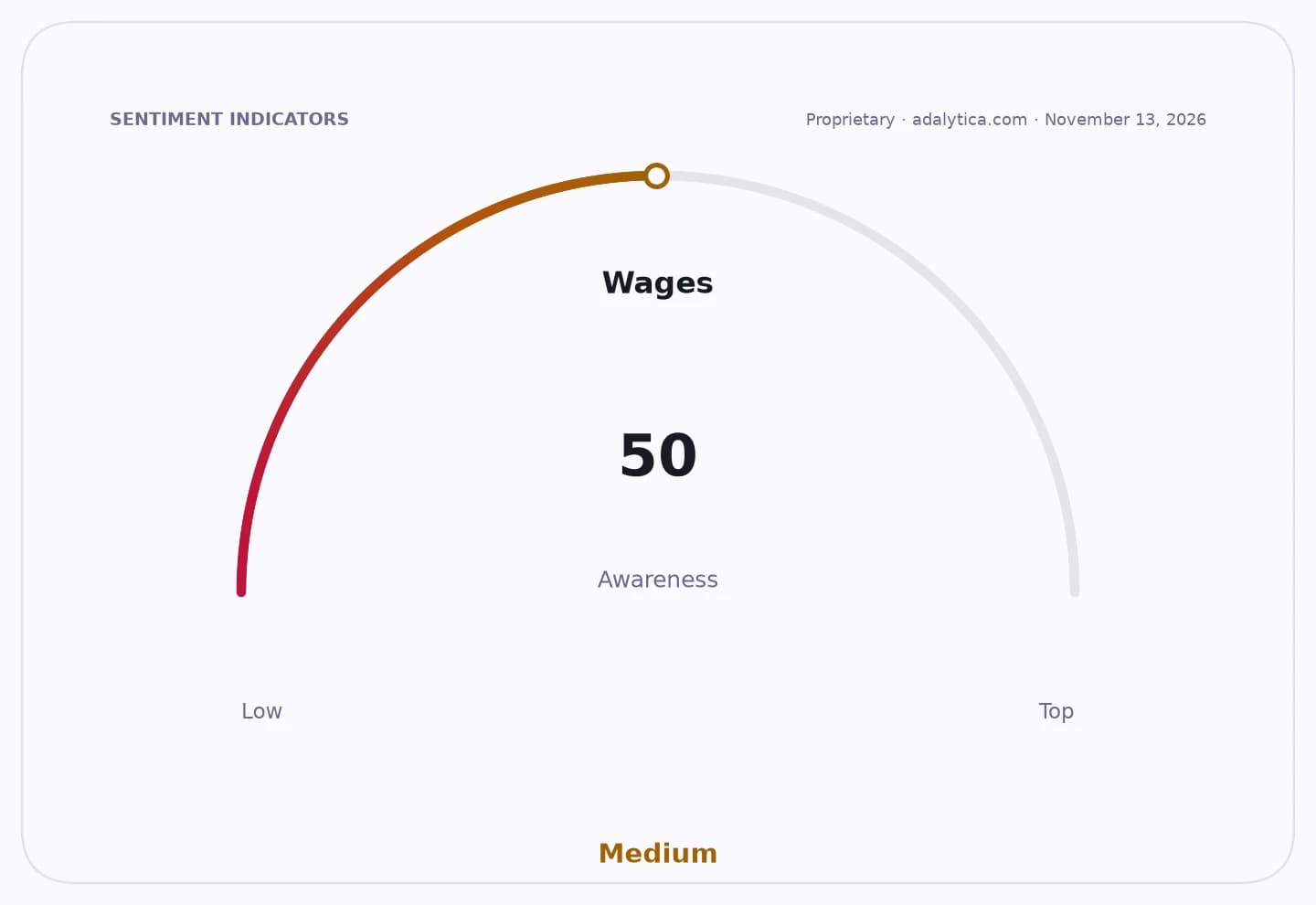
Wages
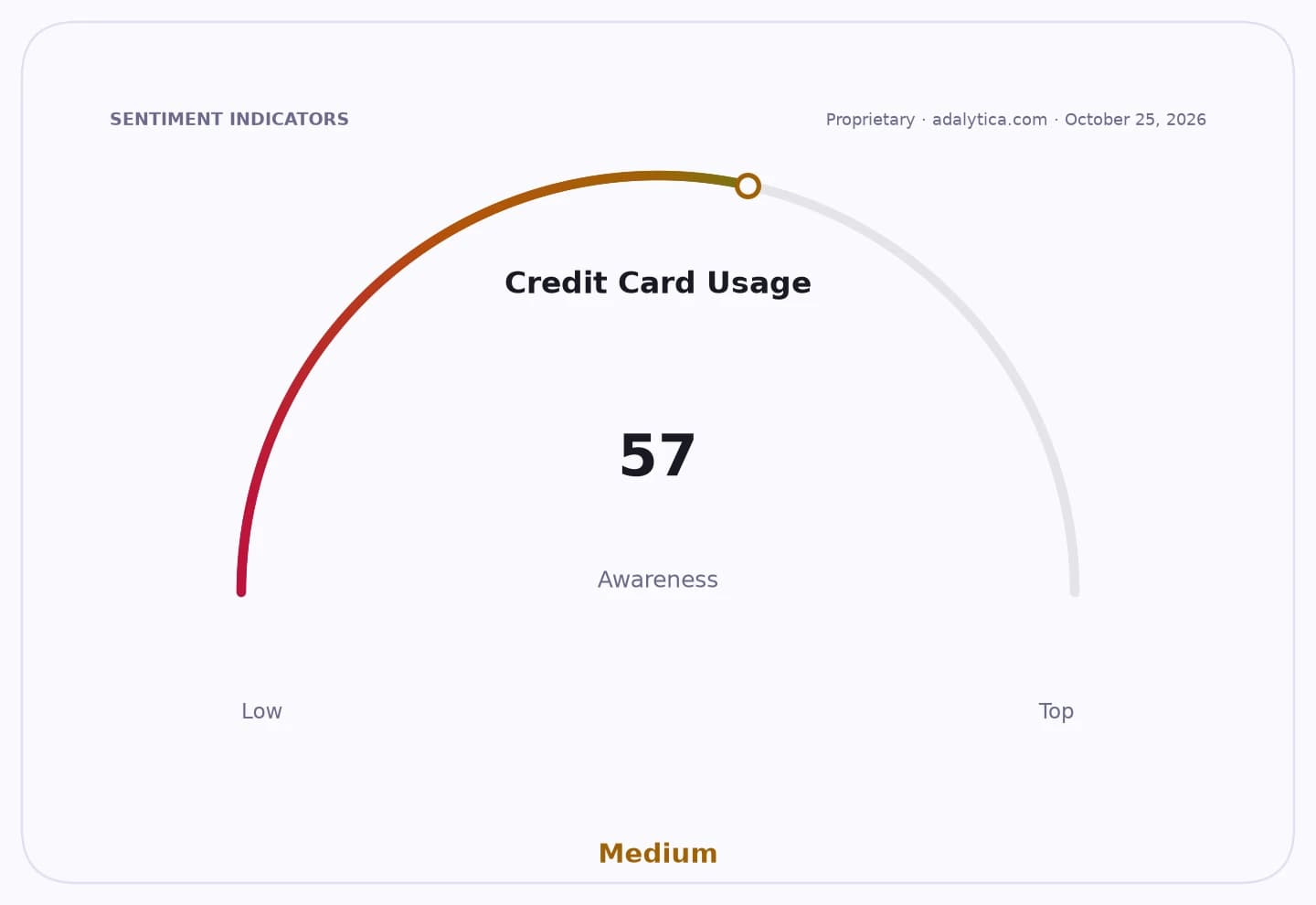
That matters because the squeeze is increasingly visible in both sentiment and balance sheets. Adalytica’s gauges show confidence in the Fed’s 2% inflation target collapsing to 4, a reading labeled “Extreme Fear,” while long-term inflation expectations and wage inflation sentiment have also fallen sharply. At the same time, U.S. financial conditions remain tight enough that consumer lenders are still watching delinquency trends closely, even after some big banks reported broadly resilient card performance in recent filings.
The equity market is reflecting that split. Consumer staples, often treated as a defensive haven when households are under stress, have outperformed more cyclical consumer shares. The Consumer Staples Select Sector SPDR Fund, XLP, has climbed to 92.35 from 75.17 in early January and sits above both its 50-day and 200-day moving averages, with momentum still positive. The Consumer Discretionary Select Sector SPDR Fund, XLY, is up too, but its path has been choppier and it remains more exposed to any slowdown in real spending once the holiday season passes.
Wages
Financials are another pressure point. The Financial Select Sector SPDR Fund, XLF, has recovered from a March low of 47.48 to 58.68, but the sector’s gains are tied as much to credit resilience as to earnings growth. Investors are watching whether higher debt burdens eventually bleed into charge-offs and reserve builds, particularly among lenders with heavy exposure to lower- and middle-income borrowers.
The macro backdrop reinforces the risk. Rising debt servicing costs, whether in U.S. households or in public finances globally, are draining disposable income and limiting policy flexibility. When debt service rises faster than wages, inflation becomes more than a pricing problem: it becomes a distribution problem, transferring income from consumers to creditors and reducing demand for everything from discretionary goods to financial products.
For investors, that leaves a clear framework. If inflation stays sticky but wages do not keep up, consumer-facing cyclicals remain vulnerable even if headline CPI moderates. Staples, quality lenders and cash-generative companies should fare better than retailers, travel names and lower-end discretionary spenders. The next test is whether November inflation data and upcoming labor-market prints confirm that price pressure is easing faster than household debt stress, or whether consumers remain trapped between still-elevated living costs and rising borrowing burdens.
| Entity | Gains | Losses |
|---|---|---|
| Consumer staples | ▲Defensive demand flows | ▼Limited upside from strong spending |
| Consumer discretionary | ▲Price power in select names | ▼Weaker household demand |
| Banks and lenders | ▲Higher interest income | ▼Rising credit stress |
| Household borrowers | ▲Short-term relief if inflation cools | ▼Debt-service burden and squeezed real income |