America’s economic story is still being sold as a broad-based win, but the data show a much narrower prosperity that is increasingly unaffordable for anyone trying to buy a home or build wealth from scratch.
U.S. housing affordability and wealth gaps widen
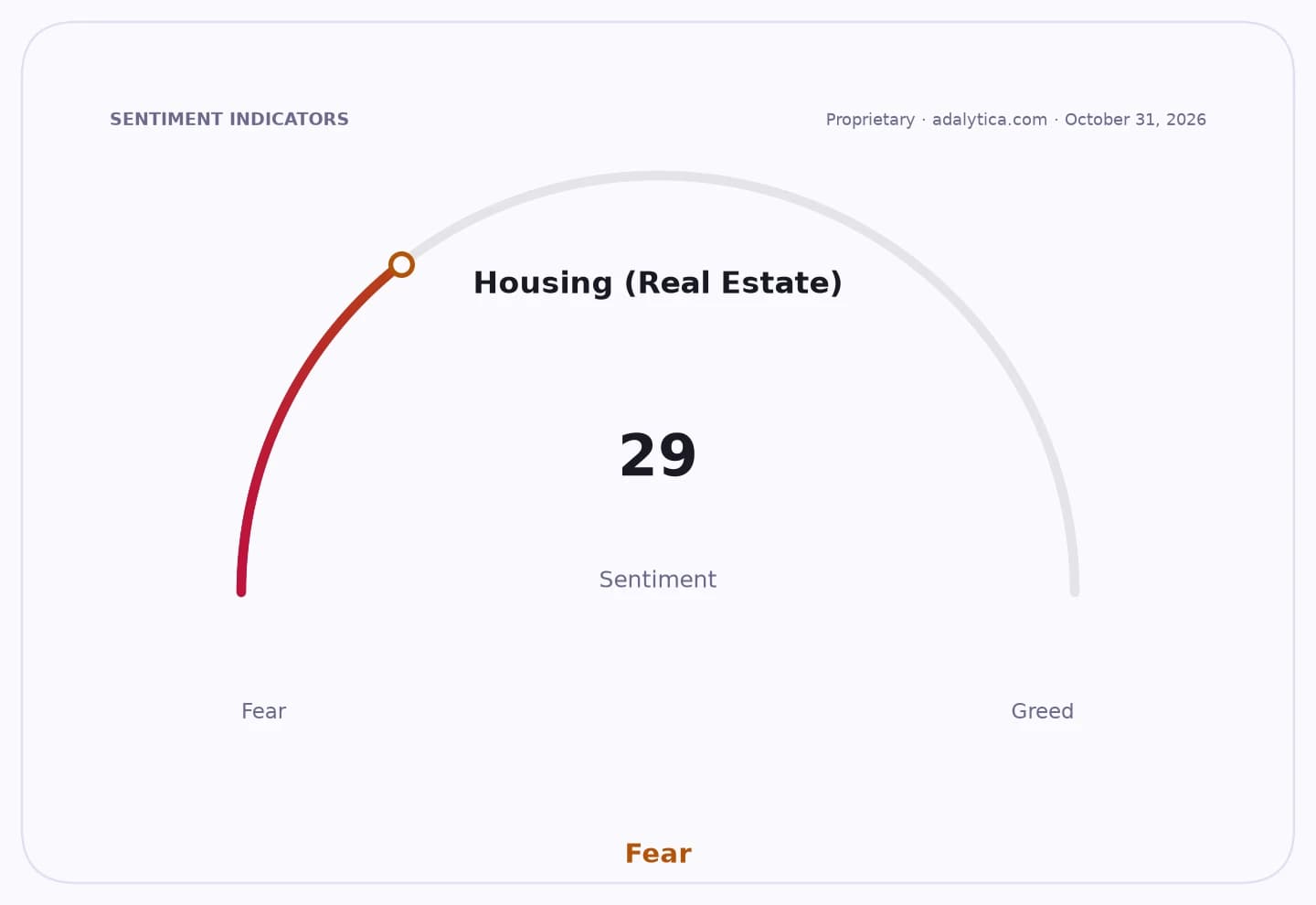
That is why the “American dream” argument matters now: the U.S. economy is still expanding, with GDP projected to reach $33.45 trillion in the latest forecast, and unemployment remains near 4.1%. Yet the housing market has kept outrunning household incomes, leaving ownership harder to reach even in a relatively strong labor market. The Case-Shiller home-price index is still near 337, more than doubling from the 2012 level and up sharply from 2019. For many families, that means the classic path to wealth creation — work, save, buy a house, refinance, repeat — is no longer working the way it did for prior generations.
Sentiment Indicators
That disconnect is the investment story. When asset prices outrun wages, capital accrues to owners and lenders while renters and first-time buyers get squeezed. It also changes where money flows next. Housing affordability pressure tends to favor rental platforms, homebuilders with entry-level product, landlords, infrastructure names tied to migration and household formation, and financial firms that can underwrite the new affordability gap. It is less friendly to consumer-discretionary spending tied to new homeowners, and it helps explain why the market keeps rewarding asset owners while broad economic sentiment remains brittle.
The broader backdrop is even more revealing. The United Nations is warning that inequality and emerging technologies, including artificial intelligence, could widen existing gaps rather than close them. That is not just a social-policy issue; it is a capital-allocation issue. If AI boosts productivity but concentrates the gains in a small set of firms and skilled workers, the next decade may look like the last one: stronger headline GDP, lower unemployment, and still-rising frustration over who actually gets ahead.
The market is already hinting at that tension. The S&P 500 has been volatile, with Adalytica’s U.S. trade-signal snapshot showing neutral sentiment but extreme awareness — a sign that investors are highly focused on the macro story even if conviction is uneven. In other words, people know something is off. The opportunity is to position for the economy that emerges when the old playbook breaks.
Our thesis is simple: the American dream is not disappearing, it is being repriced. Investors should favor companies that profit from the affordability gap, the infrastructure behind mobility and housing, and the technologies that can lower the cost of living. That is where the next asymmetric returns are likely to come from.
| Entity | Gains | Losses |
|---|---|---|
| Homebuilders | ▲Entry-level demand | ▼Price-sensitive buyers |
| Landlords / rental REITs | ▲Persistent rent demand | ▼First-time homebuyers |
| AI leaders | ▲Productivity-driven capital spend | ▼Wage growth laggards |
| Consumer discretionary | ▲Niche spending rebounds | ▼Affordability-pressured households |