U.S. housing policy is moving back to the center of the economic debate as weaker starts, stubborn affordability pressures and elevated mortgage costs point to another year in which government support could determine whether construction stabilizes or slips further.
U.S. housing policy debate centers on affordability
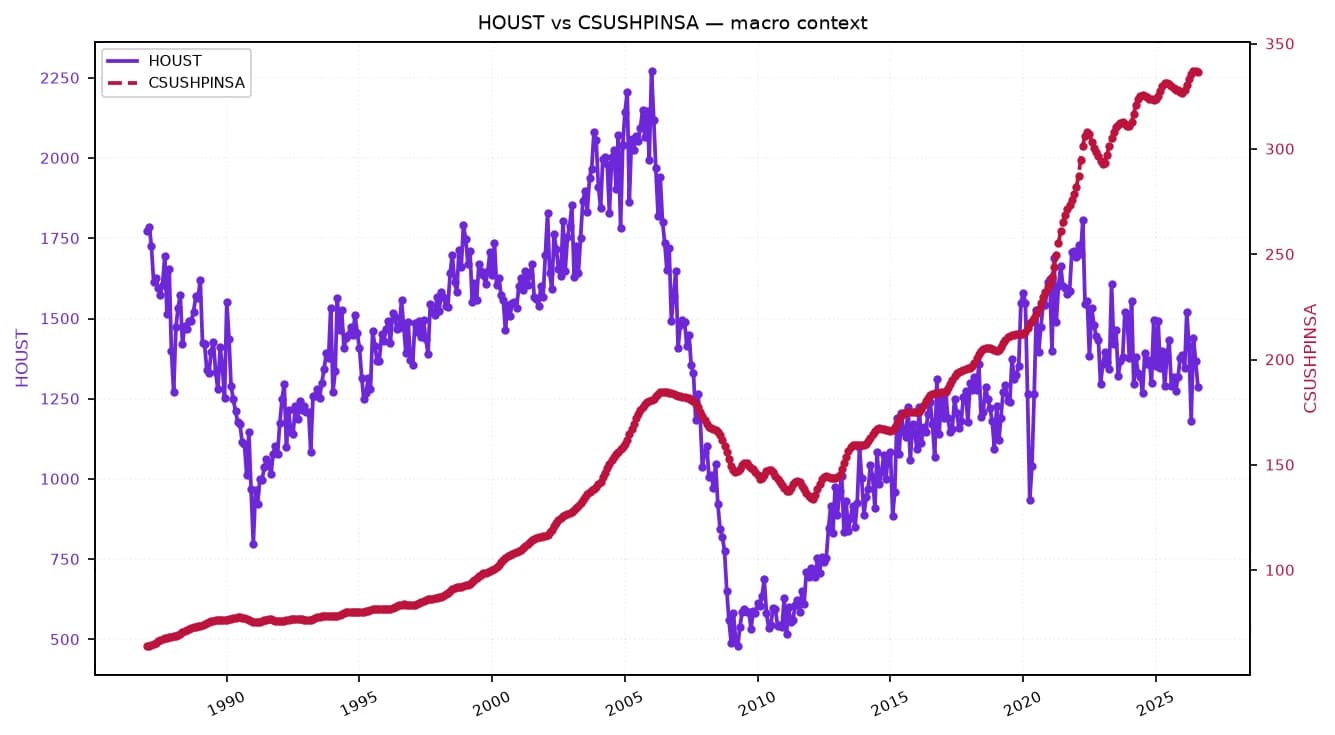
The backdrop is a housing market that remains constrained less by demand in the abstract than by price and financing pressure. New-home construction starts are forecast to fall to 1.186 million in November from 1.309 million in October, a drop of 9.4%, after an already uneven year. At the same time, the broad U.S. house-price index stands at 336.5, more than five times its 1987 level, underscoring how far homeownership has moved out of reach for many buyers even with unemployment still near 4.1%.
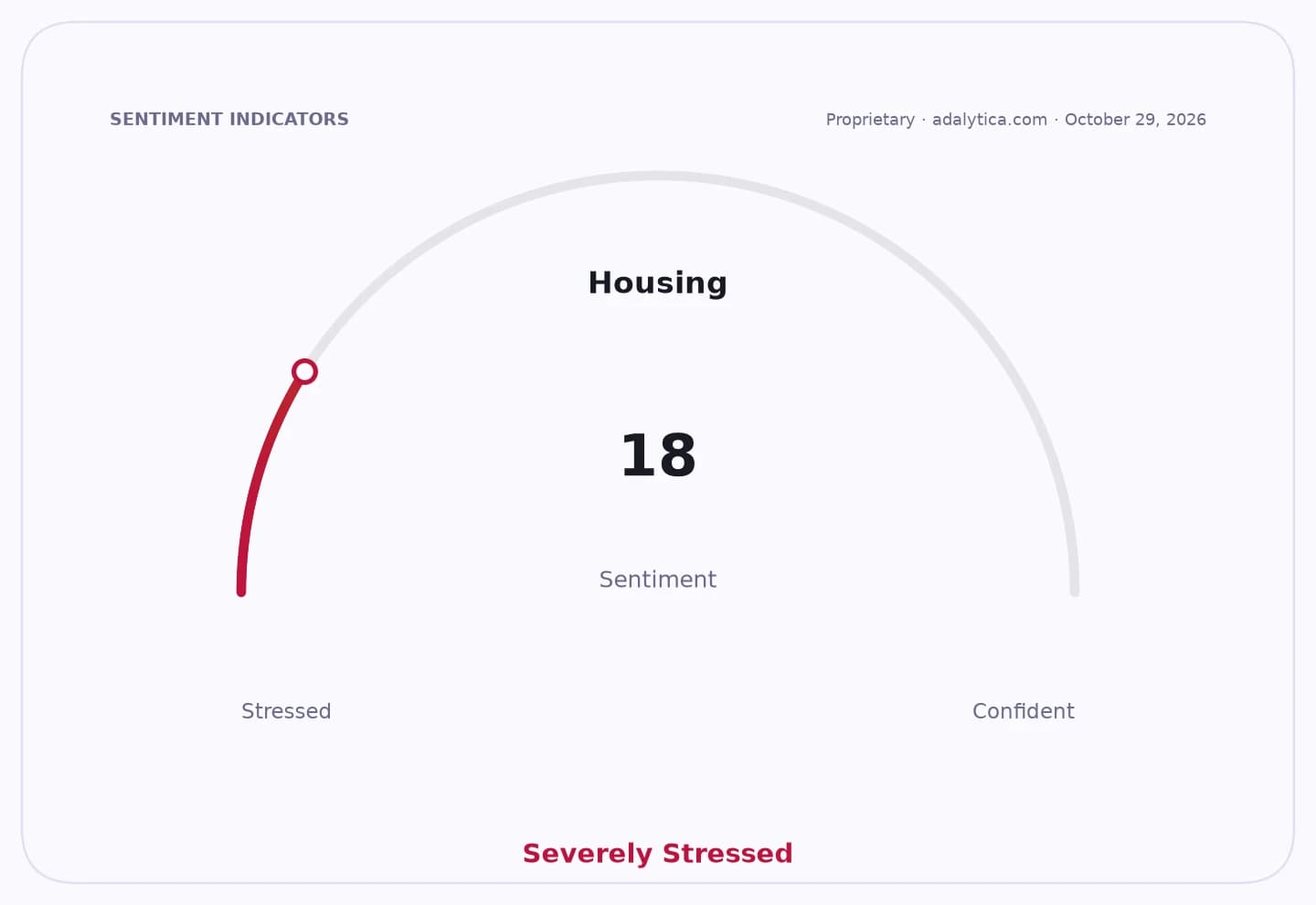
Sentiment Indicators
That combination is why calls for state intervention in mortgages and housing supply carry economic weight. If policymakers do not ease financing conditions or expand affordable stock, housing stays a drag on household formation, labor mobility and construction activity. If they do, the effects spill into mortgage lenders, homebuilders, material suppliers and local economies through higher transaction volumes and steadier employment.
Investors have already been positioning around that split. The homebuilders ETF XHB has rebounded to 104.52, while the iShares U.S. Home Construction ETF ITB has climbed to 98.71, both well above their September lows. Rocket Companies has also recovered to 15.06 from a March trough near 13.65, suggesting markets are pricing at least some relief from the worst of the affordability squeeze. But the broader move has been choppy, with shares still vulnerable to any sign that rates or demand worsen again.
HOUST vs CSUSHPINSA — macro contextadalytica.com
Explore this data interactively — full history, time series and cross-market comparisons.
The economic narrative is clear: housing is acting like a transmission belt for monetary tightness and policy frustration. Demand for new homes has been weakened by affordability issues, and recent homebuilder filings from names including D.R. Horton, Lennar, NVR and Pulte Group have pointed to pricing pressure, lower average selling prices and slower order trends. That matters because homebuilding is one of the fastest ways lower financing costs or targeted subsidies can feed through to growth.
The case for intervention is strongest where the market failure is most obvious: first-time buyers and middle-income households priced out by both mortgage rates and lack of supply. Public support for mortgages could help stabilize demand, while support for construction could improve the pipeline of affordable homes. But the bear case is just as familiar — boosting demand without solving supply constraints risks pushing prices higher, especially in markets already described as structurally undersupplied.
For investors, the key question is not whether housing is important, but which part of the chain benefits most from policy support. Mortgage originators and purchase-sensitive lenders stand to gain if lower borrowing costs revive turnover. Homebuilders benefit if incentives improve absorption and pricing power. Existing homeowners and landlords could lose if policy measures expand affordability enough to slow rent and price gains. The next catalyst will be whether governments choose direct mortgage support, supply-side subsidies or broader intervention in rental and development markets.
| Entity | Gains | Losses |
|---|---|---|
| First-time buyers | ▲Better affordability | ▼Less immediate pressure |
| Homebuilders | ▲Higher sales volume | ▼Pricing pressure eases |
| Mortgage lenders | ▲More originations | ▼Margin squeeze risk |
| Existing homeowners/landlords | ▲Slower gains | ▼Asset-price upside capped |