Job openings in the U.S. remained elevated at 7.24 million in January, underscoring a labor market that is still generating plenty of opportunities even as the pace of hiring cools from post-pandemic extremes.
U.S. Job Openings Stay Elevated at 7.24 Million

That matters because vacancies, not just payroll gains, are one of the clearest gauges of labor demand and wage pressure. With openings still far above the roughly 4 million level seen before the pandemic, employers are continuing to compete for workers, a dynamic that tends to support wage growth and household income while keeping the labor market tighter than the Federal Reserve would like if it is trying to bring inflation fully under control.
Sentiment IndicatorsⓘProprietary · adalytica.com · August 30, 2026
This is a snapshot — live sentiment, awareness and momentum for 130+ markets update continuously in the dashboard.Open AlphaPulse
The latest reading compares with 7.59 million in April and 7.54 million in May, suggesting a modest easing rather than a sharp deterioration. The broader employment backdrop also remains firm: nonfarm payrolls are at 158.9 million, near record highs, while the unemployment rate has edged down to 4.1% from 4.2% in the prior month. In other words, the labor market is not cracking — it is normalizing.
For investors, that is a mixed signal. A healthy jobs market supports consumer spending, which is still the main engine of U.S. growth, and it reduces the near-term risk of a hard landing. But persistent labor tightness can also slow the Fed’s path to rate cuts, keeping real borrowing costs higher for longer and limiting valuation upside in rate-sensitive assets such as Treasuries, housing and small-cap equities.
JTSJOL vs UNRATE — macro contextadalytica.com
Explore this data interactively — full history, time series and cross-market comparisons.Open AlphaPulse
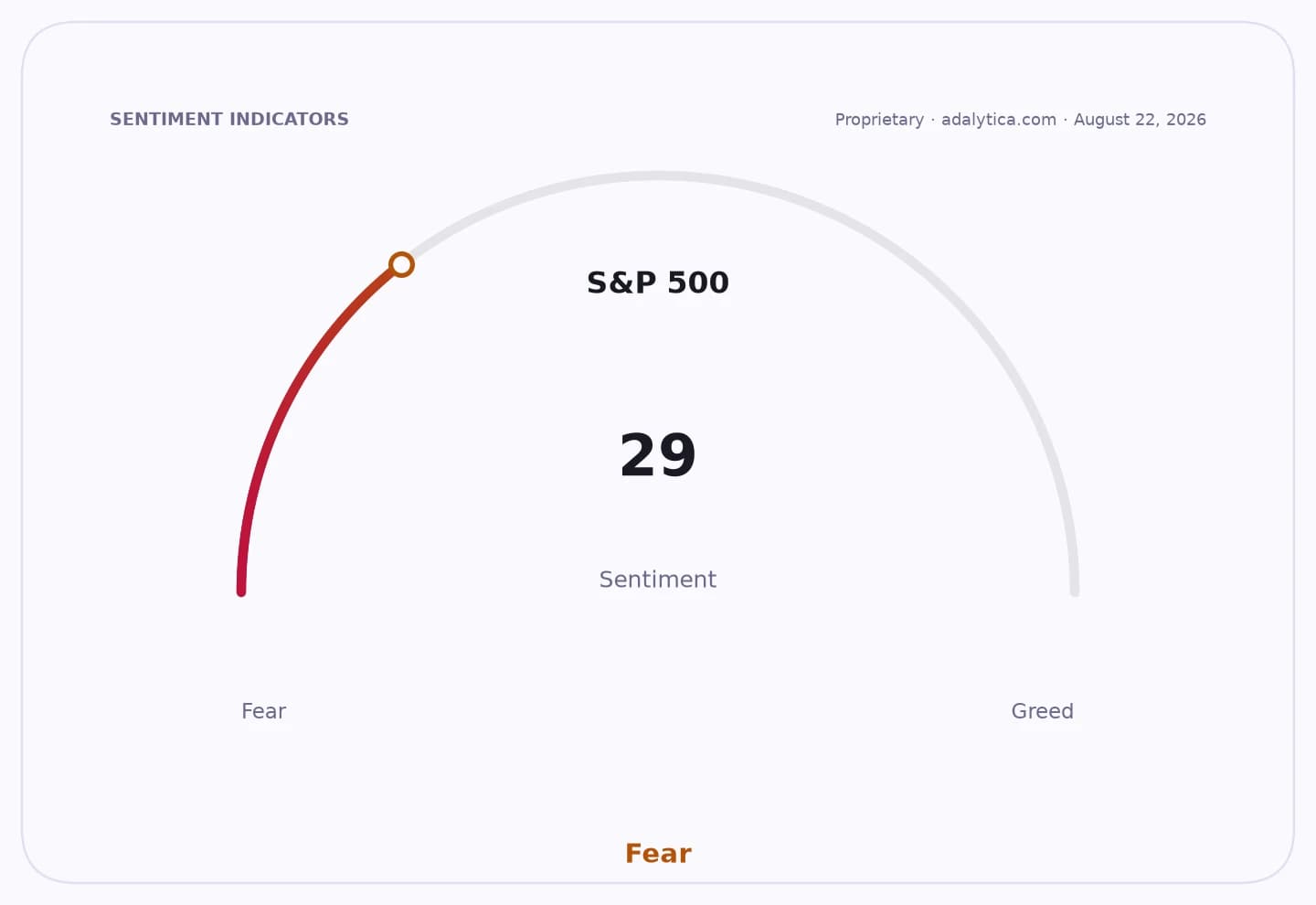
The employment picture also helps explain why market sentiment around jobs has been volatile. Adalytica’s Job Market Sentiment gauge is neutral at 41, while its payroll sentiment sits in fear territory at 23, reflecting uncertainty even as the hard data still point to resilience. That divergence suggests investors are wary of a slowdown, but the numbers have not yet confirmed one.
The central narrative is a labor market that remains supportive enough to keep the economy expanding, but not loose enough to give the Fed much room to ease aggressively. If openings continue to drift lower without a rise in unemployment, that would be the soft-landing case. If vacancies weaken faster and payroll growth stalls, the market could quickly shift to pricing in a broader slowdown.
| Entity | Gains | Losses |
|---|---|---|
| Workers | ▲More openings; wage support | ▼Less bargaining if vacancies fade |
| Employers | ▲Easier hiring if vacancies cool | ▼Higher labor costs remain sticky |
| Consumers | ▲Income and spending stay supported | ▼Inflation relief may arrive slowly |
| Fed / Rate-sensitive assets | ▲Soft-landing scenario | ▼Faster cuts delayed |