The U.S. labor market is now the key focus for investors, with a softer-than-expected private payrolls report and Friday’s official nonfarm jobs data set to shape the next move in bonds, currencies and Federal Reserve expectations.
U.S. jobs data and Fed expectations

August ADP private payrolls rose less than economists expected, adding to signs that hiring is cooling even as layoffs remain contained. Weekly jobless claims, the ISM services employment gauge and comments from Fed officials including Christopher Waller, Beth Hammack and Austan Goolsbee will add fresh clues on whether the slowdown is enough to push the central bank toward a larger rate cut path.
Sentiment IndicatorsⓘProprietary · adalytica.com · September 3, 2026
This is a snapshot — live sentiment, awareness and momentum for 130+ markets update continuously in the dashboard.Open AlphaPulse

That matters because jobs are the cleanest read on U.S. demand and the biggest near-term input for the Fed’s policy debate. A labor market that is still expanding, but losing momentum, would support the argument for easier policy without confirming a recession — a setup that can keep Treasury yields volatile and leave equities sensitive to every surprise in payrolls, wages and unemployment.
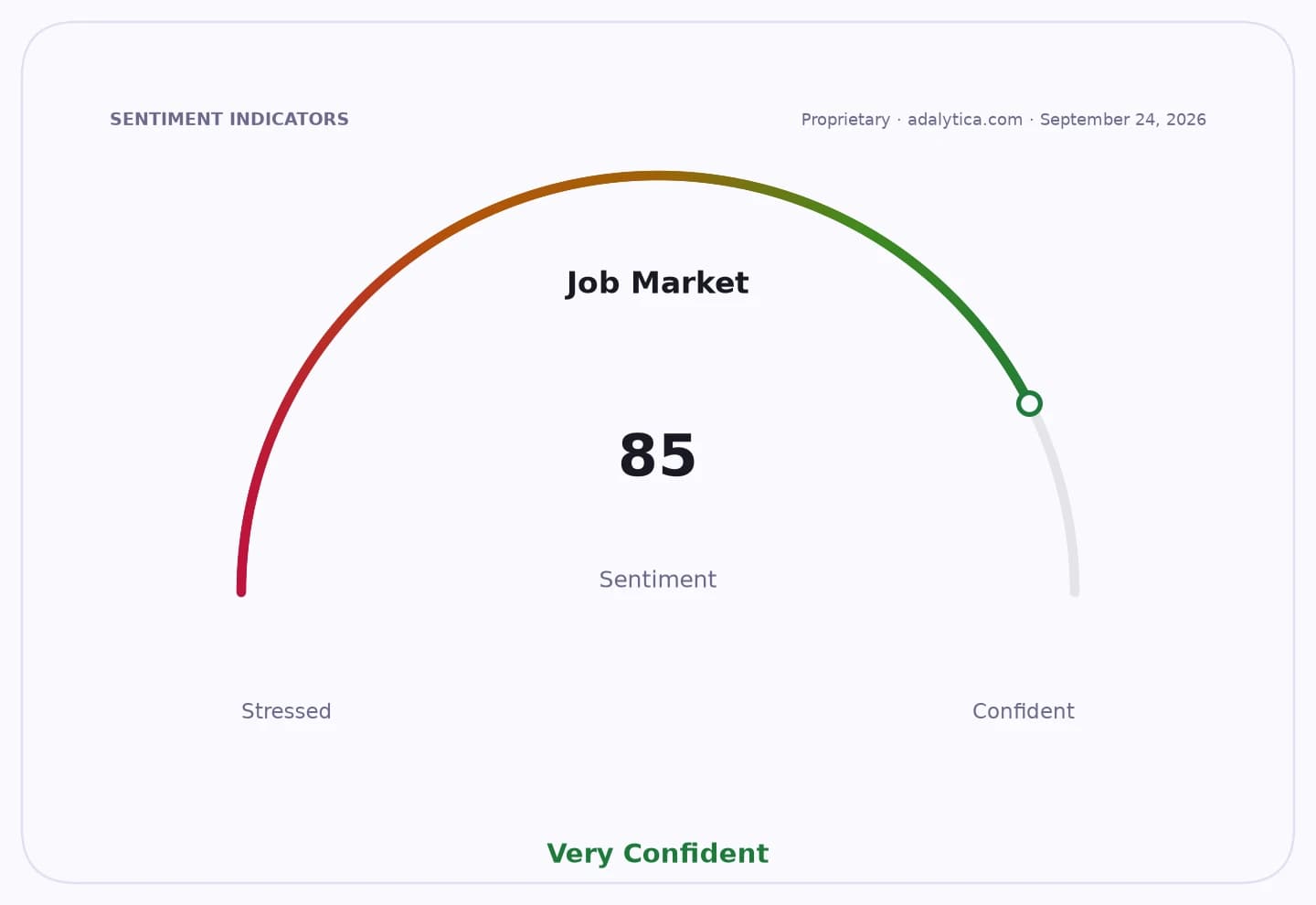
The latest Adalytica Job Market Sentiment reading is neutral at 52, while its nonfarm payrolls sentiment gauge is at 100, or extreme greed, underscoring how heavily the market is positioned around this week’s releases. Consumer confidence tied to recession risk remains in fear territory at 19, suggesting households are still cautious even as employment trends hold up.

Bonds and the dollar have already been reacting to the labor outlook, with U.S. Treasury yields slipping from recent multiyear highs and the yen firming as traders bet the Bank of Japan may tighten policy more than previously expected. For investors, the immediate risk is not just whether payrolls beat or miss, but whether a weak report would cement a faster shift into rate cuts and extend the rally in rate-sensitive assets.
Broadcom’s mixed earnings and soft fourth-quarter outlook are also feeding into the same macro trade, with the chipmaker’s AI demand commentary offering support for infrastructure spending even as investors question how quickly those outlays translate into profit. Friday’s jobs report will likely decide whether markets stay focused on resilient growth or move decisively toward a slower economy and a more dovish Fed.
| Entity | Gains | Losses |
|---|---|---|
| Treasury bulls | ▲Lower yields, softer labor data | ▼Strong payrolls |
| Fed doves | ▲More room for cuts | ▼Sticky hiring, wage strength |
| Job seekers | ▲More bargaining power if labor cools | ▼A sharper slowdown |
| Equity investors | ▲Easier-policy support if growth softens | ▼Rate shock from upside surprise |