Recent college graduates are running into the softest entry-level hiring market in years, as U.S. employers keep payrolls growing but remain reluctant to add headcount aggressively.
U.S. June payrolls seen at 159,170,900 amid soft hiring
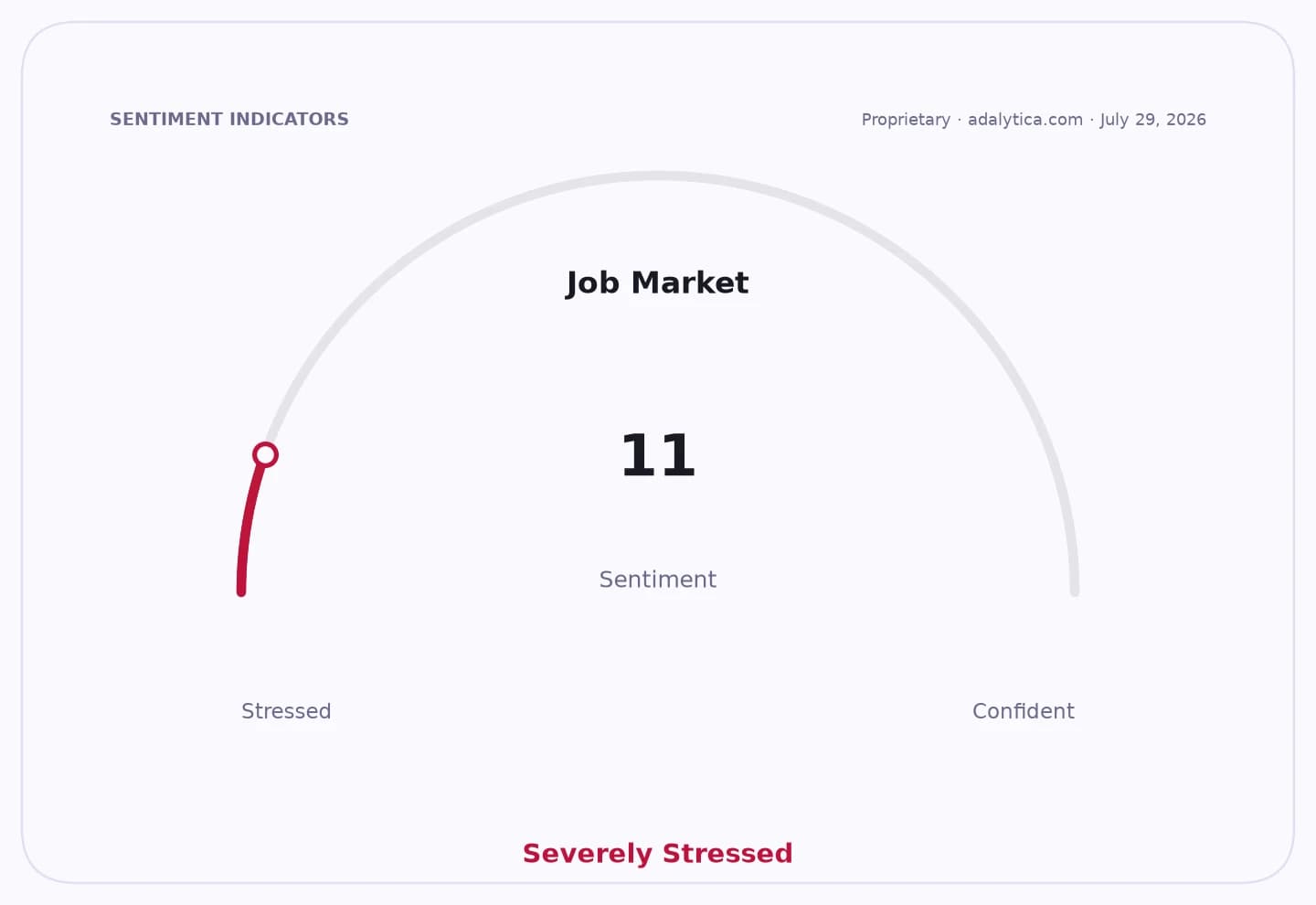
That matters because the economy is still creating jobs — nonfarm payrolls are expected to rise to 159,170,900 in June from 158,984,000 in May, while the unemployment rate is forecast to edge down to 4.18% from 4.2% — yet the pace is too subdued to absorb a fresh wave of degree holders looking for first jobs. The result is a classic low-hire, low-fire labor market: not enough layoffs to trigger recession alarms, but not enough openings to give new graduates much bargaining power.
Sentiment IndicatorsⓘProprietary · adalytica.com · July 29, 2026
This is a snapshot — live sentiment, awareness and momentum for 130+ markets update continuously in the dashboard.Open AlphaPulse
The pain is most visible at the bottom of the job ladder, where recent grads compete for internships, analyst roles and training programs that employers can delay or cancel without much immediate cost. Job openings are projected at 7.66 million in June, only slightly above May’s 7.59 million, underscoring a market that is holding steady rather than reopening.
For investors, the dynamic cuts two ways. Staffing and recruiting firms such as ManpowerGroup and Kelly Services are exposed to slower placement volumes when companies are cautious about hiring, while sectors that depend on easy labor turnover and rapid expansion also face a shallower pool of young workers. At the same time, a labor market that is stable but not overheating supports the case for a Federal Reserve that can avoid tightening policy further unless inflation re-accelerates.
The broader read-through is that U.S. employment remains historically firm, but the weakness is concentrated in the entry-level segment — a warning sign for wage growth, consumer spending and long-term productivity if a generation of graduates spends more time underemployed. Unless hiring intentions improve, the next catalyst will be the July labor report, which should show whether openings and payroll gains are finally broadening enough to help new entrants.
| Entity | Gains | Losses |
|---|---|---|
| Employers | ▲More labor supply | ▼Pressure to raise pay |
| Recent graduates | ▲Longer-term persistence | ▼Fewer entry-level openings |
| Staffing firms | ▲Demand for placement services | ▼Slower hiring volumes |
| Federal Reserve | ▲Less wage inflation pressure | ▼Less labor-market slack relief |