US labor costs rose more than expected in the second quarter as private-sector wages accelerated, adding to evidence that pay pressures remain sticky enough to complicate the Federal Reserve’s inflation fight.
US labor costs rise in Q2 as wages accelerate

The increase matters because labor costs remain the biggest input for most service-sector firms and the clearest channel through which a tight job market can feed broader price pressure. Even if the underlying trend is still moderate, faster wage growth leaves less room for companies to absorb higher compensation without passing some of the burden on to consumers or sacrificing margins.
Sentiment IndicatorsⓘProprietary · adalytica.com · August 1, 2026
This is a snapshot — live sentiment, awareness and momentum for 130+ markets update continuously in the dashboard.Open AlphaPulse
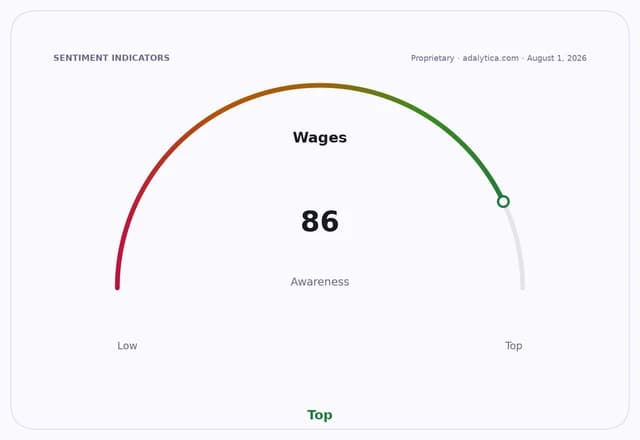
The data also lands at a delicate moment for policymakers. The Fed has been looking for signs that wage growth is cooling enough to keep inflation moving back toward target without further rate hikes. A re-acceleration in labor costs would argue for patience on any near-term easing and for continued caution in sectors where pay and prices remain closely linked. Adalytica’s Wage Inflation Sentiment snapshot turned neutral after a sharp dip, while awareness remained elevated, suggesting traders are attentive to wage pressure even if conviction is not extreme.
For investors, the implications are immediate. Higher labor costs can squeeze profit margins in labor-intensive industries such as consumer services, healthcare, logistics and retail, especially if demand is softening elsewhere in the economy. That is supportive for assets that benefit from a more restrictive Fed stance, including front-end Treasuries, while it is a headwind for rate-sensitive equities if markets push out expectations for policy cuts.
The reaction in rates and equities underscores that tension. Treasury bond sentiment tracked by Adalytica remains neutral but highly watched, while the 10-year proxy ETF TLT has been volatile around its 50-day and 200-day moving averages, reflecting shifting expectations for the policy path. The S&P 500 proxy SPY has also moved unevenly around its own 50-day and 200-day moving averages, showing that investors are still trying to reconcile resilient growth with the risk that wage-driven inflation keeps borrowing costs higher for longer.
The broader narrative is that the US economy is still generating enough pay growth to support household spending, but not so much that inflation worries have disappeared. If wage gains stay firm while productivity does not keep pace, companies will face harder choices on pricing, hiring and margins — and the Fed will have less evidence that it can ease aggressively.
| Entity | Gains | Losses |
|---|---|---|
| Workers | ▲Higher pay | ▼None immediate |
| Fed hawks | ▲Stronger case for caution | ▼Easing hopes |
| Treasury bulls | ▲Support from rate-cut delay | ▼Bond prices if yields rise |
| Labor-intensive firms | ▲Stable demand if wages reflect strength | ▼Margin pressure |