The US labor market is entering a more fragile, less familiar phase as tighter immigration rules collide with a wave of retirements, threatening to keep wage pressures elevated even as hiring slows.
US Labor Market Tightens as Immigration Slows

That combination matters because it changes the supply side of the economy. The unemployment rate is forecast at 4.09% for August, down from 4.1% in July and 4.2% in June, while nonfarm payrolls are still projected to edge higher to 158,959,300. On the surface, that looks steady. Underneath, the labor pool is getting harder to replenish. The participation rate, forecast at 61.29%, is drifting lower from 61.4% in July and 61.8% in May, a sign that more workers are leaving than entering the market. If immigration is restricted at the same time, employers lose one of the main buffers that has helped the economy absorb shocks over the past decade.
Sentiment IndicatorsⓘProprietary · adalytica.com · August 18, 2026
This is a snapshot — live sentiment, awareness and momentum for 130+ markets update continuously in the dashboard.Open AlphaPulse
For investors, that is the real inflection point. A tighter labor supply can keep services inflation sticky, delay the Federal Reserve’s ability to cut rates aggressively and squeeze margins in labor-intensive industries such as restaurants, retail, logistics and consumer services. McDonald’s and Walmart have already flagged staffing and labor-law pressures in recent filings, while FedEx and UPS have pointed to operating inefficiencies and direct labor-cost swings. That makes labor scarcity not just a macro story but a profit story — and one that favors companies able to automate, raise prices or pass costs through.
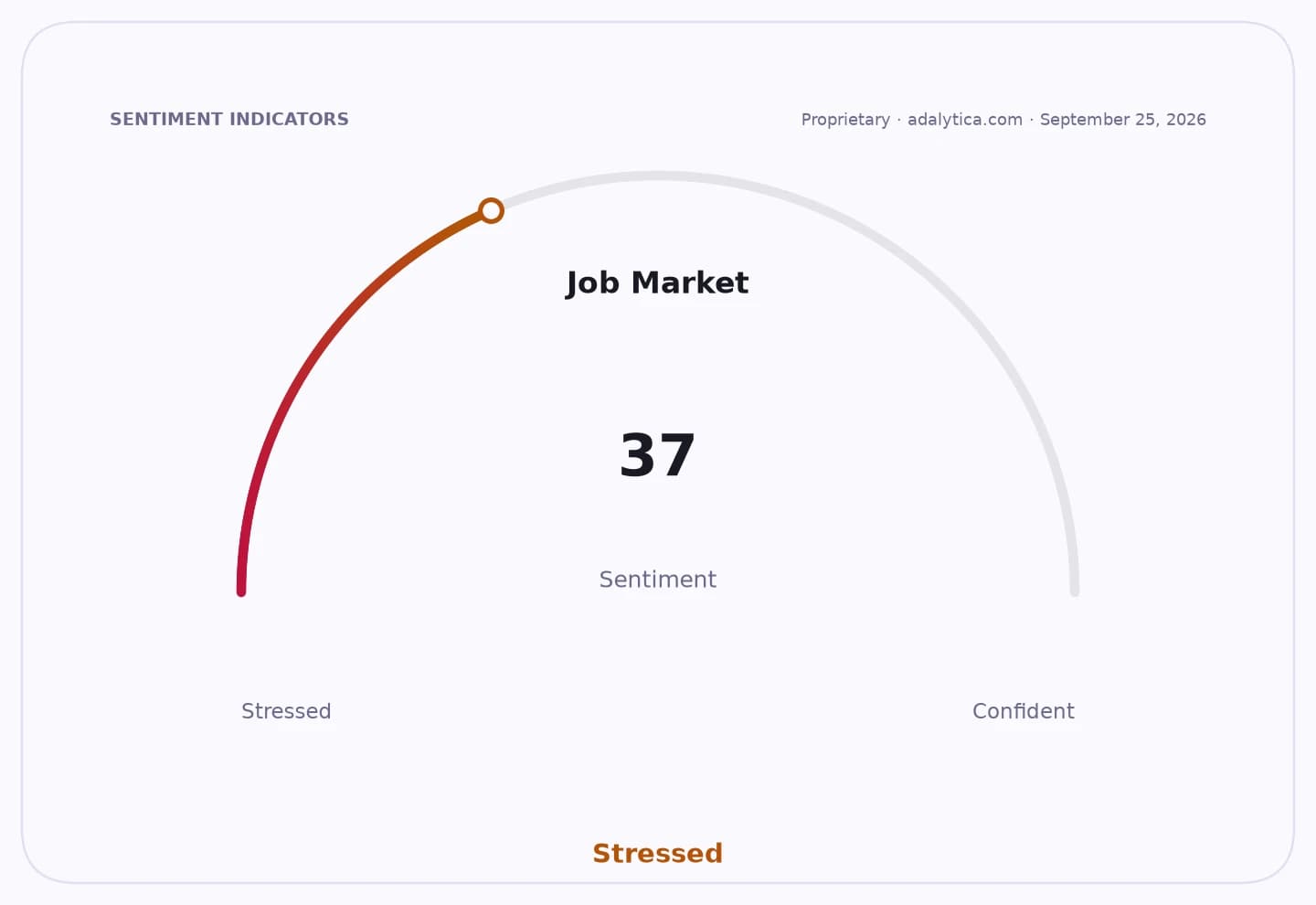
The market is already starting to price in a workforce that is both older and harder to grow. Adalytica’s Nonfarm Payrolls sentiment has surged to 71, while Job Market sentiment remains only neutral at 57, underscoring the tension between headline resilience and underlying stress. Meanwhile, the Dow Jones Industrial Average ETF, DIA, has climbed to about $537, and the industrials ETF, XLI, sits near $186, reflecting confidence in a soft landing. But if labor supply keeps tightening, that optimism may prove too complacent: wage pressure can reaccelerate even without a boom in demand, forcing the economy into a slower-growth, higher-cost regime.
The investment implication is clear. The biggest winners are likely to be automation, robotics, AI infrastructure, payroll software and logistics technology — the toll roads of a labor-constrained economy. The losers are companies that depend on abundant, low-cost labor and cannot lift productivity fast enough. If Trump’s immigration clampdown and the retirement wave both persist, the next trade is not just on employment data. It is on the businesses that can replace workers with capital, software and machine intelligence.
| Entity | Gains | Losses |
|---|---|---|
| Automation and AI suppliers | ▲Higher demand for productivity tools | ▼None |
| Labor-heavy retailers and restaurants | ▲— | ▼Higher wage and staffing costs |
| Industrials ETF XLI | ▲Cyclical exposure to capital spending | ▼Margin pressure from labor shortages |
| Consumer staples ETF XLP | ▲Defensive pricing power | ▼Limited upside if growth slows |