For job seekers, the labor market still looks like a place where opportunity exists, even as employers keep hiring at a slower, more selective pace.
U.S. Labor Market Holds Near 4.1% Unemployment

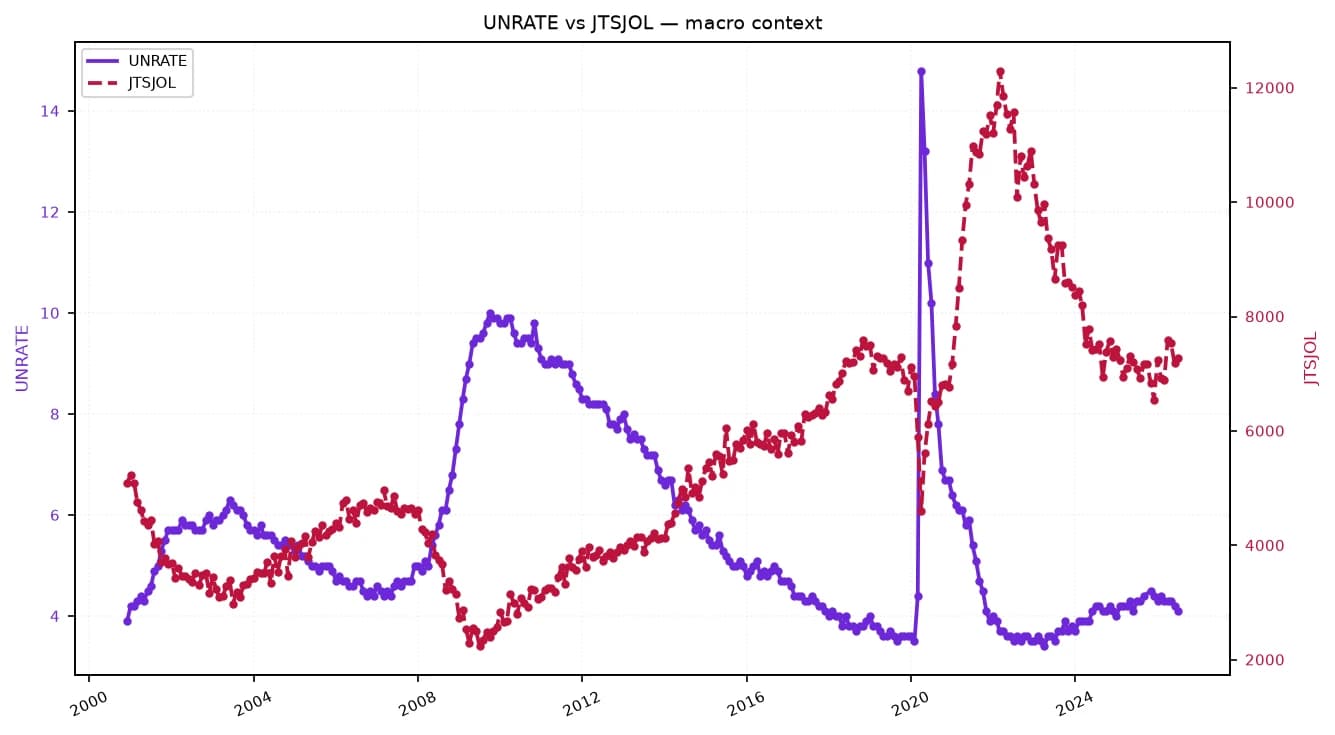
The most important development is that the U.S. unemployment rate is projected at 4.09% for August, after edging down to 4.1% in July from 4.2% in June and 4.3% in May. That keeps unemployment close to full-employment levels and reinforces the idea that this is not a recessionary jobs market, but one where workers still have leverage and firms are still adding headcount. Nonfarm payrolls are also expected to rise to 158,959,300 in August, extending a record-high employment base, while job openings are forecast to rebound to 7.7 million from 7.36 million in June.

That combination matters economically because it points to a labor market that is cooling, not cracking. Lower unemployment with still-elevated vacancies is the classic backdrop for wage support, consumer resilience and a slower but still-expanding economy. Employers are not pulling back broadly; they are choosing more carefully. For households, that means the next job may take longer to find, but openings remain plentiful enough to keep movement in the labor market alive. For policymakers, it suggests there is room to tolerate slower hiring without immediately sliding into contraction.
The data also show how unusual this cycle has been. Payrolls remain roughly 6.6 million above their pre-pandemic level, underscoring how much labor demand has been rebuilt since the shock of 2020. Job openings have come down from their 2021 peak above 11 million, but they are still well above the levels that defined the last expansion. In plain English, the labor market is no longer overheated, but it is still tight enough to favor workers with in-demand skills, especially in sectors tied to industrial activity, services and investment-led growth.
UNRATE vs JTSJOL — macro contextadalytica.com
Explore this data interactively — full history, time series and cross-market comparisons.Open AlphaPulse

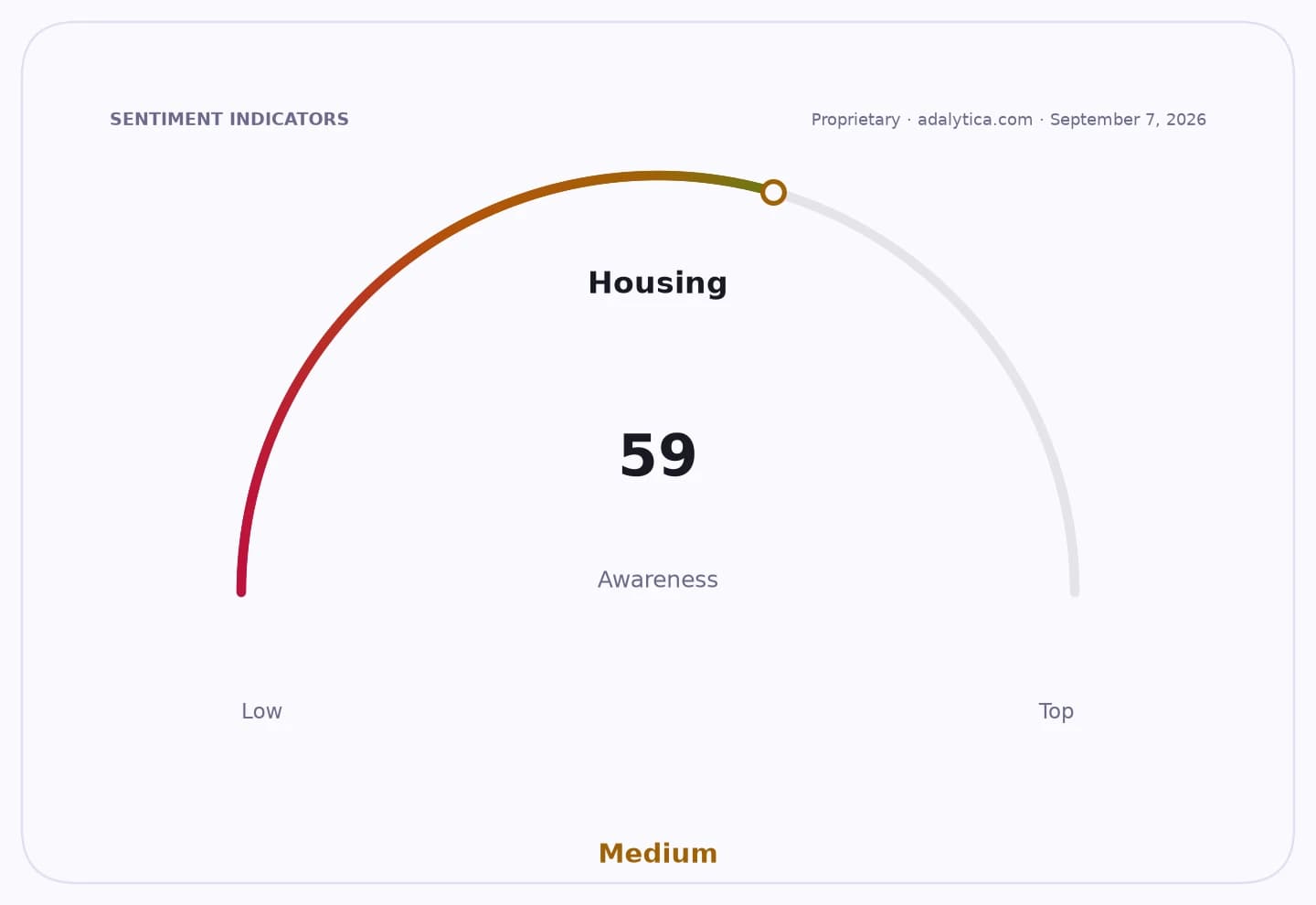
That is why this moment looks less like a warning and more like a choice point. Adalytica’s Job Market Sentiment gauge is at 82, labeled greed, while its Nonfarm Payrolls Sentiment reading is 78, also in greed territory, suggesting the market is leaning toward optimism rather than fear. Investors should read that carefully: a labor market that remains healthy while openings normalize tends to support earnings in consumer-facing businesses, staffing, industrials and training providers, even as it pressures firms with low productivity and excess labor costs.
The investable thesis is simple: the market underestimates the value of a still-functional hiring cycle. If unemployment stays near 4% and openings hold in the high 7-million range, the beneficiaries are the companies that help workers move, retrain and match into jobs faster. That includes staffing firms, online job platforms, payroll processors, and education and workforce-upskilling businesses. It also supports the broader market because employment is the backbone of spending, and spending is the backbone of profit growth.
The risk is not that jobs disappear overnight. It is that hiring becomes uneven. In that environment, the best assets are not the businesses counting on a boom, but the toll roads that profit from labor friction: recruiters, temp agencies, HR tech and payment rails that sit in the middle of the employment flow. If the labor market keeps softening only at the margins, those names can keep compounding even while headline macro data look ordinary.
For investors, the takeaway is to position for a labor market that is still open, still active and still creating optionality. The next leg of the cycle belongs to the companies that monetize job churn, not just job growth.
| Entity | Gains | Losses |
|---|---|---|
| Job seekers | ▲More openings, more leverage | ▼Slower hiring process |
| Staffing firms / recruiters | ▲Higher placement volume | ▼Cyclical hiring pauses |
| Employers | ▲Easier to fill roles | ▼Wage pressure persists |
| Consumer stocks | ▲Support from payroll growth | ▼If hiring cools further |