A Democratic gain in the 2026 US midterms would not remove Donald Trump’s power to govern, but it could make his second term far harder to execute on trade, immigration and foreign policy — the three channels through which Washington most directly affects India’s exporters, technology workers and energy bill.
US Midterms Could Hit India Trade and Energy
US Dollar
The biggest economic consequence is likely to be policy paralysis rather than policy reversal. The president would still control tariffs, visa enforcement and executive branch rules, but a Democratic Congress could slow, investigate and publicly challenge those moves, raising uncertainty for Indian companies that sell into the US, hire in the American labour market or depend on stable bilateral ties. For investors, that means more headline risk around Indian equities tied to US demand, cross-border services and imported energy, even if the broad strategic partnership with Washington remains intact.
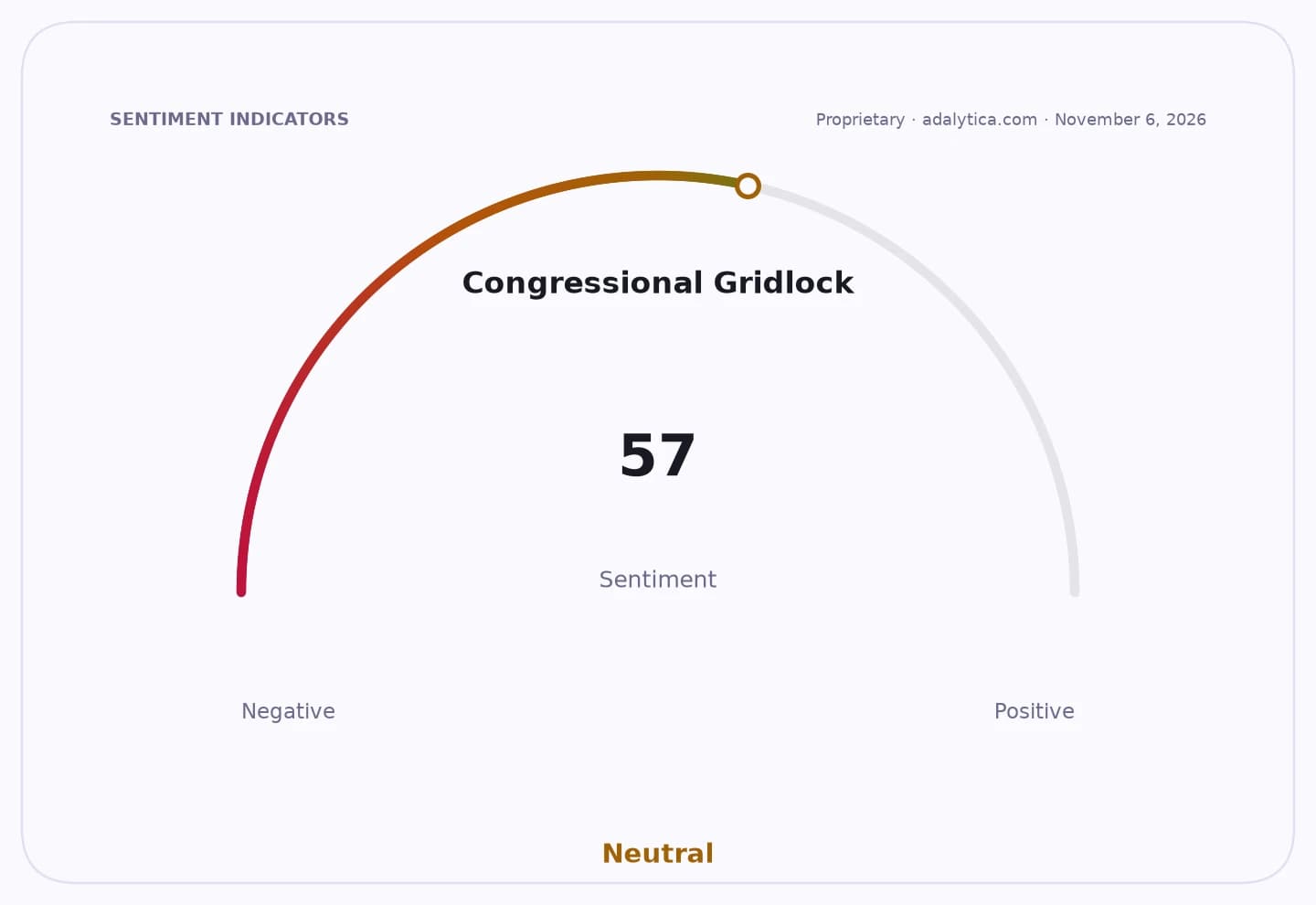
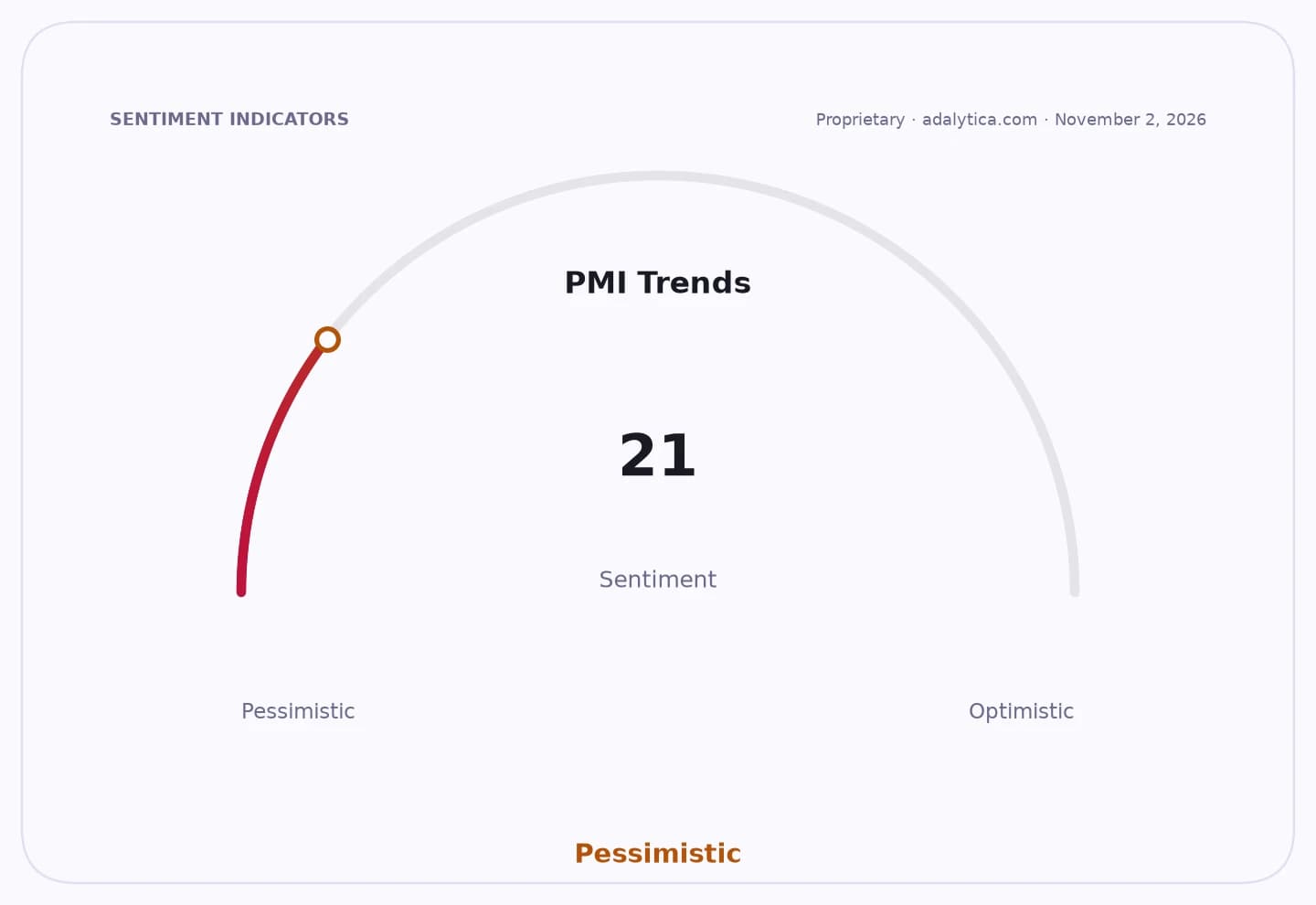
Sentiment Indicators
The scale of the election underscores how high the stakes are. AdImpact says political advertising spending and reservations had reached $11.21 billion by Oct. 26 and could finish near $11.6 billion, making this the most expensive midterm cycle ever and surpassing even the 2024 presidential contest. The result is also shaping market expectations for Trump’s final two years: a Republican loss of the House, and possibly the Senate, would weaken his leverage on spending, sanctions, trade legislation and immigration oversight.
Trump has already signalled he would answer a hostile Congress with vetoes, telling the New York Post he could become “Mr Veto.” That may satisfy his political base, but it would not solve the economic friction. Midterms do not work like presidential elections: there is no Electoral College to contest, and state-run voting and congressional certification limit any president’s ability to overturn results. The practical issue is therefore not rejection of the vote, but the prospect of gridlock once the vote is certified.
For India, the most direct exposure sits in trade and visas. Indian exporters have already faced erratic tariff policy under Trump, while proposed H-1B changes and stricter immigration rhetoric have unsettled technology firms and skilled workers. A Democratic Congress would be more likely to hold hearings, force disclosures and raise pressure on the White House over those policies, but it would not automatically unwind them because the president still has broad executive authority.
That leaves Indian labour-intensive exporters, IT services firms and pharmaceutical and electronics manufacturers exposed to a more uncertain operating environment. Weaker visibility on tariffs and customs rules can squeeze margins and lengthen payment cycles. Slower US hiring or tighter skilled-worker mobility would hit Indian IT and professional services more directly because their business models depend on American corporate spending and access to talent. The broader risk is that even modest policy changes can have outsized effects when companies are already managing thin margins and volatile demand.
Energy is the other important channel. WTI crude was forecast at about $105.26 a barrel for Oct. 28 in the data provided, after recent swings that included a move above $109 earlier in the month. Higher oil prices and freight costs matter because they feed directly into India’s import bill and household inflation. Any congressional shift that complicates sanctions policy, defence spending or Middle East strategy could alter the risk premium in energy markets, while a more confrontational Washington can also feed broader geopolitical volatility.
That matters to investors well beyond India-specific assets. The Indian ETF INDA has rebounded to $50.06, above its 50-day moving average of $47.83, while still below its 200-day average of $49.12, suggesting the market is recovering but not yet fully out of the woods. The Germany ETF EWG has also strengthened, but the more telling move is in energy: XLE fell to $62.98 on Nov. 4 from $70.02 four sessions earlier, even as its 50-day average remained near $64.96, showing how quickly energy-sensitive assets can reprice when political and supply assumptions shift.
The U.S. dollar signal is also relevant. Adalytica.com’s trade-signal snapshot shows dollar sentiment at 17, labelled “Fear,” with awareness at 89, or “Extreme Greed,” after a 45-point drop over 30 days. That combination points to heightened attention and unease around policy and macro risks. For India, a weaker or more volatile dollar can affect capital flows, import costs and the pricing of crude and technology inputs.
The bullish case for India is that divided government may restrain the most disruptive parts of Trump’s agenda. A Democratic Congress could make it harder for the White House to push through aggressive tariff policy or deeper immigration restrictions without pushback. The strategic logic of U.S.-India cooperation also remains intact because both parties still see value in countering China and deepening links in semiconductors, artificial intelligence and defence.
| Entity | Gains | Losses |
|---|---|---|
| Indian exporters | ▲More congressional scrutiny of tariffs | ▼Policy uncertainty and margin pressure |
| Indian IT and H-1B workers | ▲Potential relief from visa tightening | ▼Stricter immigration enforcement if Trump doubles down |
| Oil exporters and energy stocks | ▲Higher risk premium supports prices | ▼Importing economies face cost pressure |
| Trump White House | ▲Veto power and executive authority | ▼Legislative leverage if Democrats win Congress |