Mortgage rates in the U.S. have climbed to 6.66%, the highest in a year, underscoring how stubbornly high borrowing costs are keeping the housing market under pressure even as the Federal Reserve has eased off its tightening campaign.
U.S. mortgage rates rise to 6.66% as Treasury yields hold near 4.6%
That matters because housing is one of the clearest transmission channels from monetary policy to the real economy. When mortgage rates rise, monthly payments jump, affordability worsens and turnover slows, locking out first-time buyers and discouraging existing homeowners from moving. The latest move comes as the 10-year Treasury yield sits around 4.6%, a reminder that long-dated borrowing costs, not just the Fed funds rate, are now driving mortgage pricing.
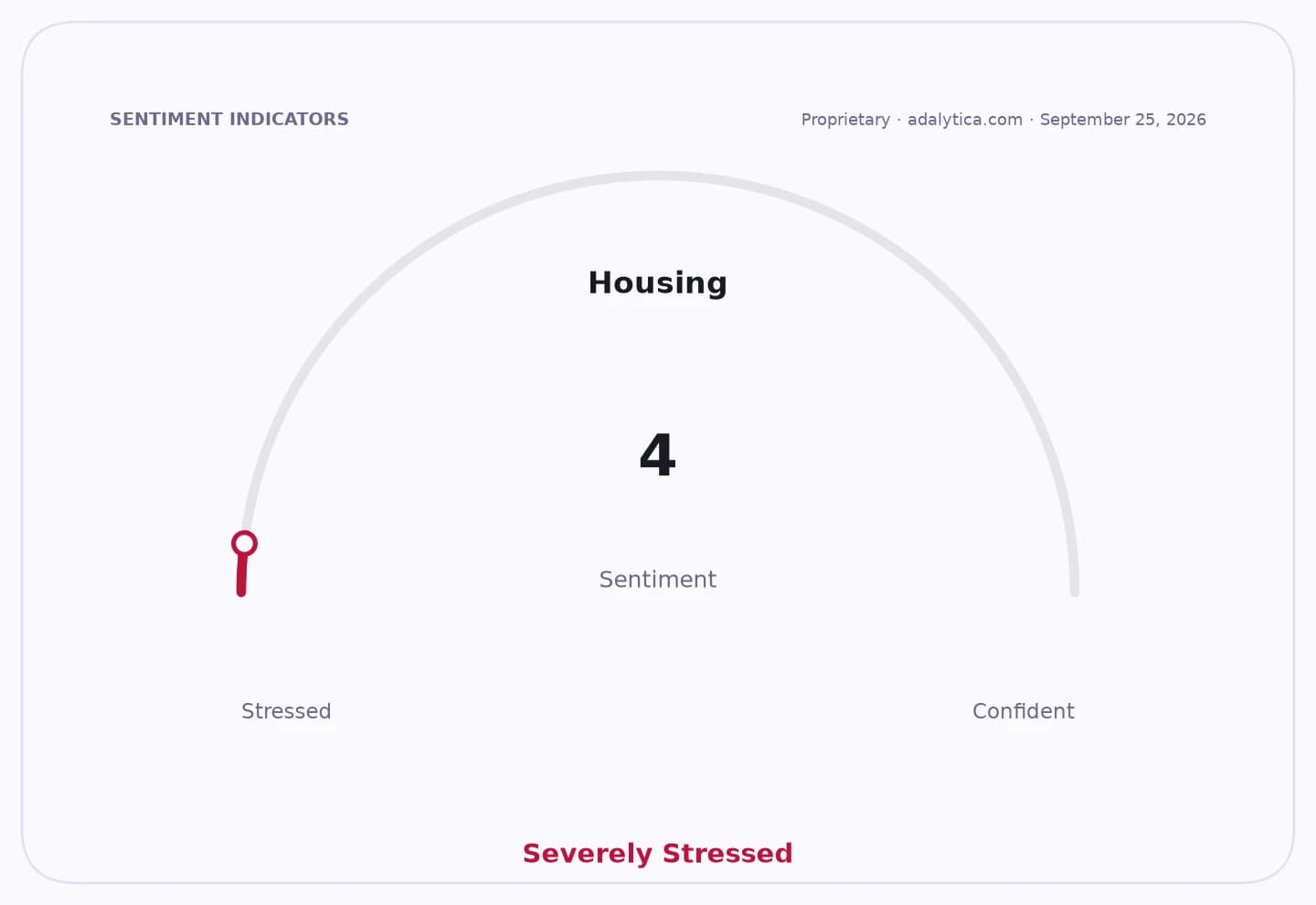
Sentiment IndicatorsⓘProprietary · adalytica.com · July 30, 2026
This is a snapshot — live sentiment, awareness and momentum for 130+ markets update continuously in the dashboard.Open AlphaPulse
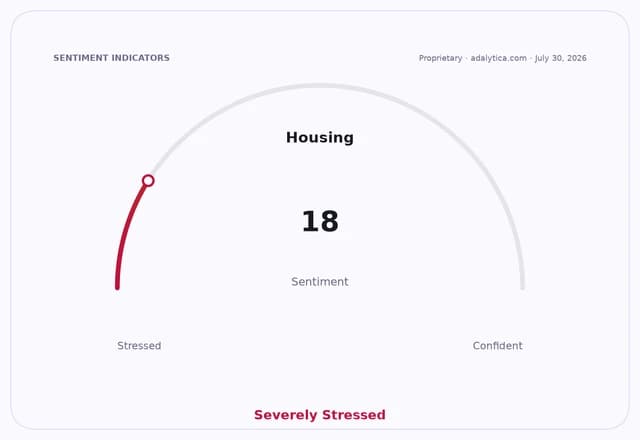
The market is already feeling it. Homebuilder ETF ITB has slipped to $95.54 from above $100 earlier in the month, while mortgage REIT proxy MBB has been stuck near $93, reflecting a market that is not expecting an easy retreat in financing costs. Adalytica’s Housing and Rent Inflation Sentiment gauge is in “Fear,” with awareness marked at “Extreme Fear,” a sign that investors and households alike are increasingly sensitive to the damage higher rates can do to demand.
For investors, the message is not simply that housing is weak. It is that the winners and losers are becoming more obvious. Higher rates can keep pressure on home sales, refinancing activity and housing-related transaction volumes, while benefiting investors positioned for sustained yield and away from rate-sensitive cyclicals. Mortgage insurers, lenders, homebuilders and title companies face a longer stretch of muted volumes, even if prices remain relatively firm because supply is still tight.
DGS10 vs FEDFUNDS — macro contextadalytica.com
Explore this data interactively — full history, time series and cross-market comparisons.Open AlphaPulse

The broader thesis is that the market may be underestimating how sticky mortgage pain can be once it reasserts itself. The Fed can cut the policy rate, but mortgage rates are still governed by the Treasury market, inflation expectations and term premium. Unless those ease decisively, the housing rebound remains on ice.
For investors, that argues for staying cautious on rate-sensitive housing names and looking instead at parts of the market that benefit from a higher-for-longer yield environment. In this setup, the next trade is not a quick housing recovery — it is a longer period of affordability stress, weaker transaction activity and continued pressure on the housing complex until bond yields break lower.
| Entity | Gains | Losses |
|---|---|---|
| Treasury bond holders | ▲Higher yield income | ▼Mark-to-market volatility |
| Homebuyers | ▲None | ▼Higher monthly payments |
| Homebuilders | ▲Scarce supply support | ▼Slower demand |
| Mortgage lenders/REITs | ▲Wider asset yields | ▼Lower refinancing volumes |