A $400,000 mortgage at today’s average 30-year fixed rate of 7.18% carries a principal-and-interest payment of about $2,700 a month, underscoring how elevated borrowing costs continue to squeeze housing affordability even as benchmark Treasury yields ease slightly.
US Mortgages Stay Near 7.18% as Treasury Yields Ease
Housing
The rate backdrop matters because mortgages remain pinned near the highest levels in years. The average 30-year loan has barely budged from 7.32% two weeks ago and is still far above the 2022 level of 4.99%, keeping monthly payments well above what many buyers budgeted when home prices were rising.
Sentiment Indicators
The pressure is showing up in the bond market too. The 10-year Treasury yield, a key benchmark for mortgage pricing, is at 4.86%, just below a recent 4.9% peak, while forecasts call for only a modest move lower to 4.829%. That leaves little relief for borrowers unless inflation cools faster or the Fed turns more dovish.
For investors, the message is twofold: housing demand is likely to stay constrained, and mortgage-related assets remain sensitive to every move in yields. Homebuilders, mortgage lenders and bond funds tied to duration all face a market where small rate changes can have outsized effects on sales, refinancing volumes and portfolio values.
DGS10 vs MORTGAGE30US — macro contextadalytica.com
Explore this data interactively — full history, time series and cross-market comparisons.
House prices are also still high enough to keep affordability stretched. The S&P CoreLogic Case-Shiller index remains elevated at 336.741, far above pre-pandemic levels, so even a modest dip in mortgage rates has not restored accessibility for many buyers.
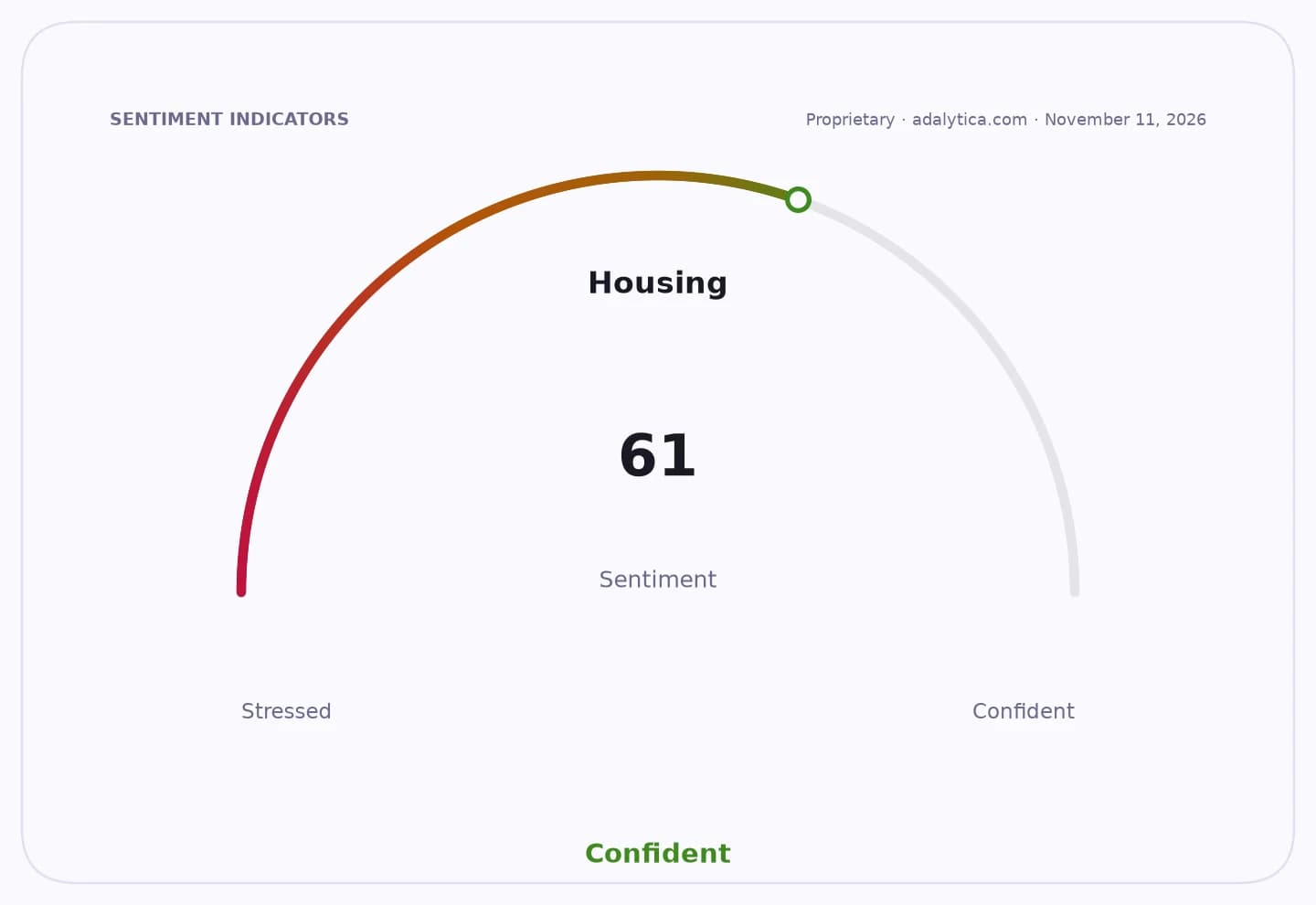
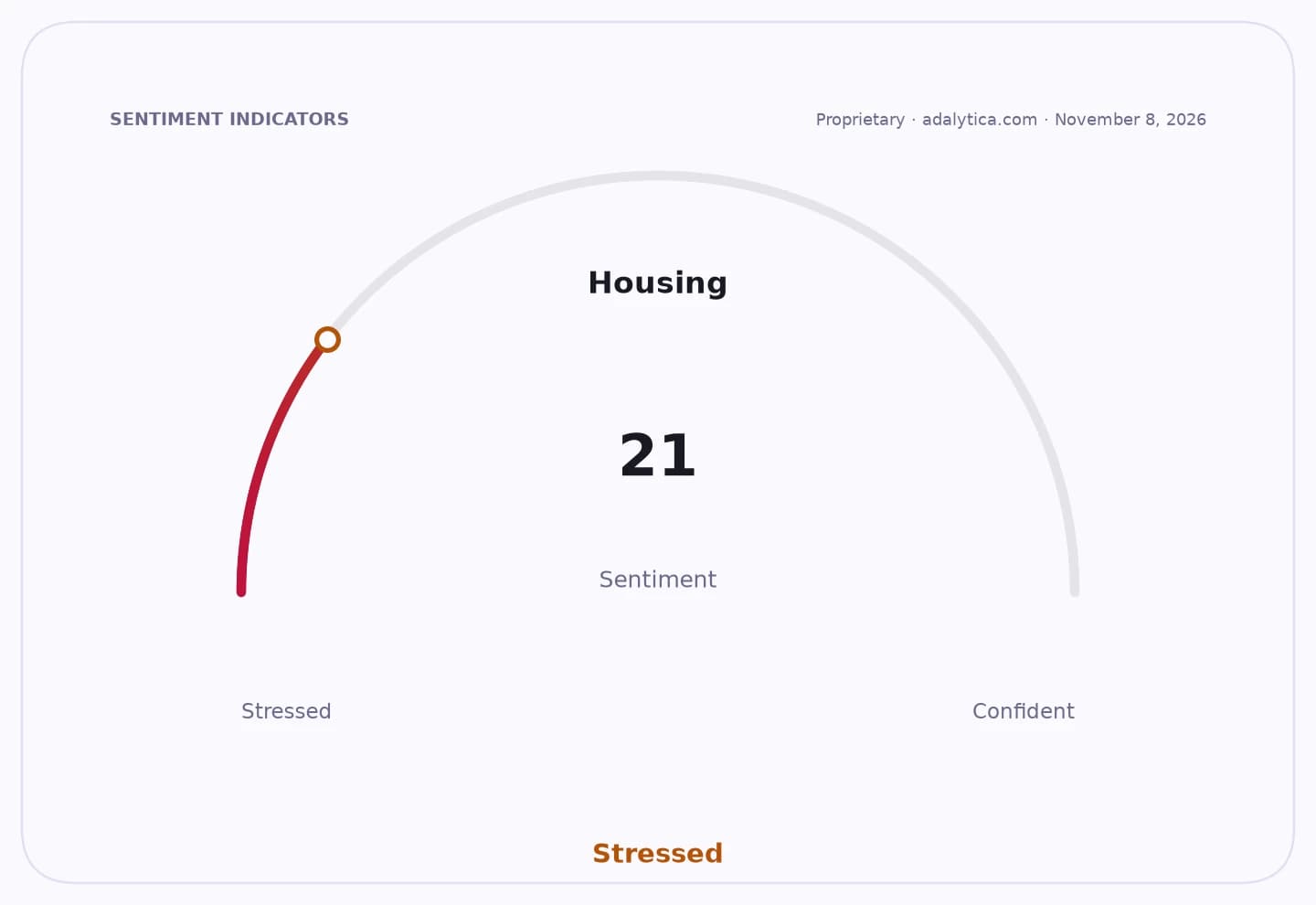
Adalytica’s Housing and Rent Inflation Sentiment gauge points to a neutral reading of 61, but with extreme fear in awareness terms, suggesting borrowers and investors remain highly alert to the risk of another leg higher in financing costs. The key catalyst from here is the next move in Treasury yields and any shift in Fed expectations that could pull mortgage rates lower or keep them locked near 7%.
| Entity | Gains | Losses |
|---|---|---|
| Treasury bond holders | ▲Higher yield income | ▼Lower bond prices if yields rise |
| Homebuyers | ▲Slight relief if rates ease | ▼Larger monthly payments at 7%+ |
| Home sellers | ▲Better demand if rates fall | ▼Slower sales at current financing costs |
| Mortgage lenders | ▲More origination if activity picks up | ▼Weak refinancing volumes |