U.S. natural gas production and demand are both on track to hit record highs in 2026, according to the Energy Information Administration, underscoring how a surge in LNG exports and power-sector consumption is reshaping the market even as prices remain volatile.
U.S. Natural Gas Output and Demand Seen at Records
The significance is less about a simple supply boom than about a market being pulled in two directions at once: enough output to keep volumes rising, but not enough slack to prevent repeated price swings when weather, storage or export demand tighten the balance. The EIA’s outlook points to dry gas production averaging 103 billion cubic feet per day in 2026, up from about 99.2 bcfd at the start of 2024, while demand rises to 67 bcfd, also a record. That combination implies a structurally larger and more liquid U.S. gas market, but one that is increasingly tied to LNG exports and domestic electricity demand rather than to traditional industrial consumption alone.
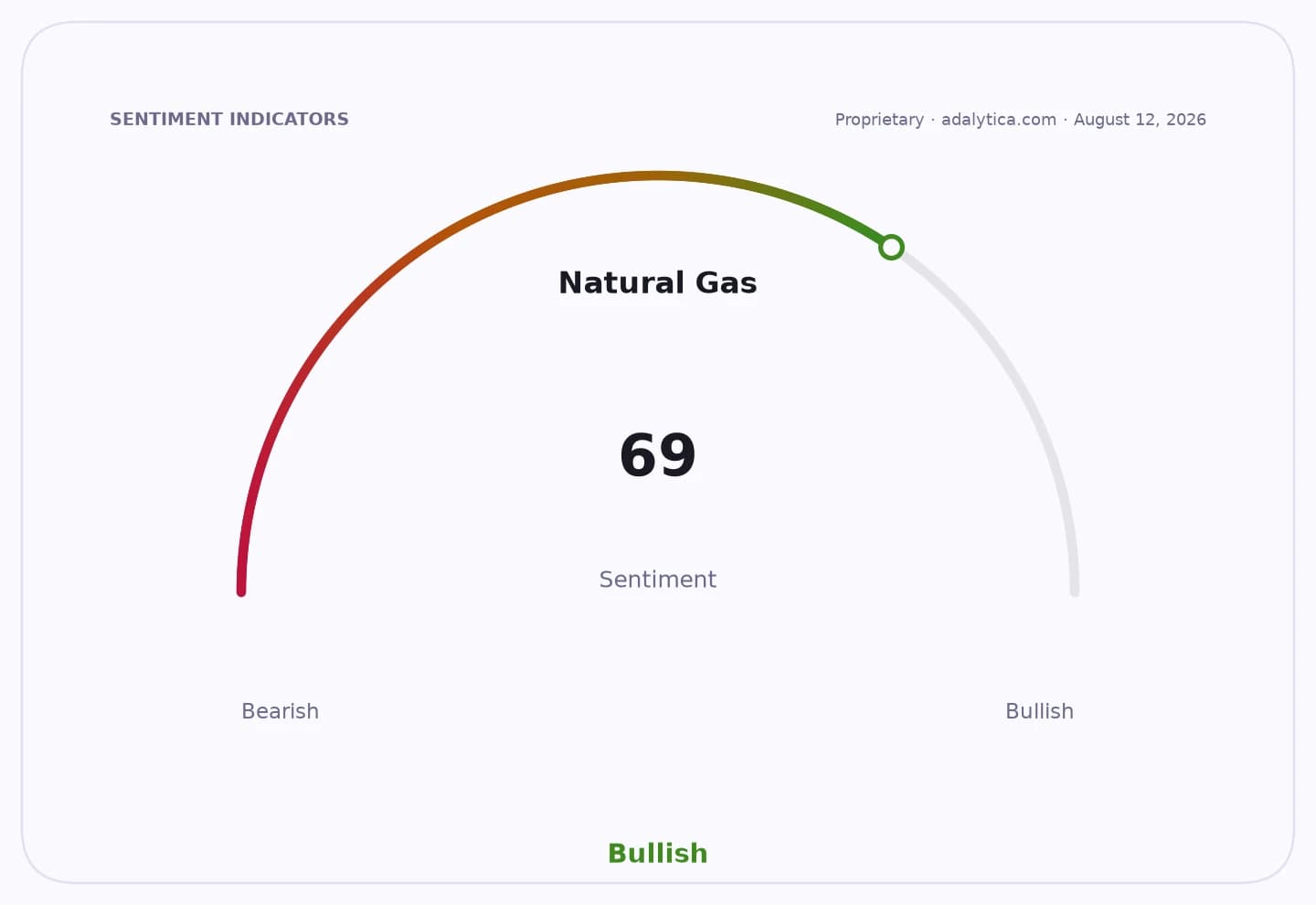
Sentiment IndicatorsⓘProprietary · adalytica.com · August 12, 2026
This is a snapshot — live sentiment, awareness and momentum for 130+ markets update continuously in the dashboard.Open AlphaPulse
For investors, that matters because it keeps the earnings outlook for gas producers, pipelines and LNG-linked infrastructure closely tied to volumes rather than just commodity prices. Higher output typically benefits producers with low-cost acreage and midstream firms that earn fee-based revenue on gathering, processing and transport. It also supports continued investment in export terminals and pipeline capacity. But it is less straightforward for pure commodity exposure. The U.S. Natural Gas Fund, which tracks front-month gas futures, has been volatile even as fundamentals improve, with the ETF recently around $10.07 after swinging as high as $16.90 in January. Standard technical indicators show the fund below its 200-day moving average and with RSI readings that point to a market still lacking sustained momentum.
The broader earnings backdrop in the sector has already reflected that mix of growth and margin pressure. Shares of the SPDR Energy Select Sector fund have climbed to about $60.93, while the SPDR Oil & Gas Exploration & Production ETF recently traded near $178.37, indicating investors are still willing to pay for energy cash flow, especially where capital discipline and production growth coexist. Producers with significant natural gas exposure, including Range Resources and EQT, have pointed to constructive longer-term pricing tied to LNG export expansion and rising power demand, even as near-term realized prices have softened in some basins.
The EIA forecast also fits a wider global squeeze. European gas prices have jumped to two-week highs on supply concerns and storage levels remain well below five-year averages, reinforcing the premium on reliable U.S. LNG supply. That keeps American gas central to the global energy mix, and it also helps explain why U.S. output can keep setting records without necessarily producing a sustained glut. Domestic supply growth is being absorbed offshore, by power generators and by industrial users, while export capacity continues to expand.
For markets, the key question is whether output can keep outrunning demand enough to cap prices, or whether LNG shipments and summer cooling demand will keep inventories tighter than headline production growth suggests. A record in both supply and demand points to a larger market, not necessarily an easier one, and that should keep volatility elevated for gas prices, while favoring producers, pipelines and LNG operators over unhedged commodity bulls.
| Entity | Gains | Losses |
|---|---|---|
| U.S. gas producers | ▲Higher volumes | ▼Price volatility |
| LNG exporters | ▲More feedgas supply | ▼Tight domestic balance |
| Pipelines and midstream firms | ▲Fee-based throughput | ▼Capacity bottlenecks |
| Gas consumers | ▲Greater supply availability | ▼Higher seasonal prices |