Public sector employment has pushed past 5.4 million, underscoring a labor market that is still adding workers even as private hiring looks more uneven.
U.S. public sector employment tops 5.4 million

That matters because government payrolls remain one of the steadiest sources of employment in the economy. When public hiring stays firm, it helps cushion the job market, supports household income and keeps consumer spending from weakening too quickly. For investors, that kind of stability can delay the kind of broad economic slowdown that typically pressures corporate earnings, but it can also keep the Federal Reserve cautious about cutting rates too aggressively.
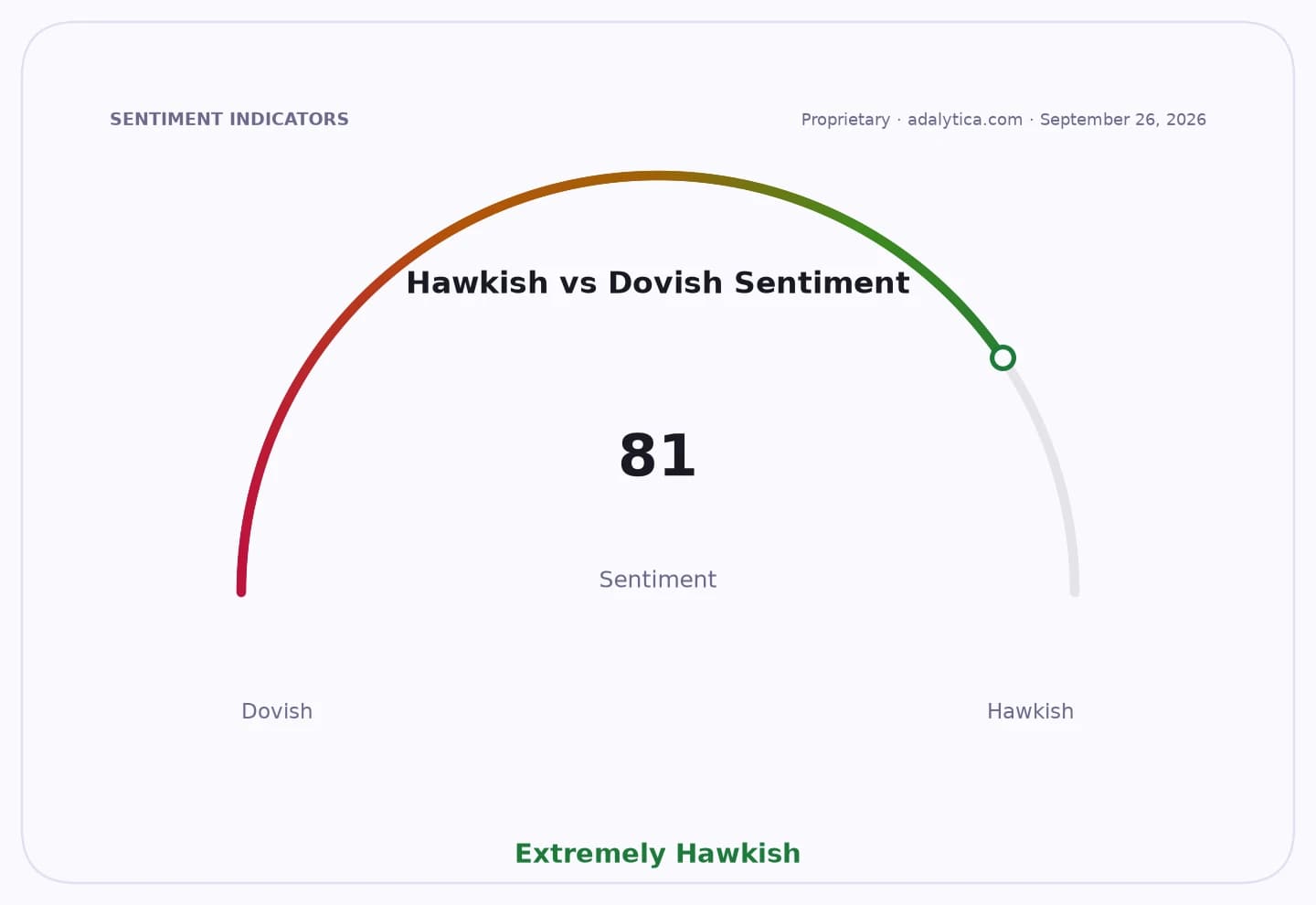
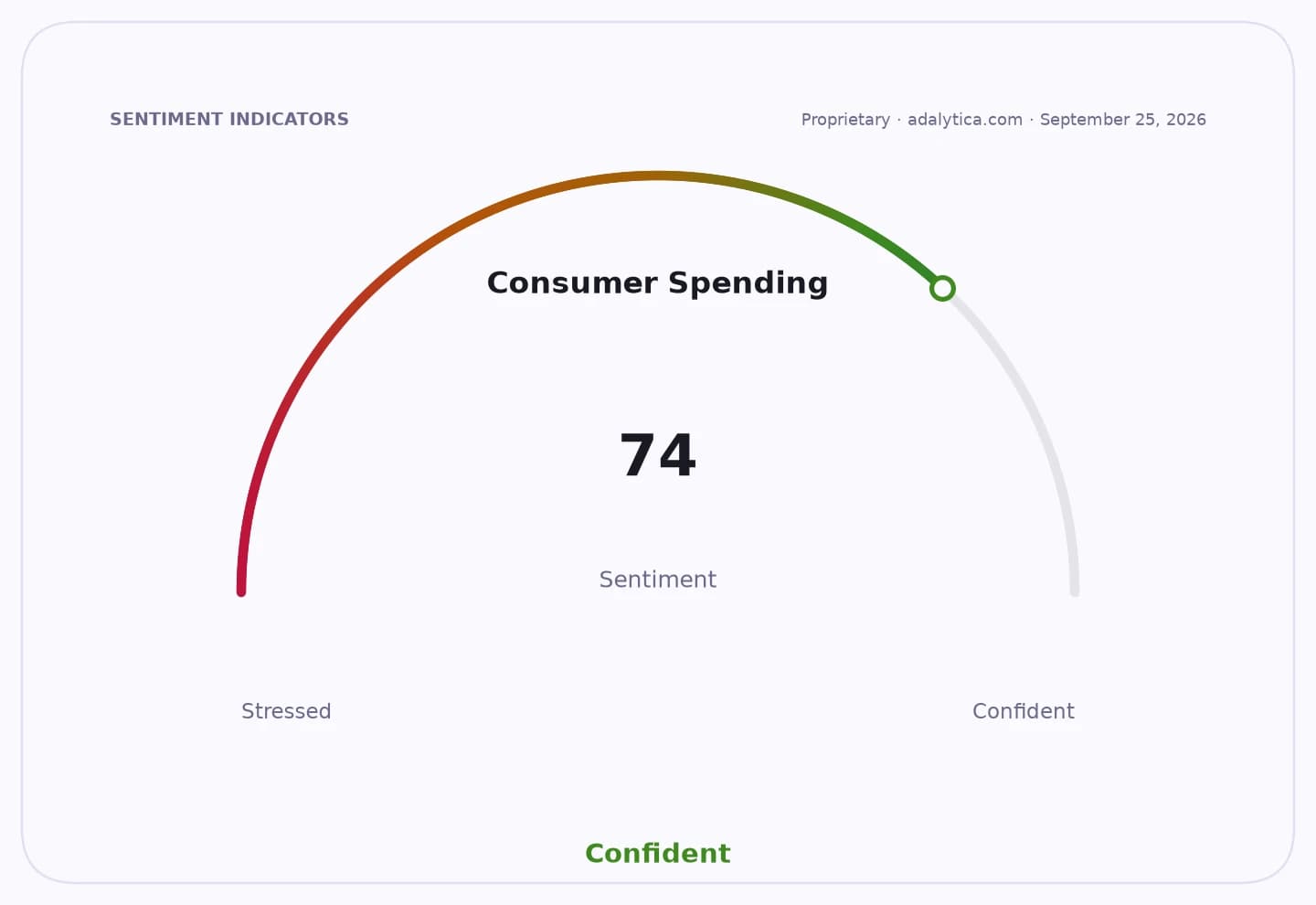
Sentiment IndicatorsⓘProprietary · adalytica.com · August 16, 2026
This is a snapshot — live sentiment, awareness and momentum for 130+ markets update continuously in the dashboard.Open AlphaPulse
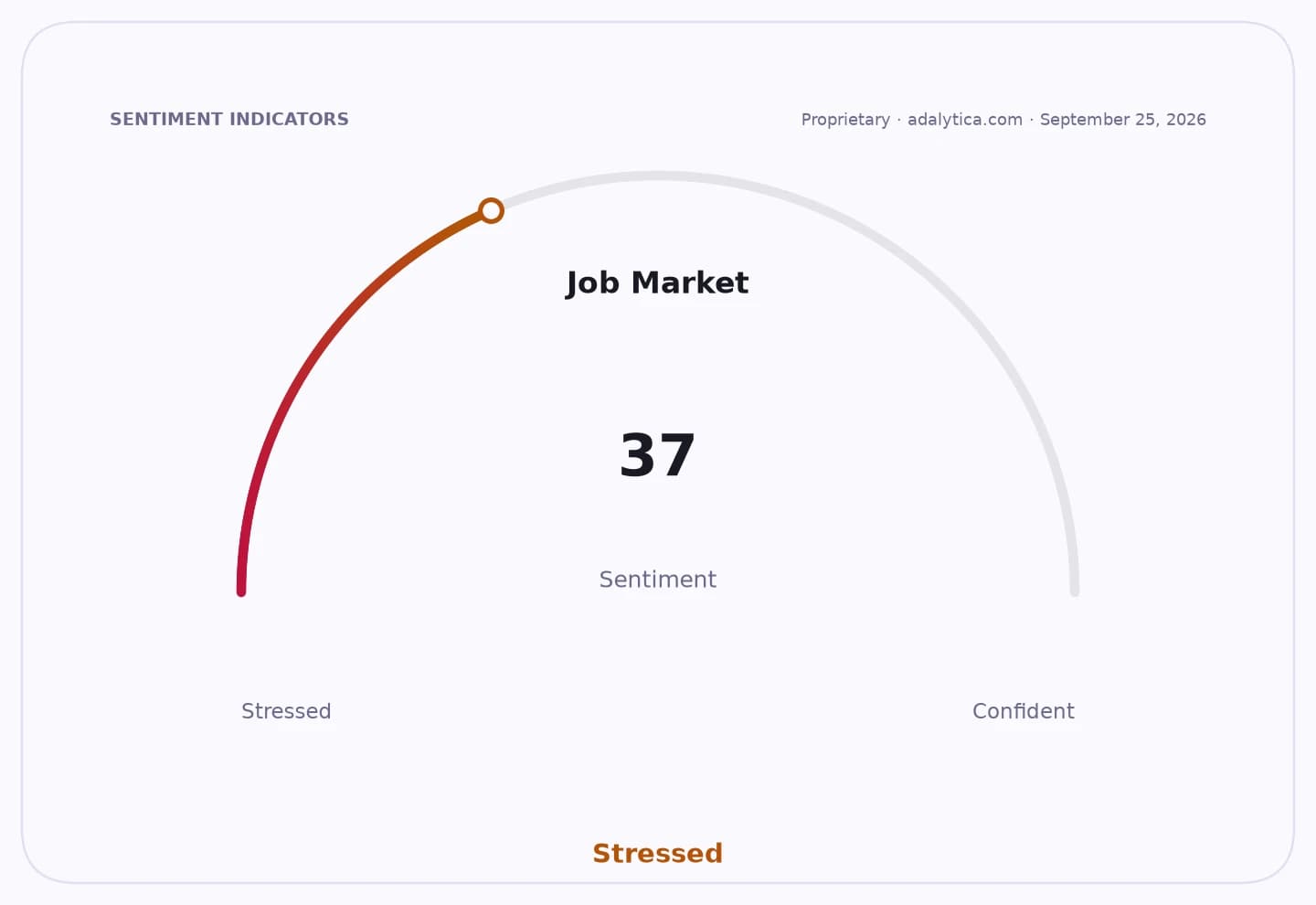
The latest figures show U.S. nonfarm payroll sentiment from Adalytica at 63, a neutral reading, while job-market sentiment sits deep in fear at 18, reflecting the mixed mood around hiring even as the hard data remain resilient. The unemployment rate has edged down to 4.1% from 4.2% and 4.3% in the prior two months, suggesting the labor market is not rolling over. Forecast data point to a slight further improvement to 4.09% in August.
Public employment near 5.4 million is not just a statistical milestone. It speaks to the role of schools, health systems, local governments and other public institutions in anchoring demand across the economy. Those jobs are less cyclical than private-sector positions, so they can soften downturns and keep spending circulating in everything from groceries to rent to local services. That is good news for consumer-facing companies, especially those dependent on steady wage growth.
Still, investors should not mistake resilience for acceleration. The private sector remains the engine of long-term job creation, and the mix of stronger public hiring with more uneven private-sector gains can tell you something important: the economy is still growing, but not with the kind of broad-based momentum that usually powers a sustained earnings boom. If labor demand cools later this year, rate-sensitive areas of the market could benefit; if it does not, the case for rapid monetary easing weakens.
For long-term investors, the key takeaway is simple: a labor market built on stable public employment is usually supportive of the real economy, but it can also keep policy tighter for longer. That means patience still matters. The best approach is to stay diversified, focus on companies with durable cash flow and strong moats, and treat labor-market strength as a reason to stay invested, not to chase the next headline. Worth watching.
| Entity | Gains | Losses |
|---|---|---|
| Public-sector workers | ▲Stable payrolls | ▼Less urgency for layoffs relief |
| Consumers | ▲Steadier income support | ▼Slower rate-cut relief |
| Private employers | ▲Easier hiring environment | ▼Wage competition from government jobs |
| Rate-sensitive stocks | ▲Potential eventual Fed easing | ▼Tighter policy for longer |