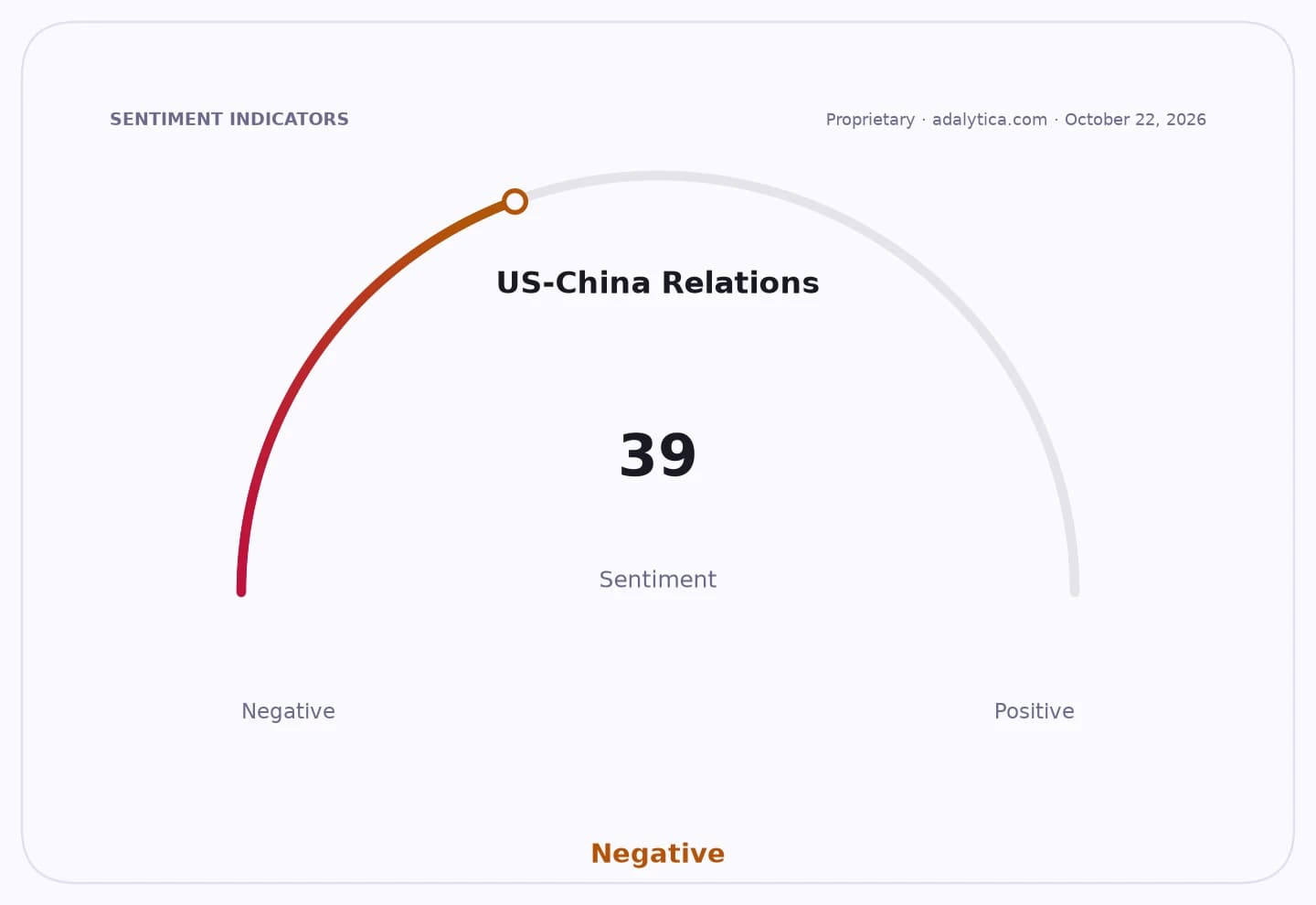
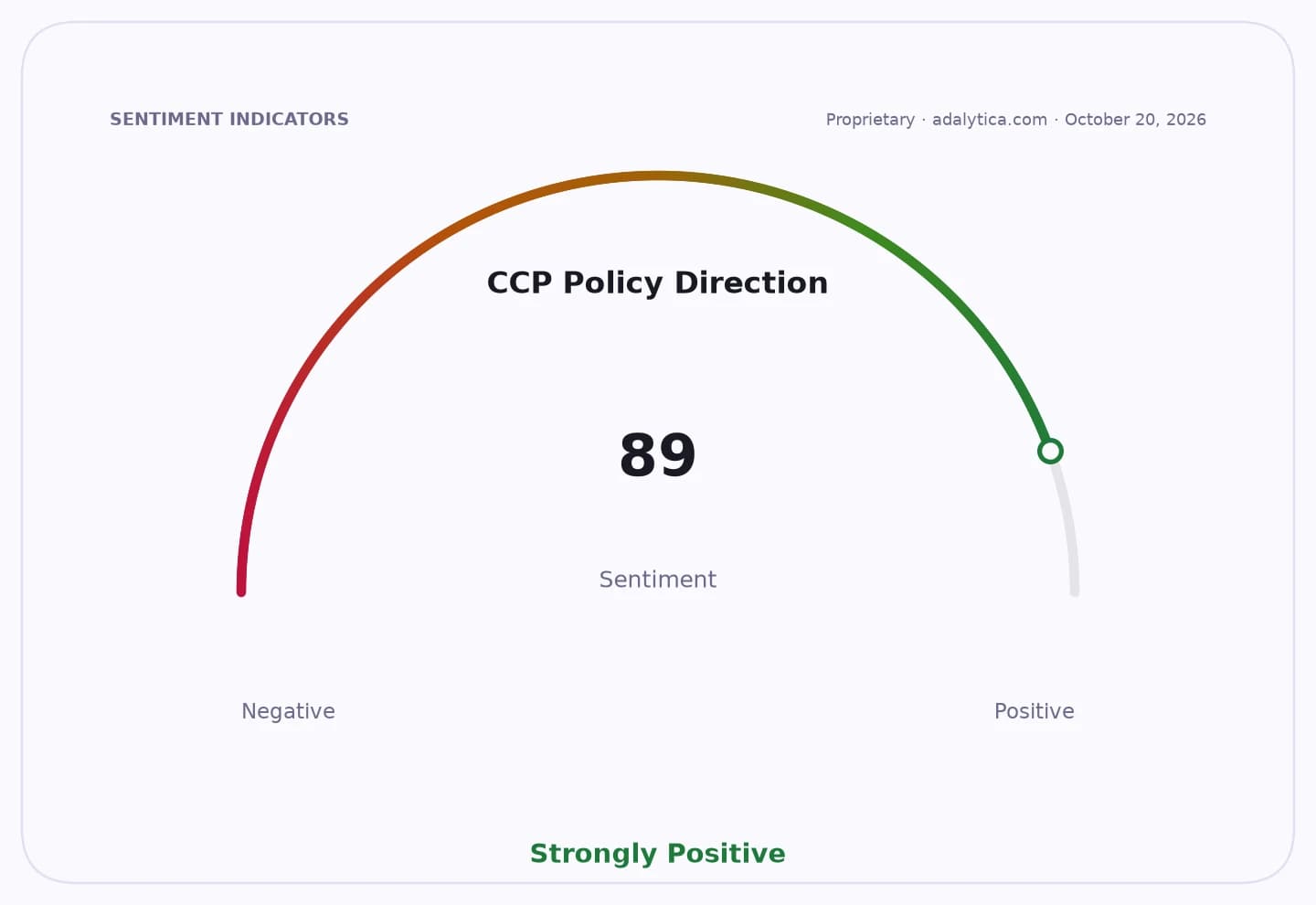
A bipartisan commission says the U.S. is winning the robotics brain wars but losing the factory-floor race, a gap that could decide who controls the next decade of industrial productivity, supply chains and defense manufacturing.
U.S. Robotics Deployment Lags China, Commission Says
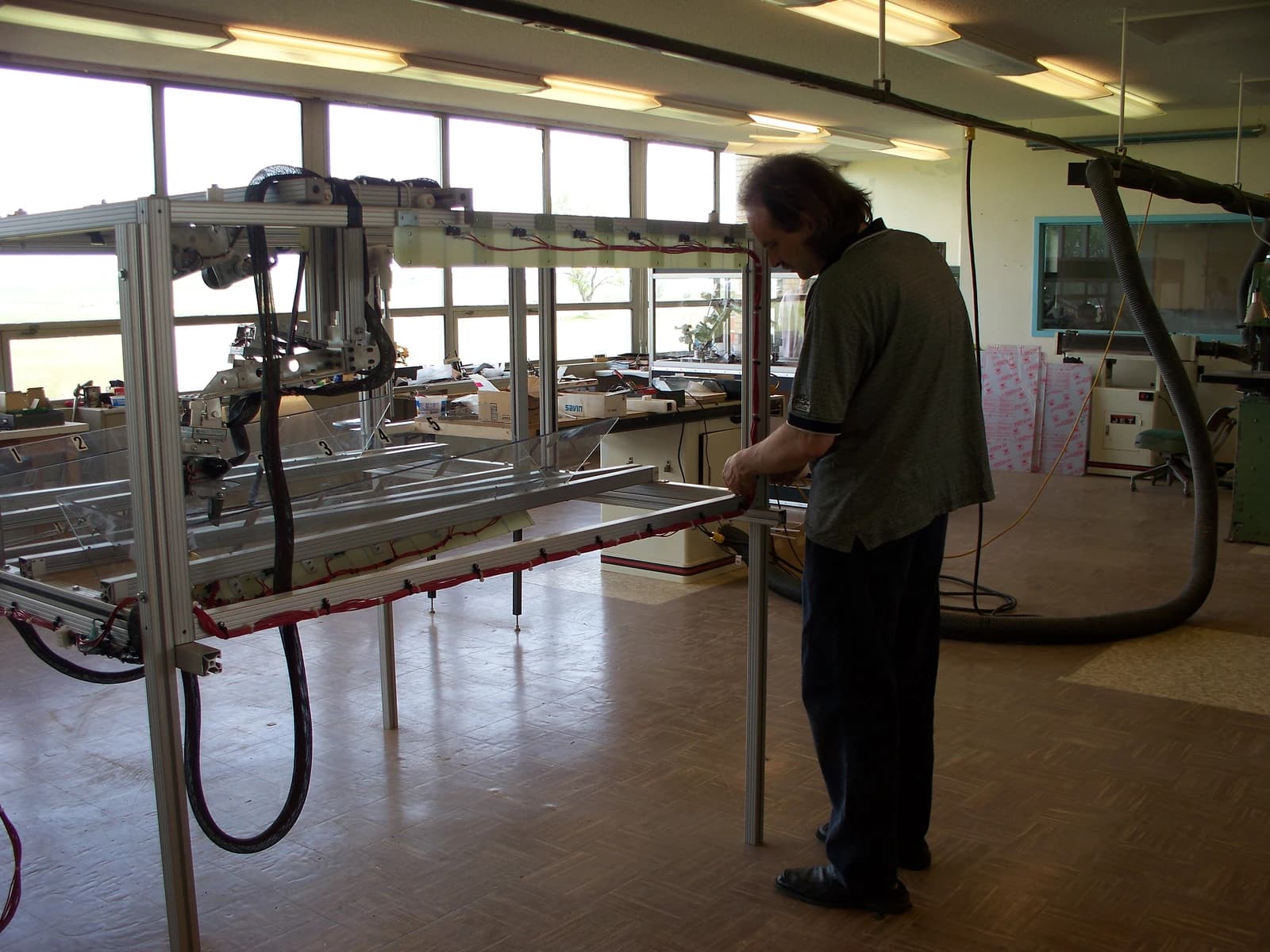
That matters because robotics is no longer just a factory efficiency story. It is becoming a national-capacity issue tied to reshoring, labor shortages, critical components and geopolitical resilience. The commission’s warning is blunt: America has the software, autonomy and AI leadership, but not enough deployment scale to turn that edge into durable industrial power.
Sentiment IndicatorsⓘProprietary · adalytica.com · October 14, 2026
This is a snapshot — live sentiment, awareness and momentum for 130+ markets update continuously in the dashboard.Open AlphaPulse
The National Security Commission on Robotics for Advanced Manufacturing, released Oct. 13, says China installed about 354,200 industrial robots in 2025, or 59% of global installations, versus roughly 38,400 in the United States. By the end of 2024, Chinese factories were running more than two million industrial robots, more than five times the U.S. stock of 393,700. The U.S. ranked only eighth globally in robot density in 2024, with about 307 robots per 10,000 manufacturing workers.
For investors, that is the setup for a long-cycle capital allocation shift. The market still tends to treat robotics as a niche automation theme, but the commission is describing the early stages of an industrial arms race. If the U.S. is serious about reindustrialization, automation adoption has to accelerate across automotive, electronics, logistics, semiconductors and small and medium-sized manufacturers that make up about 95% of U.S. firms. That creates a multi-year runway for robotics vendors, machine-vision suppliers, motion-control companies, industrial software providers and AI-chip makers.
The report also exposes why the U.S. has underinvested. Manufacturers want robots that are cheaper, more adaptable and proven; robotics firms need deployment volume to get there. That first-mover problem is a classic market failure, which means public policy, procurement and industrial incentives may have to do the heavy lifting before private adoption reaches critical mass.
China’s dominance in the physical supply chain is another reason this matters. The report says China controlled about 60% of global rare-earth mine production, 91% of refined output and 94% of sintered permanent-magnet production in 2024, and that export restrictions in 2025 disrupted supply chains in the U.S. and allied economies. In other words, the robotics race is not just about software and sensors; it is also about magnets, motors, actuators, power systems and domestic manufacturing depth.
That is why the winners are likely to be the picks-and-shovels names, not just the headline robot makers. Nvidia is already central to the compute stack that powers physical AI, and its stock remains structurally supported by the broader automation and autonomy buildout even after sharp swings in momentum. Automation suppliers, industrial test-equipment vendors and factory-integrator chains can also benefit as manufacturers move from pilot projects to scaled deployments. The commission’s warning implies that the next leg of the AI trade may be less about model training and more about embodied AI in warehouses, plants and field operations.
The national-security angle adds another layer of urgency. The report cites cybersecurity vulnerabilities in foreign-made robot devices and a 2026 national security determination that put foreign-produced advanced robotic devices on the FCC’s Covered List. That raises the probability of tighter procurement standards, more domestic sourcing and a preference for allied suppliers in sensitive sectors.
The most investable takeaway is simple: the U.S. is late to robot deployment, but that is exactly why the opportunity is asymmetric. I believe the market underestimates how quickly automation spending can become a strategic priority once labor scarcity, reshoring and supply-chain security collide. The best position now is in the enablers of physical AI — compute, industrial automation, vision systems, controls, and manufacturing software — before the policy and capex cycle fully inflects.
The commission’s final report is due in March 2027, and that gives investors a clear catalyst path: more federal coordination, more industrial-policy support and more capital flowing into the companies that help America close the deployment gap with China.
| Entity | Gains | Losses |
|---|---|---|
| U.S. robotics suppliers | ▲Deployment-driven demand | ▼ |
| China industrial robotics ecosystem | ▲ | ▼U.S. policy push, allied sourcing |
| Nvidia and AI compute providers | ▲Physical AI capex cycle | ▼ |
| U.S. manufacturers | ▲Productivity gains, automation | ▼Labor-constraint pressure |