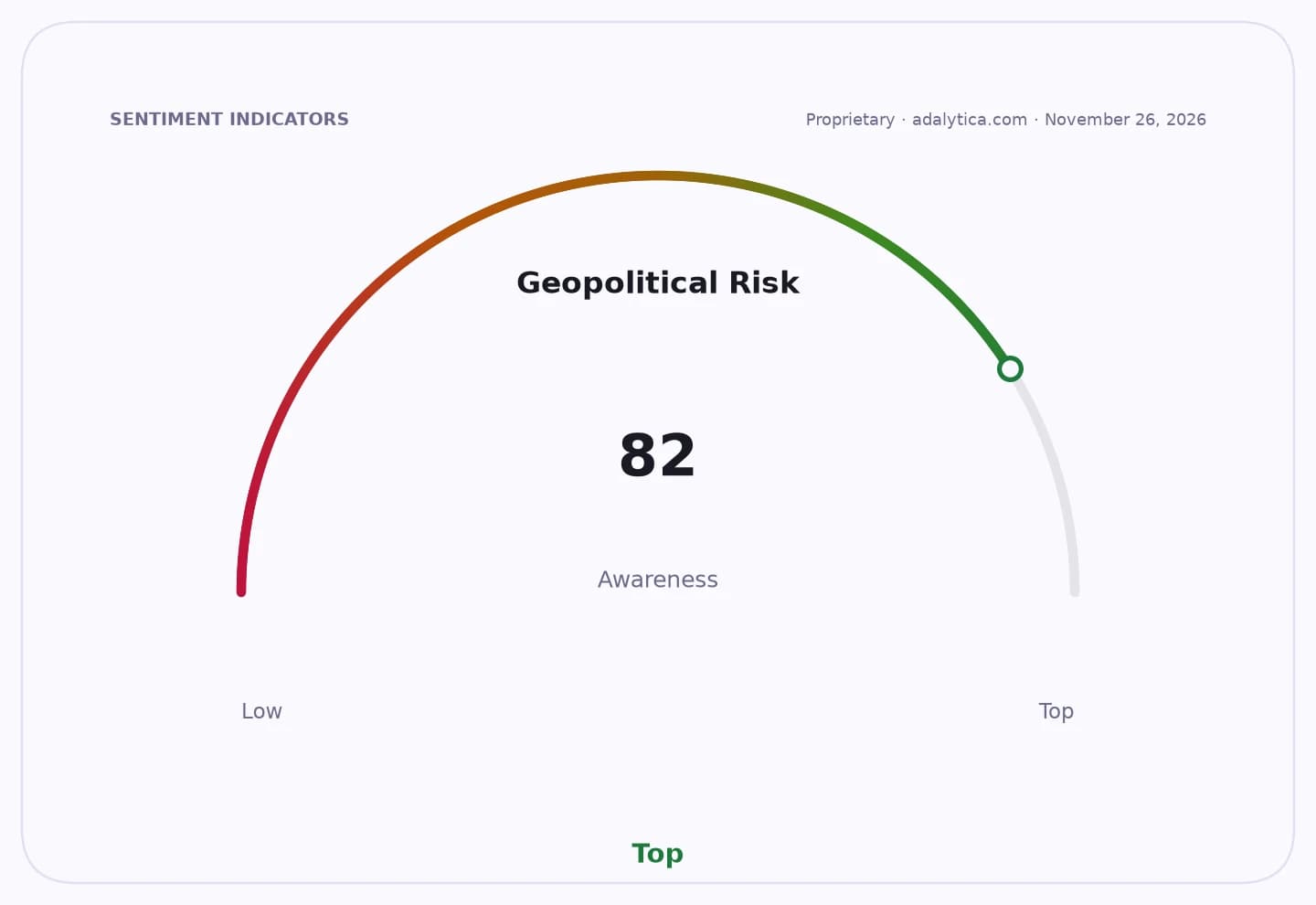
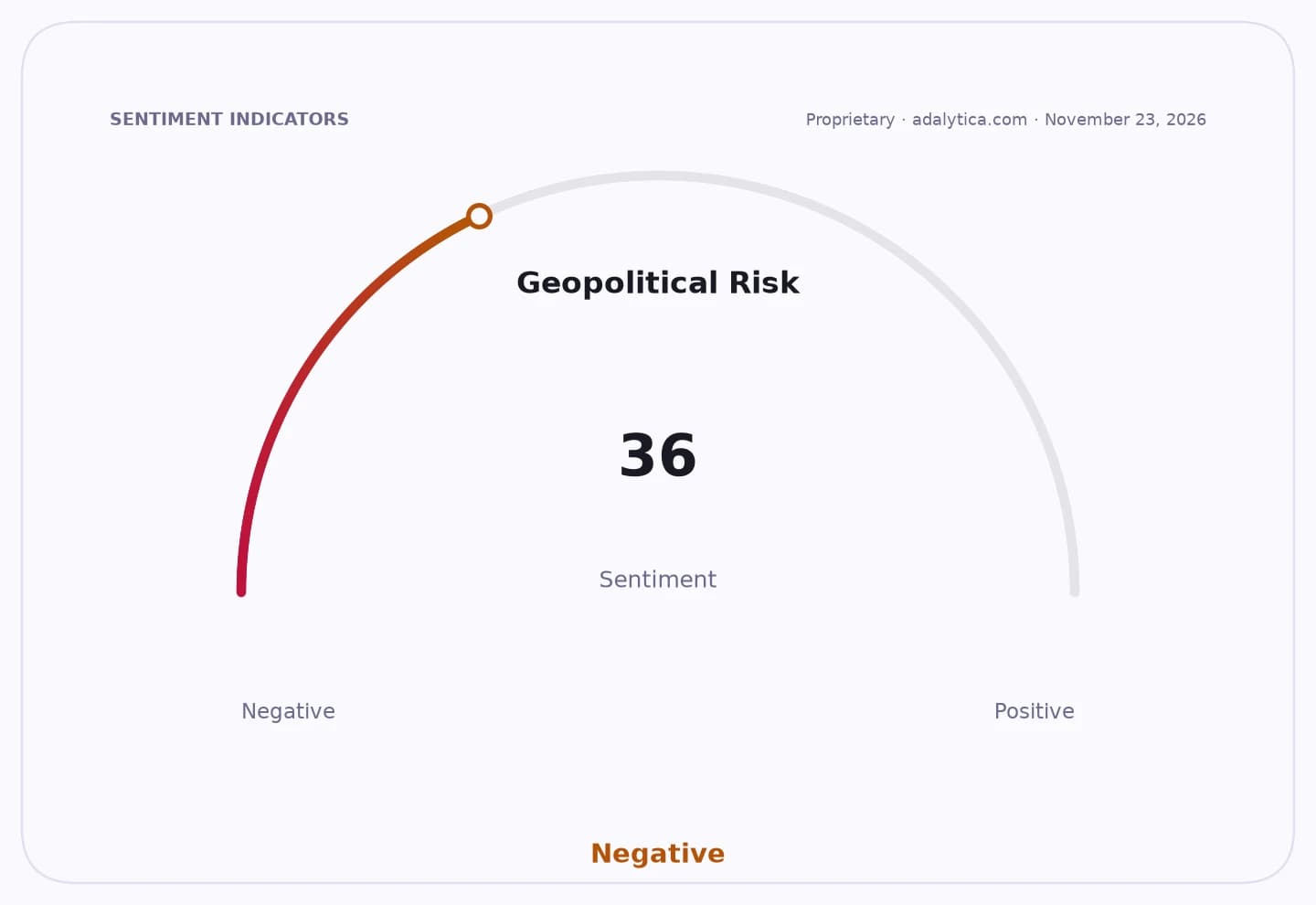
The United States is widening its crackdown on Iran’s offshore payment channels, a move that raises the cost of moving oil revenue through the global banking system and adds another layer of geopolitical risk for large international lenders with cross-border reach.
US sanctions Iran oil payment networks
Washington said it is targeting nearly $15 billion in suspected Iranian shadow banking networks, including four Iranian citizens and entities tied to the collection of oil proceeds. The action is aimed at choking off capital inflows to Tehran and comes as tensions around the Strait of Hormuz remain elevated, with tanker incidents and suspected attacks underscoring the vulnerability of energy and trade routes.
Sentiment Indicators
For investors, the significance is less about direct earnings exposure than about compliance risk, sanctions screening and the possibility of spillover into correspondent banking. Major global banks such as JPMorgan Chase, Citigroup and HSBC operate extensive international franchises, and even if they are not the target of the measures, the tighter enforcement environment typically means more monitoring costs, more legal scrutiny and a higher bar for dollar-clearing activity involving the Middle East.
The sanctions also land at a time when Treasury yields remain elevated, with the 10-year US note around 4.9%, keeping global dollar funding expensive and amplifying pressure on opaque financing structures. A stronger dollar backdrop and tighter liquidity conditions can make it harder for sanctioned actors to disguise flows, but they can also increase volatility in trade finance and emerging-market payment routes.
Bank shares have been under pressure in recent sessions. JPMorgan shares are trading around $316.74, down sharply from a recent high above $352, while Citigroup is near $113.33 and HSBC about $81.81, both well below their recent peaks, reflecting a broader pullback in financials and caution around global exposure.
Adalytica’s Treasury Purchase Sentiment Outlook remains in “fear,” while its US dollar trade signals also sit in fear territory, reinforcing a market backdrop that favors defensive positioning over risk-taking in cross-border credit and trade flows. The next catalyst is likely to be additional sanctions enforcement or a retaliatory response from Tehran, which could further tighten scrutiny on banks and shipping-linked payment channels.
| Entity | Gains | Losses |
|---|---|---|
| US Treasury | ▲stronger sanctions leverage | ▼higher enforcement burden |
| Iran shadow banking network | ▲none | ▼oil-revenue access |
| JPMorgan, Citi, HSBC | ▲compliance clarity | ▼more screening and legal risk |
| Oil traders / shippers | ▲tighter rule visibility | ▼higher payment friction |