Dozens of U.S. senators are pressing President Donald Trump to cancel his newly announced diesel arrangement with Russia, a move that could determine whether Washington leans into energy pragmatism or hardens sanctions on Moscow at a moment of elevated fuel prices and geopolitical risk.
U.S. senators press Trump on Russia diesel deal
The market significance is less about the tiny physical flow of diesel than the signal it sends. If the White House follows through on a deal that eases restrictions on Russian energy, it risks undercutting the sanctions regime built around the Ukraine war and handing Moscow another source of hard currency. If it retreats, diesel markets may stay tighter for longer, but the political cost would be lower than opening a sanction loophole that could outlive today’s price spike.
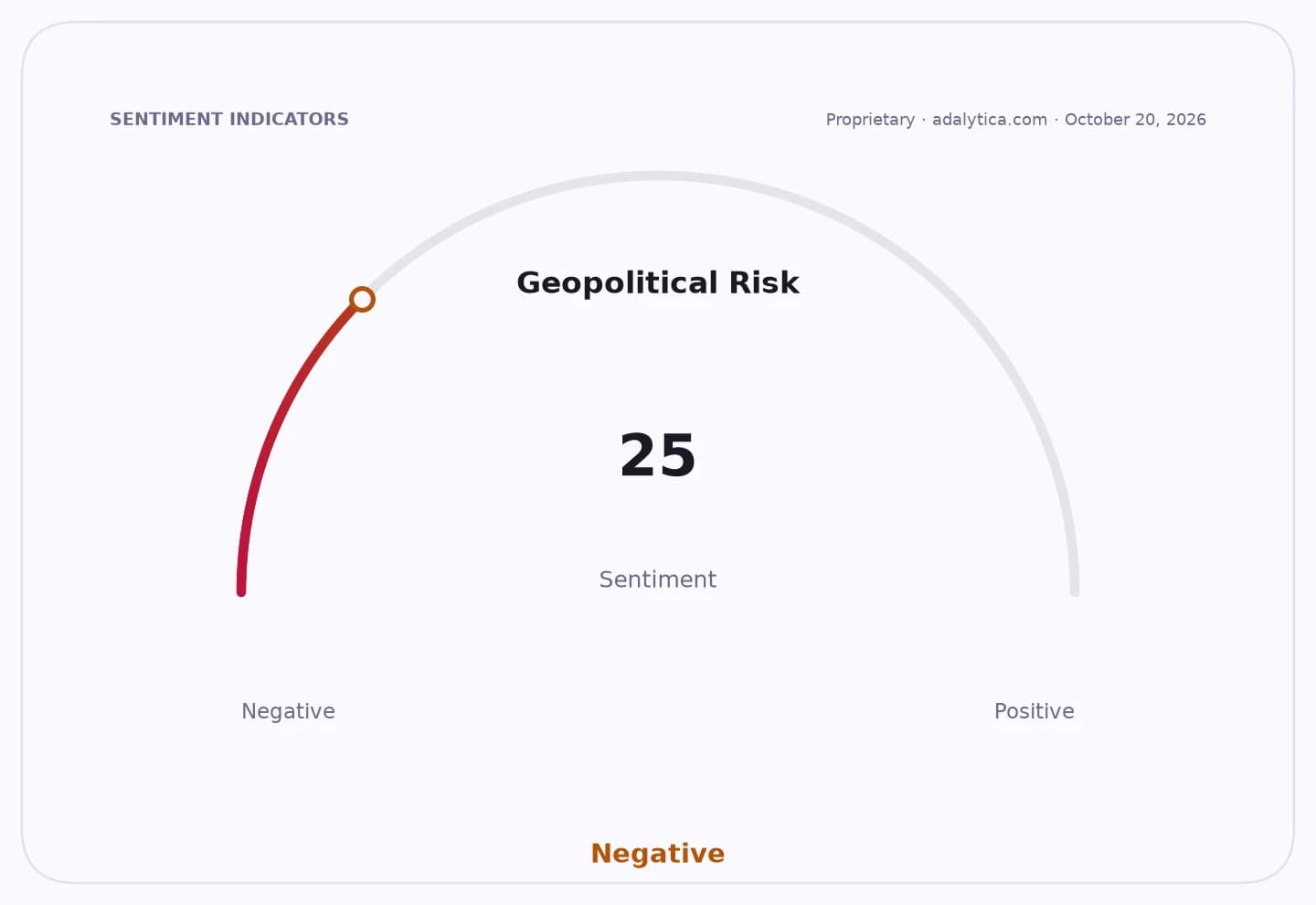
Sentiment IndicatorsⓘProprietary · adalytica.com · October 15, 2026
This is a snapshot — live sentiment, awareness and momentum for 130+ markets update continuously in the dashboard.Open AlphaPulse
The senators’ letter — backed by six Republicans, including Thom Tillis, Susan Collins, Lisa Murkowski, Mitch McConnell and John Cornyn — argues that letting Russian diesel into global markets would be a gift to an adversary and a betrayal of Ukraine. That framing matters because it raises the odds of congressional resistance just as Trump tries to sell the deal as a way to cool diesel prices.
The economic case for the agreement looks thin. Even critics say any diesel relief would be marginal relative to U.S. consumption, while Russia would gain a fresh outlet for refined products at a time when its energy sector remains a critical wartime revenue engine. In practical terms, the deal looks more like a geopolitical concession than a meaningful supply fix.
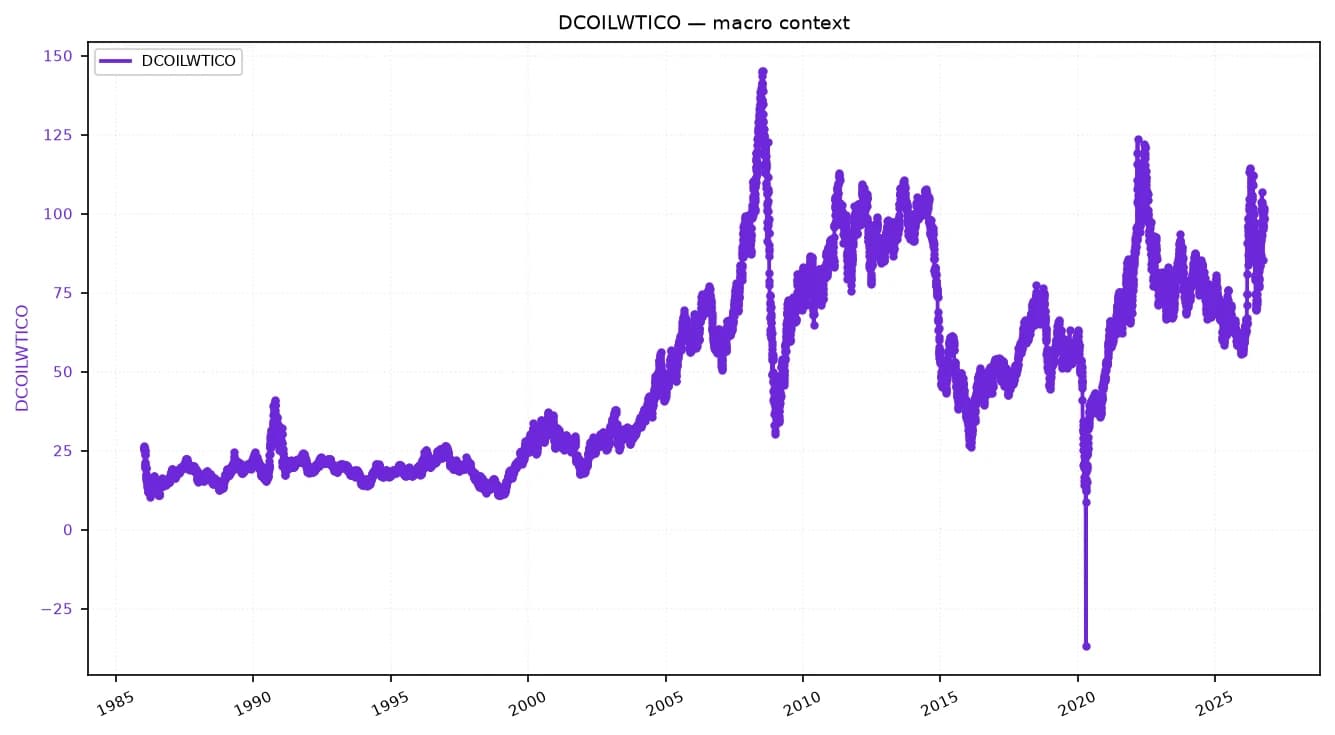
That is why investors should focus on second-order effects. Refiners and fuel distributors benefit most when sanctions and supply discipline keep product markets tight. A reversal of the deal would support margins for U.S. refining names such as Valero, Marathon Petroleum and Phillips 66, while a broader easing of Russian energy restrictions could eventually pressure diesel spreads and soften one of the main supports under the sector’s profits. Crude itself is already trading near $96 a barrel, with U.S. benchmark futures holding above their 50-day and 200-day moving averages, and the persistence of elevated energy prices suggests the market is still pricing in geopolitical risk rather than abundant supply.
The broader backdrop is a market that remains uneasy even as some gauges of global stability have improved. Oil’s climb and the 10-year Treasury yield above 5% show investors are still demanding a premium for uncertainty, while the dollar’s strength points to a flight toward safety whenever geopolitical headlines worsen. That makes this more than a foreign-policy dispute: it is a reminder that energy sanctions remain one of the few policy tools capable of moving inflation expectations, refinery earnings and risk sentiment at the same time.
My view is that the market is underestimating how much political pressure is now building against any Russia diesel carve-out. The likely path is not a durable new supply solution, but a louder fight over sanctions enforcement and energy security — and that favors investors positioned in domestic refining, logistics and other U.S.-centric energy infrastructure. Watch the administration’s next move closely: if the deal is shelved, the winners are U.S. refiners and sanctions hawks; if it survives, Russia gains, but the political backlash could keep the relief brief.
| Entity | Gains | Losses |
|---|---|---|
| U.S. refiners | ▲Wider diesel margins | ▼ |
| Russia | ▲Export revenue | ▼ |
| Trump administration | ▲Short-term fuel optics | ▼Sanctions credibility |
| Ukraine / sanctions hawks | ▲ | ▼Policy setback |