Washington’s decision to shut down five cultural-exchange programs with China is another sign that the world’s two biggest economies are willing to keep narrowing the channels that once helped stabilize the relationship, and investors should treat that as more than a diplomatic footnote.
U.S. shuts five China cultural exchange programs
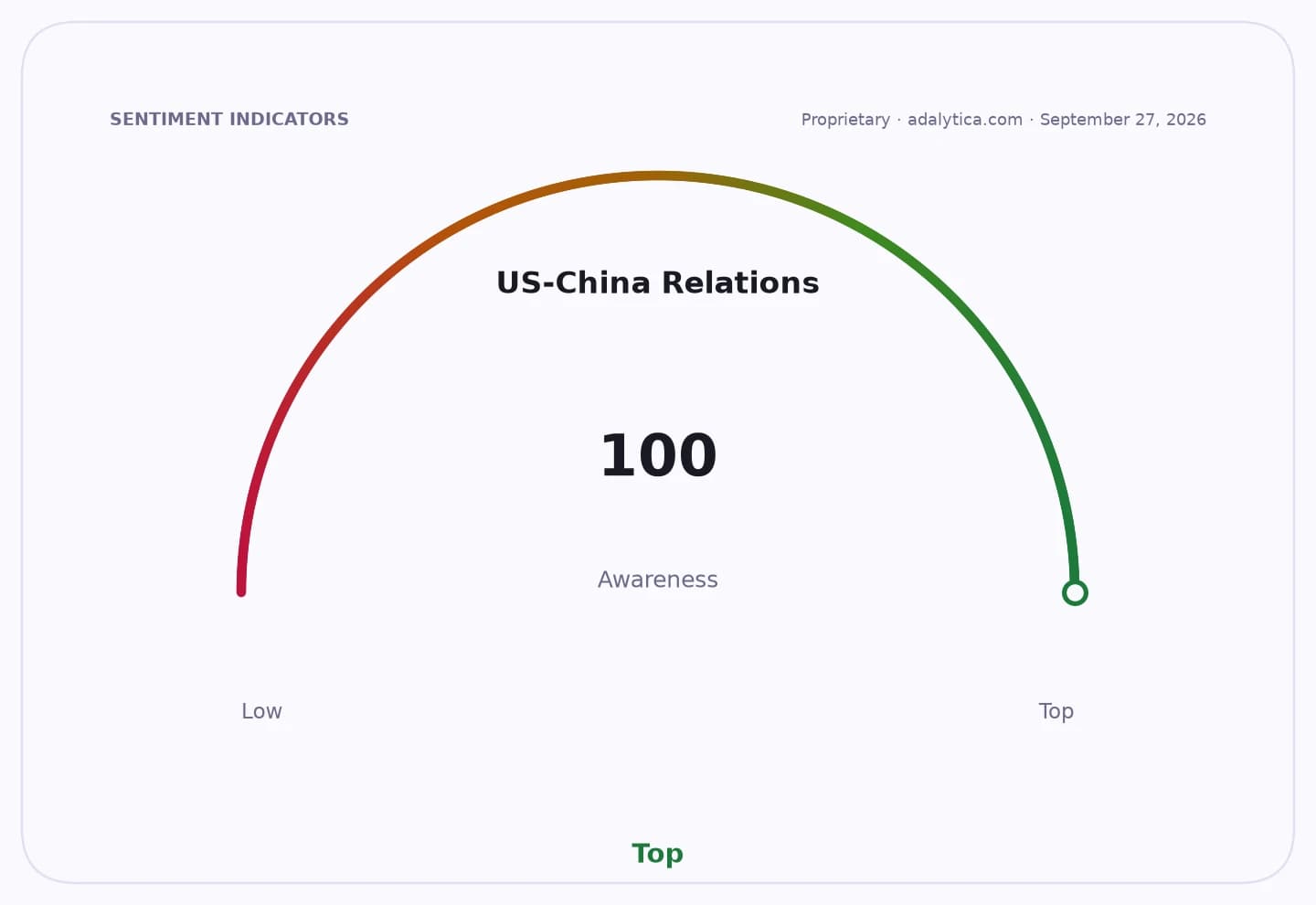
The immediate market impact is limited, but the economic message is clear: when cultural and people-to-people programs are caught in the same sweep as visa restrictions and propaganda accusations, it gets harder to rebuild trust between the U.S. and China. That matters because mistrust is expensive. It raises the odds of more restrictions on students, researchers, executives and eventually business activity, which can slow everything from dealmaking to supply-chain planning.
Sentiment IndicatorsⓘProprietary · adalytica.com · September 27, 2026
This is a snapshot — live sentiment, awareness and momentum for 130+ markets update continuously in the dashboard.Open AlphaPulse
Secretary of State Mike Pompeo said the programs were fully funded and run by the Chinese government and served as “soft power propaganda tools.” The move follows new U.S. visa limits on Communist Party members and their families, reinforcing a policy pattern that has broadened beyond tariffs and technology controls into a more durable political and ideological separation.
For long-term investors, the story is not about one program or one headline. It is about the increasing probability that U.S.-China relations stay structurally strained, even when leaders try to cool tensions at the margin. That has implications for companies with heavy exposure to China, from consumer brands and industrial exporters to multinational tech firms navigating rules around data, chips and talent.
Geopolitical Risk — 30-day sentimentadalytica.com
Explore this data interactively — full history, time series and cross-market comparisons.Open AlphaPulse
Exchange-traded funds tied to Chinese stocks were already showing pressure around the time of the latest tensions. FXI, the large-cap China ETF, has slipped below its 50-day moving average and remains under its 200-day moving average, while RSI readings around 31 point to a market that has weakened enough to attract bargain hunters but not enough to call a decisive turn. MCHI, another broad China ETF, has also drifted below its 50-day and 200-day moving averages, reflecting how little conviction investors currently have in a clean rebound.
That weakness is not just about politics. It is about the risk premium investors now assign to anything tied to the U.S.-China axis. More friction can support short-term rallies in nationalist or domestically oriented sectors, but it tends to weigh on companies that depend on cross-border trust, open capital flows and stable rules.
There is a reason markets often shrug off diplomatic disputes at first and then reprice them later. Incremental restrictions can slowly change behavior until supply chains, hiring, research collaboration and consumer demand all look different than they did a few years ago. The five cultural-program cuts are small in isolation, but they fit the broader pattern of a relationship moving away from engagement and toward managed rivalry.
For investors, the takeaway is simple: assume U.S.-China tensions will keep creating winners and losers rather than a clean market-wide trade. Diversification still matters, and so does patience. Companies with strong balance sheets, global pricing power and limited dependence on one corridor of political risk are better positioned to compound over years, not months.
| Entity | Gains | Losses |
|---|---|---|
| U.S. policymakers | ▲tougher leverage | ▼diplomatic flexibility |
| Chinese state programs | ▲none | ▼exchange channels |
| China-exposed ETFs like FXI and MCHI | ▲tactical bargain interest | ▼policy-risk overhang |
| Multinationals with China ties | ▲selective winners if diversified | ▼cross-border planning certainty |