US stocks are still climbing, but the market’s underlying message is turning more complicated: artificial intelligence is helping companies trim labor costs even as inflation refuses to behave like a clean headline trend, leaving the Federal Reserve with less room to deliver the kind of broad “white knight” easing investors have been leaning on.
US stocks, AI, and 10-year yields at 4.70%

That mix matters because it pulls the economy in two directions at once. AI-led job reductions point to a productivity shock that can cushion corporate margins and keep earnings growth alive, but they also reinforce a K-shaped backdrop in which higher-income households and asset owners can keep spending while weaker consumers absorb more of the squeeze. Meanwhile, inflation gauges and market-based expectations are not screaming crisis, but they are not yet back to a placid pre-pandemic regime either.
Sentiment IndicatorsⓘProprietary · adalytica.com · August 5, 2026
This is a snapshot — live sentiment, awareness and momentum for 130+ markets update continuously in the dashboard.Open AlphaPulse

The data still show a labor market that is cooling rather than cracking. The unemployment rate is forecast at 4.18% for July, after holding at 4.2% in June, a level consistent with a soft-landing narrative rather than recession. But the more important question for investors is not whether the jobless rate is rising slowly; it is whether AI-driven restructuring is beginning to suppress payroll growth without generating the kind of broad demand weakness that forces the Fed into rapid easing.
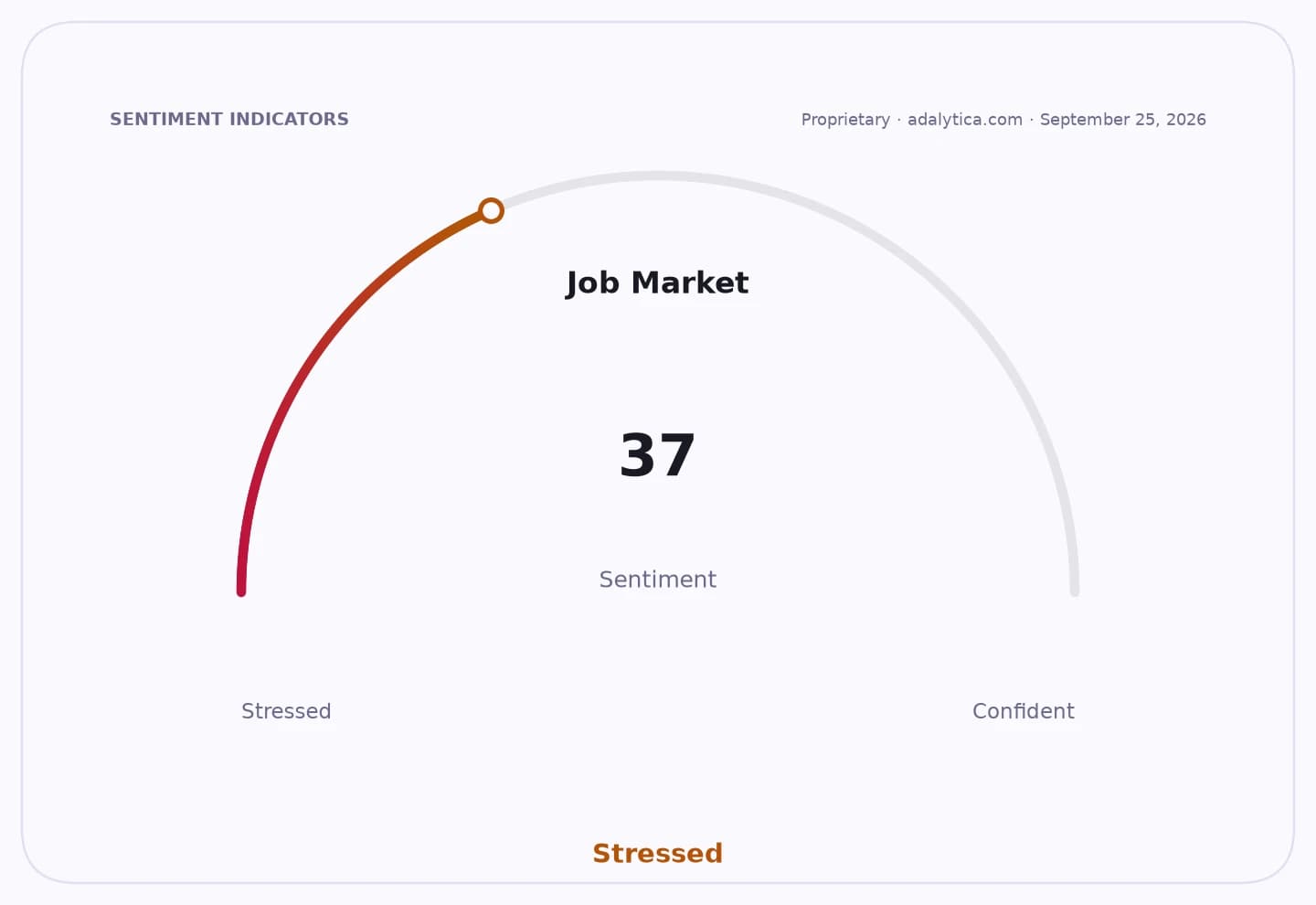
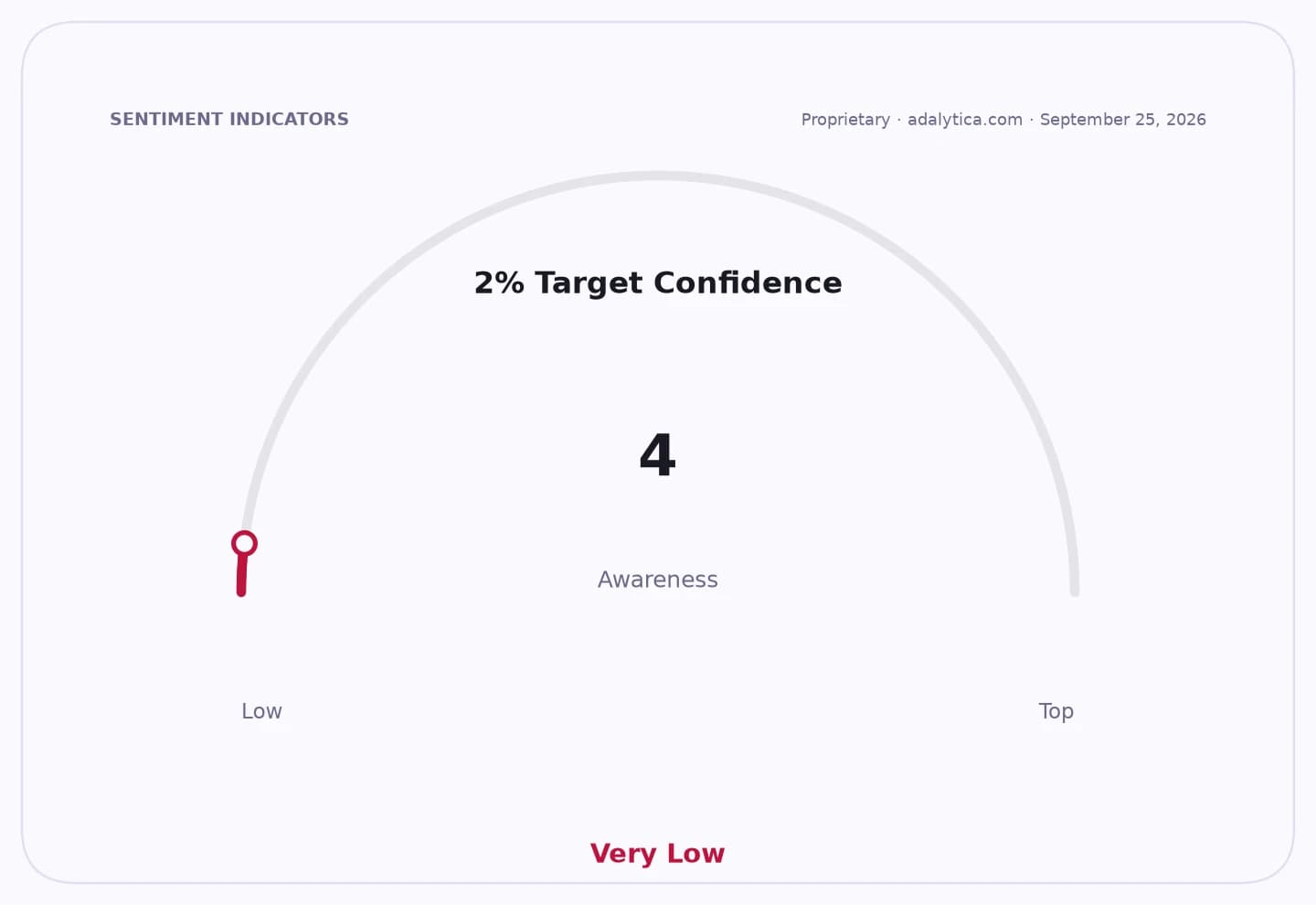
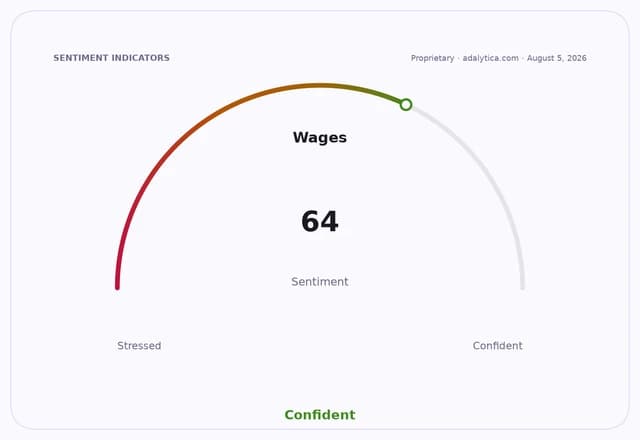
That is where the inflation story becomes central. The consumer price index has fallen to 332.568 in June from 333.979 in May, but expectations are still being recalibrated rather than decisively anchored. Adalytica’s confidence measure in the Fed’s 2% inflation target jumped to 82, or “Extreme Greed,” while wage inflation sentiment also recovered sharply to 64 from 29 a day earlier. Long-term inflation expectations and five-year breakeven sentiment both rose to 54. The message is not that inflation is reaccelerating; it is that markets are still debating whether the disinflation path is durable enough to let the Fed cut aggressively.
Treasury yields underscore that tension. The 10-year note stood at 4.70% on Aug. 3 and is forecast at 4.76%, keeping real discount rates high enough to matter for equity valuation, especially in growth-heavy parts of the market. That helps explain why the S&P 500 and Nasdaq 100 can rally even as investors remain selective. The SPDR S&P 500 ETF Trust has pushed to 771.33, above both its 50-day and 200-day moving averages, and the Nasdaq 100 tracker has recovered to 723.85. But the underlying technical picture still reflects a market that has had to heal from a sharp July drawdown, particularly in rate-sensitive and long-duration assets.
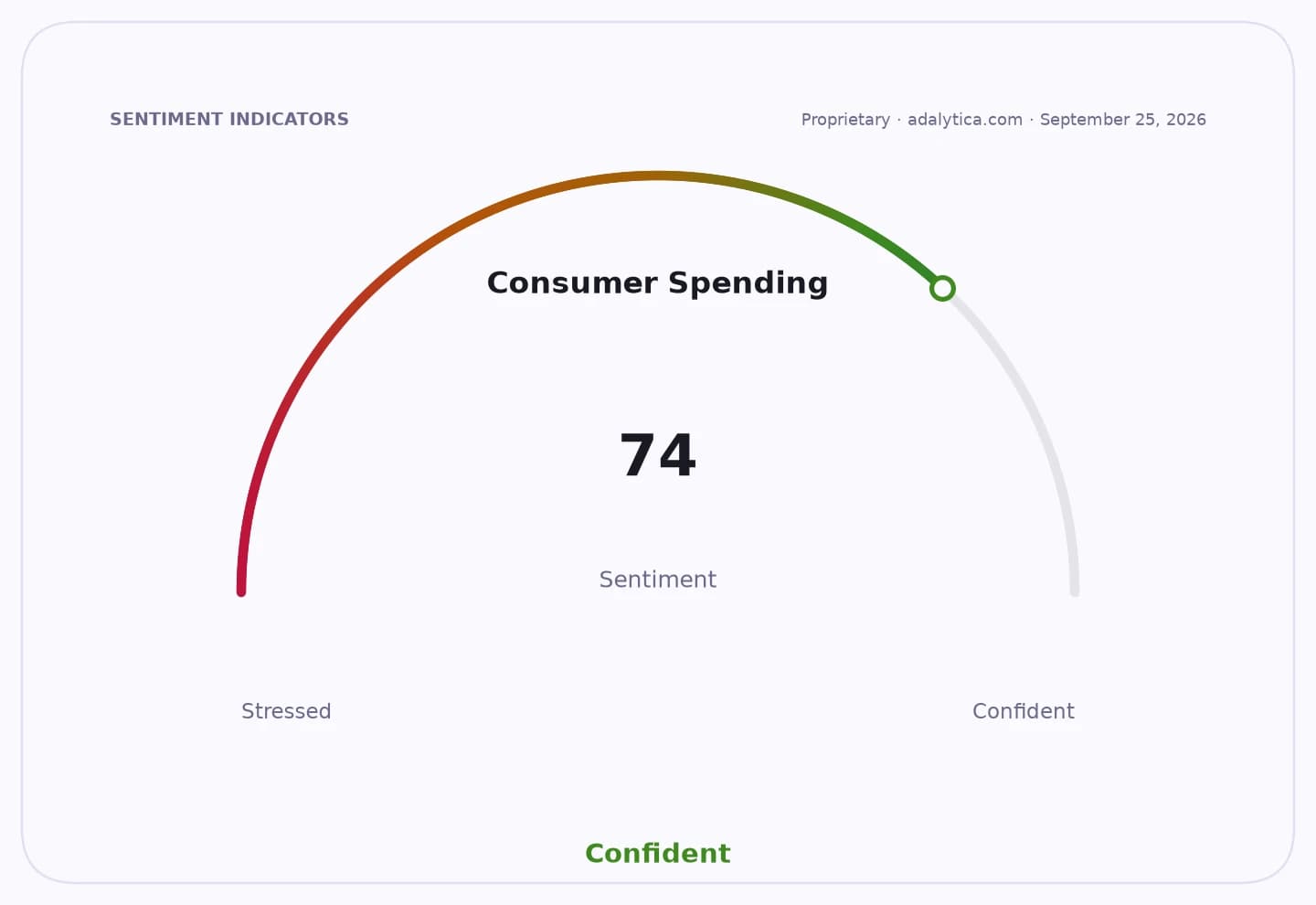
Consumers are also splitting unevenly. The consumer discretionary ETF has rebounded to 118.29, but it is still only modestly above its 50-day and 200-day moving averages, hinting at a recovery that is more fragile than the headline index strength suggests. That is the K-shaped element investors cannot ignore: AI may be improving efficiency at the corporate level, but the benefits are likely to accrue unevenly, favoring firms with pricing power, scale and automation budgets while pressuring labor-intensive businesses and lower-end demand.
For the Fed, that leaves a narrower escape route than markets would prefer. If AI keeps depressing hiring without causing a slump, policymakers may be able to justify patience on growth grounds. But if inflation expectations remain sticky — especially in wages and services — then rate cuts become harder to front-load. In that scenario, the “white knight” for markets is not a rapid easing cycle but the slower version: modest cuts, a still-positive growth backdrop and enough earnings resilience to support valuations.
For investors, the implication is straightforward. The bullish case is that AI is lifting productivity just as inflation cools enough to preserve margins, allowing equities to grind higher without a recession. The bearish case is that AI-driven job cuts and uneven spending create a weaker consumer at the same time as sticky inflation keeps yields elevated, compressing multiples and leaving the Fed behind the curve. The next catalyst is whether incoming labor and price data confirm that the economy is cooling in an orderly way — or reveal that the hoped-for soft landing is getting harder to engineer.
| Entity | Gains | Losses |
|---|---|---|
| Large-cap tech | ▲Margin gains from AI efficiency | ▼Higher rates keep valuations capped |
| Labor-intensive firms | ▲Lower wage bills from automation | ▼Hiring and morale pressure |
| Fed | ▲More room to wait if growth holds | ▼Less freedom if inflation sticks |
| Lower-income consumers | ▲Little immediate benefit | ▼Bigger hit from K-shaped demand |