US stocks are starting the session split, with bank earnings helping the Dow Jones hold a small gain even as the Nasdaq 100 sells off again on renewed semiconductor weakness.
US Stocks Split as Banks Rise and Nasdaq Falls
The divergence matters because it shows investors rotating toward financials while trimming exposure to a crowded tech trade that has powered much of the market’s 2026 advance. The S&P 500 is little changed, slipping 0.1%, and remains close to record highs, suggesting the broader market is still being supported even as leadership narrows.
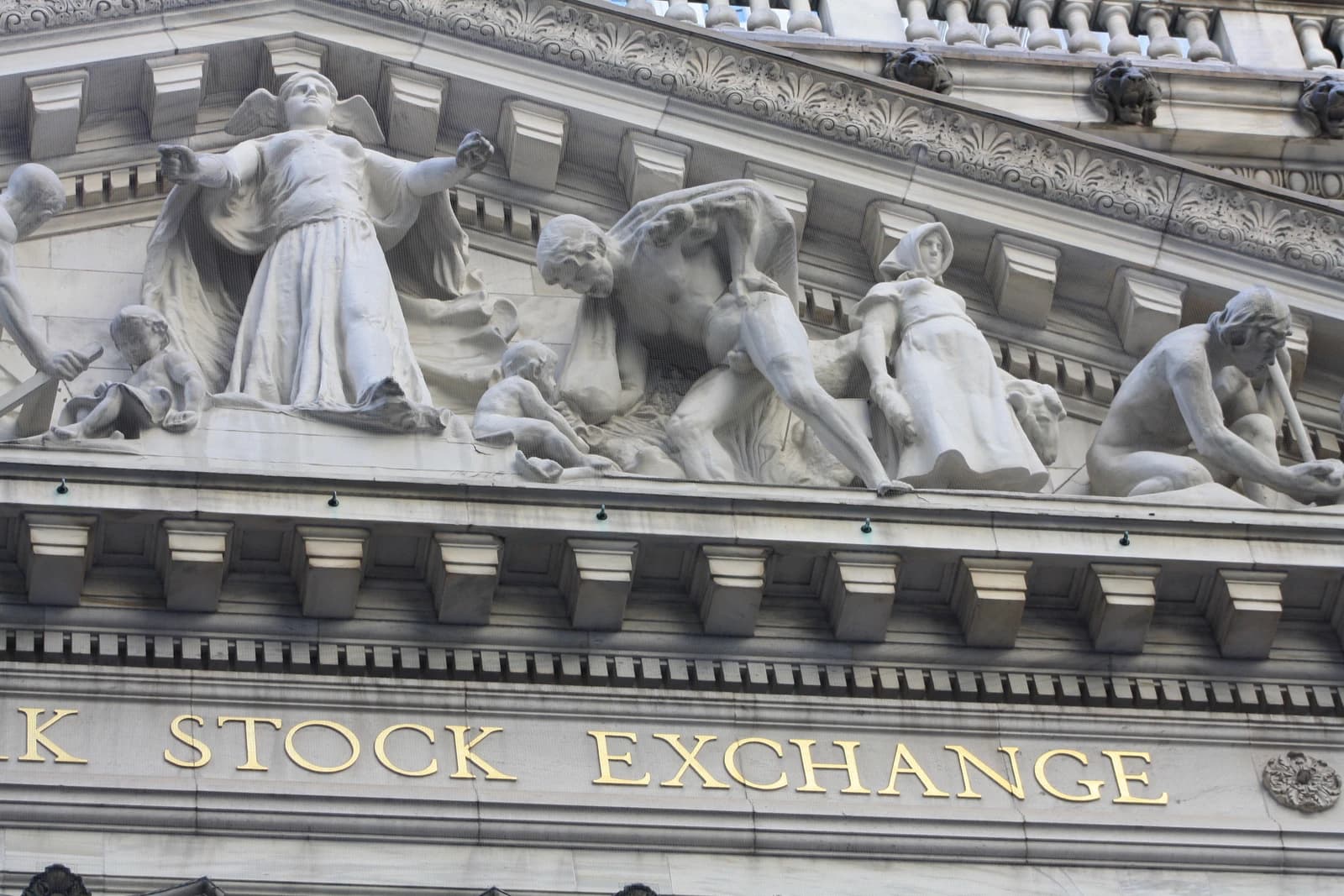
Sentiment IndicatorsⓘProprietary · adalytica.com · October 13, 2026
This is a snapshot — live sentiment, awareness and momentum for 130+ markets update continuously in the dashboard.Open AlphaPulse
The Dow Jones rose 0.1% after leading US banks delivered a strong start to earnings season, giving cyclical and rate-sensitive shares a lift. By contrast, the Nasdaq 100 fell 0.5% as chip stocks came under pressure for a second day, extending a pullback in the megacap technology complex that has been sensitive to valuation, position risk and any sign of slowing momentum.
That split is important for investors because banks can cushion the market when tech cools, but they also change the character of the rally. A stronger financials bid typically points to healthier loan demand, steadier deposit conditions and improving visibility on net interest income, while weakness in semiconductors can weigh on index-heavy funds, passive flows and sentiment around artificial intelligence-related winners.
S&P 500 vs XLFadalytica.com
Explore this data interactively — full history, time series and cross-market comparisons.Open AlphaPulse

Treasury market data also points to a backdrop that is still supportive for banks. The US 10-year yield was around 5.27%, while the 2-year was near 4.79%, leaving a 10-year/2-year spread of about 44 basis points, a curve shape that still rewards lenders more than it did when the curve was deeply inverted.
Bank shares have also been firmer technically. The Financial Select Sector SPDR Fund, XLF, recently traded at $54.98, above its 200-day moving average of $53.33 and not far from its 50-day average of $56.31, a sign that the sector has been outperforming even as broader risk appetite rotates.
The tech pullback looks more tactical than structural for now. The S&P 500 held at 777.75 on the latest session data, while the Nasdaq 100 remained well above its 200-day moving average of 672.11, but the latest downtick leaves the index vulnerable if chip weakness spreads beyond a handful of names.
Adalytica’s S&P 500 Trade Signals snapshot still shows neutral sentiment, but awareness is at an “Extreme Fear” reading, underscoring how quickly traders have become defensive around risk assets even with the index near highs. That anxiety is more evident in tech than in financials, which are benefiting from the start of earnings season and a steadier rate backdrop.
The near-term test is whether bank results can keep broadening the rally beyond technology. If financials continue to beat and semiconductor shares stabilize, the Dow and S&P 500 could stay supported even if the Nasdaq 100 remains choppy; if chip weakness deepens, the market’s narrow leadership may face a harder test.
| Entity | Gains | Losses |
|---|---|---|
| Dow Jones | ▲Banks and cyclicals | ▼Tech-heavy growth trades |
| Banks / XLF | ▲Earnings momentum | ▼Rate-sensitive borrowers |
| Nasdaq 100 | ▲— | ▼Semiconductor shares |
| S&P 500 holders | ▲Index support from financials | ▼Narrower market leadership |