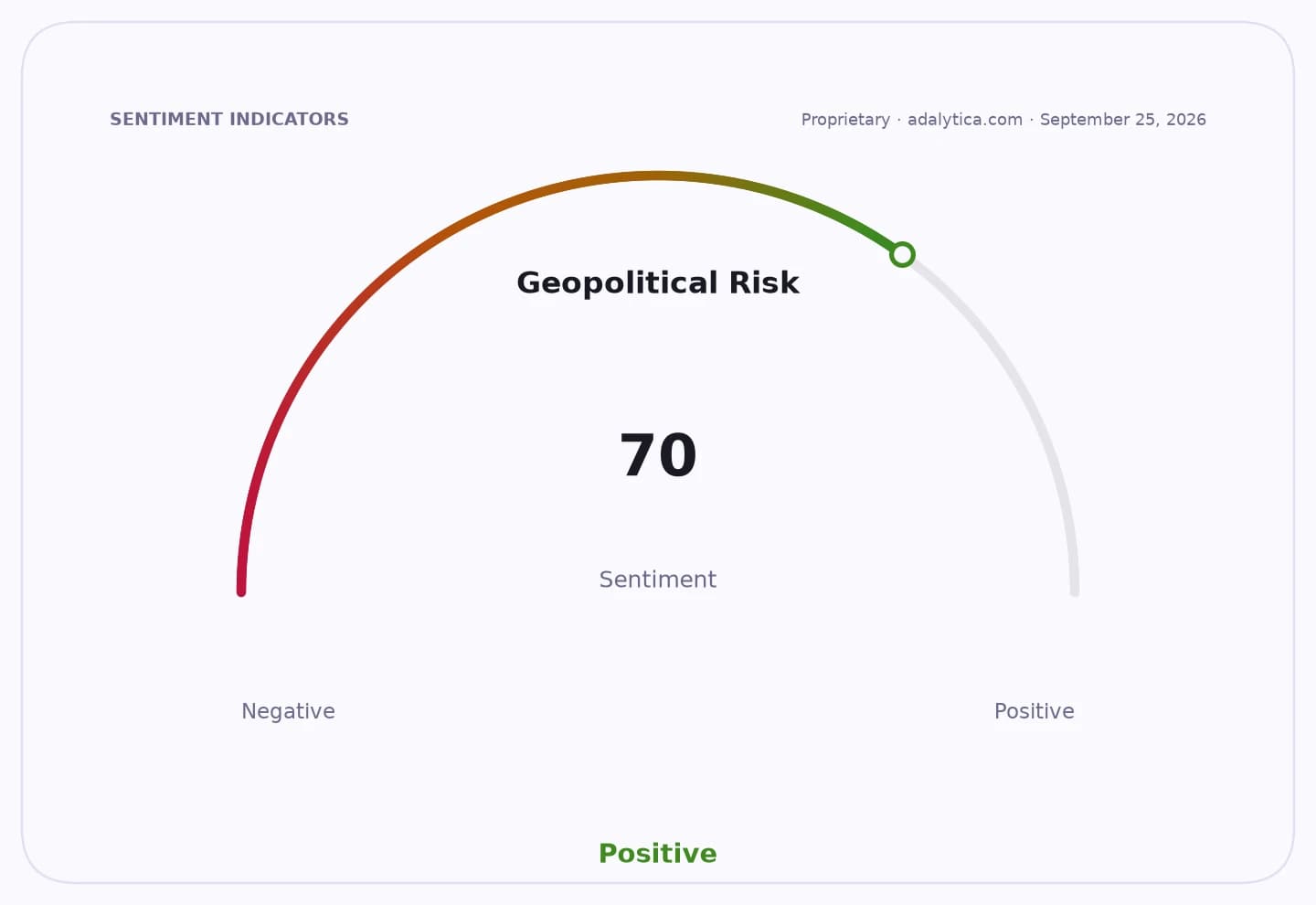
The United States’ decision to impose 25% tariffs on selected Brazilian imports from July 22 turns a long-simmering dispute into a direct earnings and market risk for Brazil’s export sector, even as Brasília says the measure has no basis and is preparing countersteps.
U.S. Tariffs Threaten Brazil Exporters, EWZ

The significance is not just diplomatic. Tariffs of that size can quickly alter pricing power, shipment timing and margin assumptions for exporters tied to the US market, while also complicating supply chains for American buyers that rely on Brazilian commodities and industrial inputs. For investors, the issue is whether the levies stay narrow and negotiable or widen into a broader bilateral trade fight that hits earnings, currencies and risk appetite across Latin America.
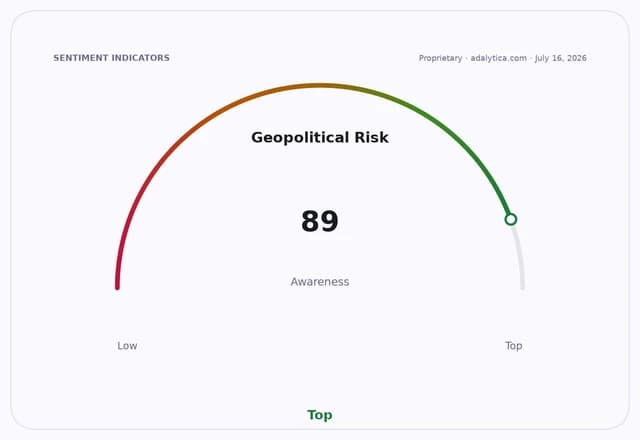
Sentiment IndicatorsⓘProprietary · adalytica.com · July 16, 2026
This is a snapshot — live sentiment, awareness and momentum for 130+ markets update continuously in the dashboard.Open AlphaPulse
Brazil’s government has rejected the rationale for the tariffs and is weighing retaliatory measures to shield its producers, a move that raises the chance of escalation. That matters because trade retaliation rarely stops at the initial target. Even when the tariff list is limited, the threat can spill into sectors that were not directly named, from agribusiness and food producers to manufacturers with cross-border exposure, while also feeding volatility in the real and in Brazil-focused assets.
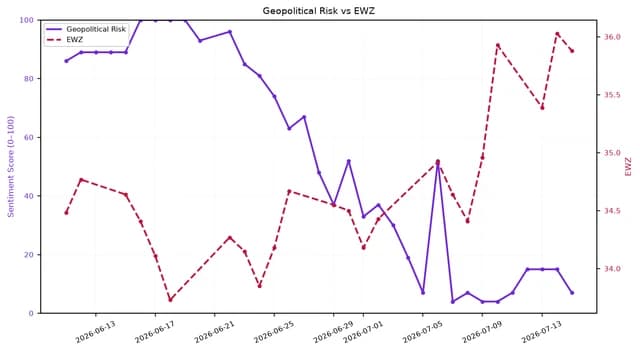
The market has already been sensitive to the prospect of a sharper trade shock. The iShares MSCI Brazil ETF, EWZ, has been volatile in recent months, and the latest trading tape shows the fund near the upper end of its recent range, with the 50-day moving average around $35.50 and the latest close at $35.88. RSI readings near 68.8 and a positive MACD suggest momentum remains firm, but not without strain if the tariff dispute escalates. That leaves the ETF vulnerable to a repricing if investors conclude that the measure is the start of a broader contest rather than a contained policy move.
The pressure point is especially important for Brazil’s commodity exporters and companies with US sales exposure. Beef, coffee, steel-related flows and other agricultural and industrial shipments can be sensitive to tariffs because the burden is often split between foreign sellers, US importers and end customers. If buyers absorb the cost, margins compress; if sellers absorb it, export revenues weaken. Either way, the policy acts like a tax on trade, reducing efficiency and potentially shifting sourcing away from Brazil to third-country suppliers.
Brazilian financial assets also sit against a fragile global backdrop. Adalytica’s Global Stability Sentiment gauge has dropped to “Extreme Fear,” while the US dollar trade signal also shows “Extreme Fear,” reflecting a market environment in which investors are quick to punish policy surprises. In that setting, even a targeted tariff can have outsized effects because it reinforces the view that trade policy is becoming less predictable and more politicized.
There is a possible bull case for markets. If the tariffs remain limited to a narrow product list and exemptions are granted, the hit to Brazil’s broader export complex could prove manageable, and negotiations may eventually contain the damage. But the bear case is more relevant for investors today: a retaliatory cycle, slower shipments and weaker confidence could bleed into earnings estimates and push risk premiums higher for Brazil-linked names.
The key test now is whether the July 22 start date becomes the opening of a drawn-out dispute or a bargaining chip in a negotiated pause. For investors, the distinction will determine whether this is a temporary headline risk or the start of a more durable drag on Brazil trade, the real and the valuations of companies exposed to the US market.
| Entity | Gains | Losses |
|---|---|---|
| US import competitors | ▲Better pricing power | ▼Brazilian supply displacement |
| Brazilian exporters | ▲Possible exemptions | ▼Higher tariff burden |
| US consumers/buyers | ▲Little immediate gain | ▼Higher import costs |
| EWZ and Brazil equities | ▲Relief if talks succeed | ▼Repricing if tensions escalate |