The U.S. Treasury’s planned sale of 3-month and 9-month bills on Tuesday comes as money markets remain firmly anchored to elevated short-term yields, with the two-year Treasury note at 4.20% and the federal funds rate still at 3.63%, underscoring how much investors are demanding to park cash at the front end of the curve.
U.S. Treasury bills auction Tuesday as SGOV, BIL stay firm

That matters because bill auctions are a direct read on the government’s near-term funding appetite and on whether cash-rich investors, from money-market funds to corporate treasurers, are still willing to absorb short-dated supply without asking for a further premium. In the current rate environment, bills remain a core place to earn yield with limited duration risk, but the Treasury is also relying on them heavily to finance the deficit at a time when the market’s tolerance for duration has become more selective.
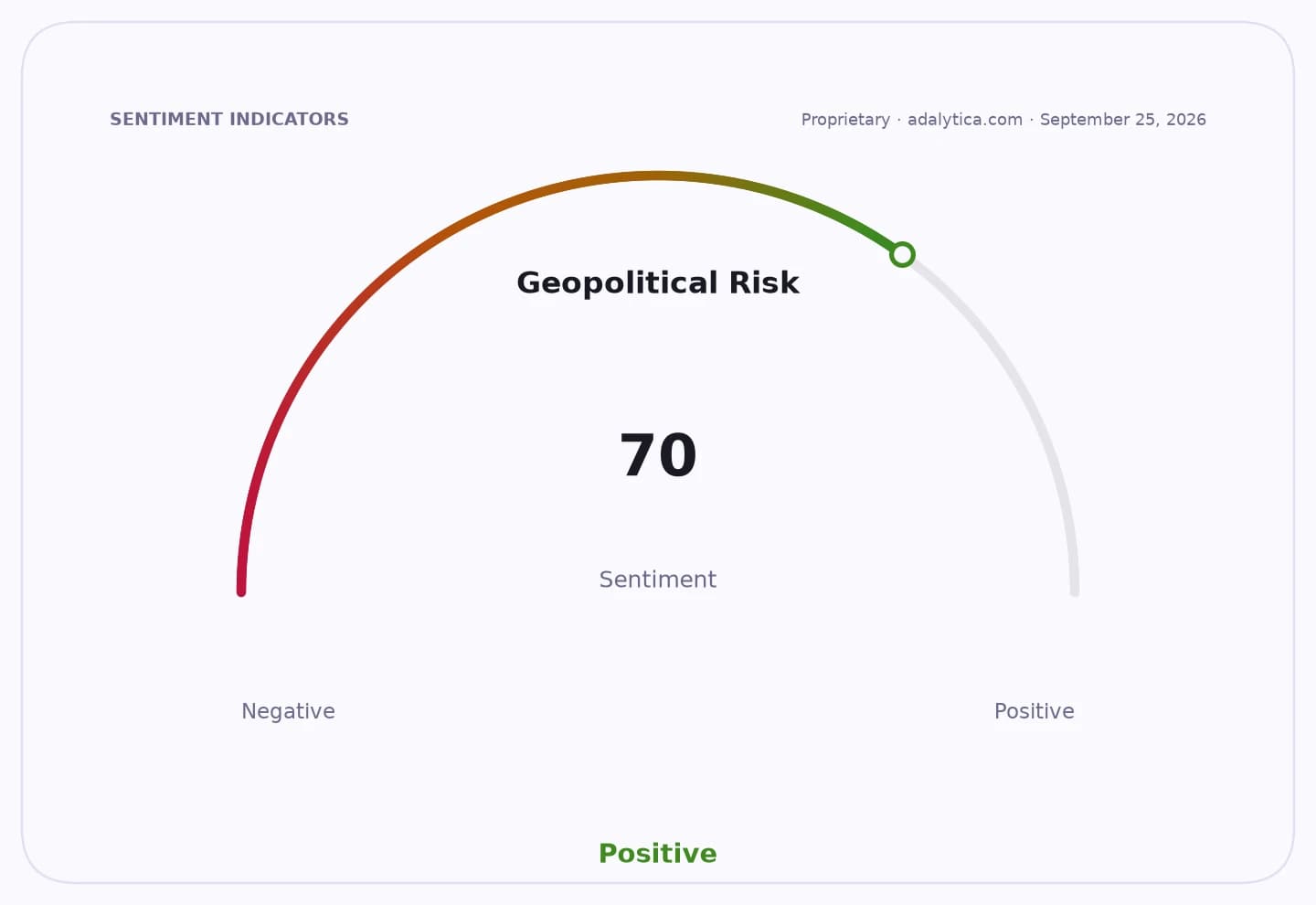
Sentiment IndicatorsⓘProprietary · adalytica.com · August 9, 2026
This is a snapshot — live sentiment, awareness and momentum for 130+ markets update continuously in the dashboard.Open AlphaPulse

Recent market pricing suggests that appetite for short-dated government paper remains solid. The iShares 0-3 Month Treasury Bond ETF, SGOV, is trading at 100.48, close to its highs and above both its 50-day and 200-day moving averages, while the SPDR Bloomberg 1-3 Month T-Bill ETF, BIL, has risen to 91.48 and is also above both trend measures. Those moves point to sustained demand for cash-equivalent assets rather than a broader shift into longer-dated Treasuries, which are more sensitive to inflation and policy expectations.
By contrast, the 10-year note at 4.69% still offers investors significantly more term premium than the front end, but not enough to guarantee broad-based duration buying if inflation data or Fed rhetoric push real yields higher. The market is effectively saying that short bills are attractive, but that conviction does not yet extend to the longer end of the curve.

For the Treasury, the auction will be watched for bid-to-cover ratios and dealer take-up as a measure of how much private demand can absorb repeated bill issuance without forcing yields higher. A well-subscribed sale would reinforce the view that excess cash is still parked in Treasury paper, helping keep front-end funding smooth and limiting volatility in money markets. A weak auction, however, would matter quickly for investors because it could lift discount rates across the short end and force a repricing in money funds, reverse repos and other cash substitutes.
The broader backdrop is one of tight but stable liquidity preferences. Adalytica’s trade signals for Treasury bonds show elevated sentiment and awareness, while the dollar signal has turned to extreme greed, a combination that suggests investors remain comfortable owning U.S. safe assets even as they demand yield. That dynamic supports bill demand in the near term, but it also leaves the market vulnerable if the Fed is slower than expected to ease or if supply continues to outpace cash inflows.
Investors will therefore focus less on the headline size of Tuesday’s sale than on whether the Treasury can place the bills cleanly at current yield levels. If it can, that would confirm that cash demand is still strong enough to keep the front end orderly. If not, the first cracks would likely show up in short-term funding rates before spilling into broader fixed-income markets.
| Entity | Gains | Losses |
|---|---|---|
| Money-market funds | ▲Higher short-term yield | ▼Duration risk |
| Treasury | ▲Low-cost funding access | ▼Weak auction demand |
| Cash investors | ▲Safe income at 3-9 months | ▼Reinvestment risk |
| Bond bears | ▲Higher front-end rates | ▼Price support in bills |