U.S. Treasury bills are regaining appeal in late summer as short-term yields edge back toward levels that once made cash look competitive with risk assets.
U.S. Treasury Bills Yield Near 3.9%

The 3-month Treasury bill yield was forecast at 3.872% for Aug. 14, up from 3.87% on Aug. 13 and 3.89% earlier in the week, reversing a stretch in which front-end rates had slipped from recent highs. For money-market investors, the move matters because it restores income on the safest part of the curve just as uncertainty over Federal Reserve policy, inflation and fiscal supply remains elevated.
Sentiment IndicatorsⓘProprietary · adalytica.com · August 15, 2026
This is a snapshot — live sentiment, awareness and momentum for 130+ markets update continuously in the dashboard.Open AlphaPulse
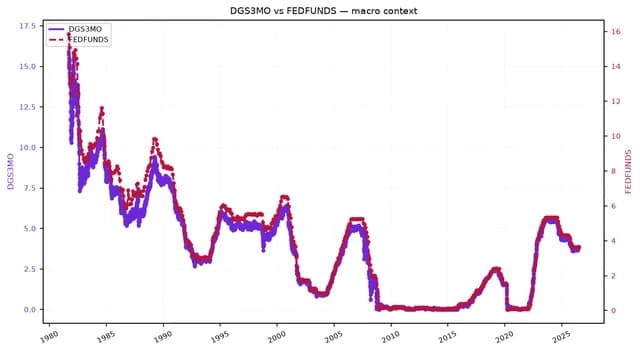
That return of yield comes against a broader backdrop of persistently high U.S. borrowing costs. The federal funds rate is forecast at 3.625% for August, while the 10-year Treasury yield is around 4.65% and had touched 4.7% this week, near levels that continue to pressure duration-sensitive assets. The 3-month bill now offers a yield above the policy rate, reinforcing the view that the front end remains a usable parking place for cash even as long bonds face heavier volatility.
For investors, the appeal is straightforward: bills deliver low credit risk, high liquidity and a return that still competes with many short-dated alternatives. The recent price action in short-duration Treasury ETFs underscores that preference. SHY, which tracks 1-3 year Treasuries, has risen to about 82.00, above its 50-day and 200-day moving averages, while BIL, which holds very short Treasury bills, has advanced to 91.53 and SGOV to 100.56. Both funds are trading near their highs for the period, a sign that demand for cash-like government paper remains firm.
The economic narrative is less benign for Washington. Higher bill and bond yields raise the government’s refinancing bill at a time when deficits remain large and supply is heavy. Even though short bills are less painful than long-term bonds, a sustained move higher in front-end funding costs would still feed through to the Treasury’s overall interest burden and keep pressure on fiscal policy. That is why investors have been paying close attention not just to Fed pricing but also to auction demand and the term premium embedded in longer maturities.
The bull case for bills is that they offer near-zero duration risk at a yield that is still compelling relative to inflation expectations and bank deposit rates. The bear case is that these yields may not last if the Fed cuts later in the year or if growth weakens enough to pull short rates lower. For now, though, the market is signaling that summer cash can once again earn a respectable return without moving far out on the risk spectrum.
What to watch next is whether the 3-month bill yield can hold around 3.9% as Treasury supply, inflation data and Fed commentary shift into the autumn. If it does, money-market funds and other cash allocators are likely to keep favoring bills over longer-duration assets.
| Entity | Gains | Losses |
|---|---|---|
| Treasury bill buyers | ▲Safer income, higher cash yield | ▼Lower upside than risk assets |
| Money-market funds | ▲Better reinvestment rates | ▼Pressure to stay short-duration |
| U.S. Treasury | ▲Easier bill funding at current demand | ▼Higher interest expense overall |
| Long-duration bondholders | ▲— | ▼Mark-to-market losses from higher yields |




