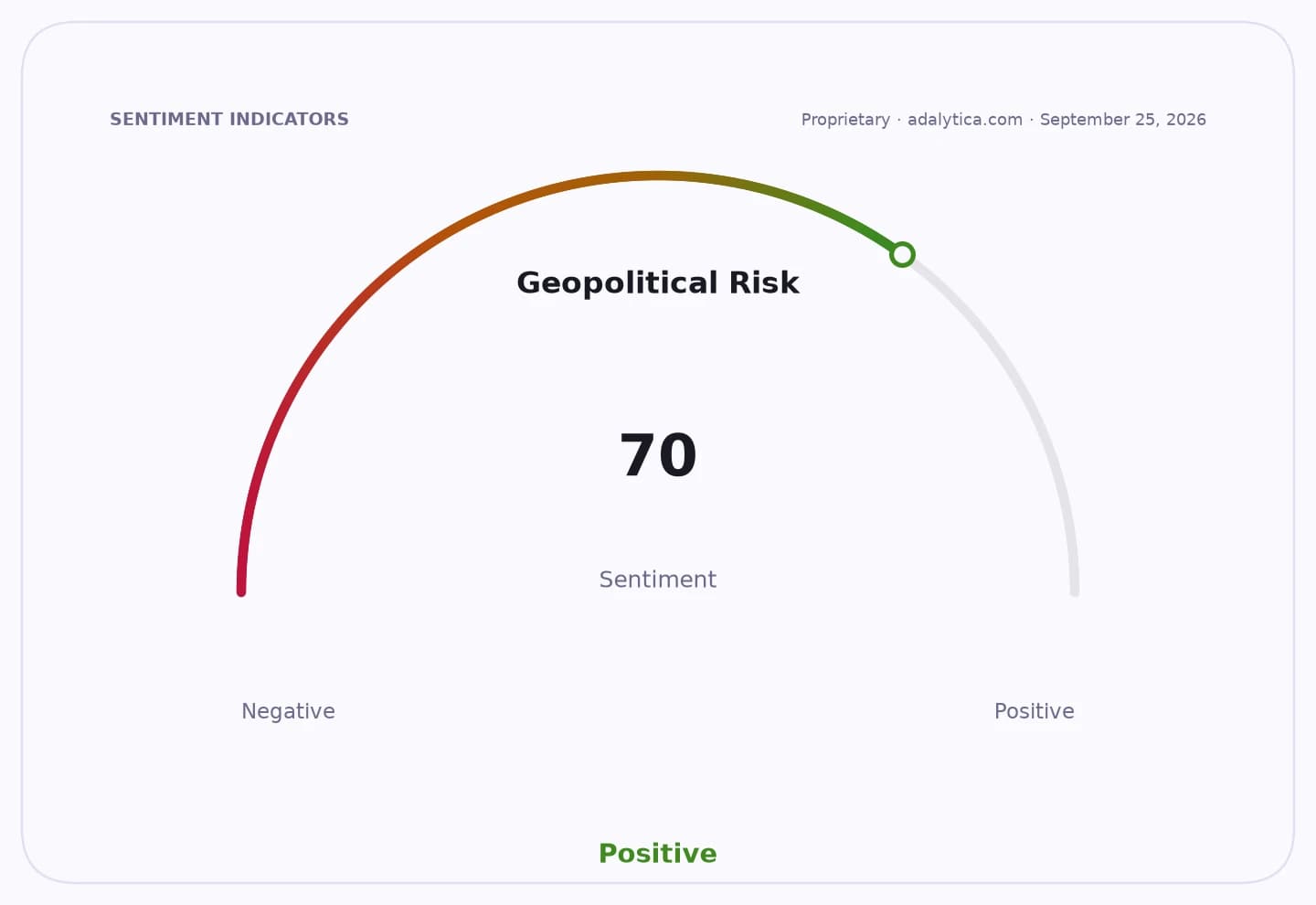
The U.S. Treasury’s move to sanction two Iran-linked cryptocurrency exchanges, alongside about $47 million in related digital asset flows, tightens Washington’s pressure on a channel used to move funds outside the traditional banking system.
U.S. Treasury sanctions two Iran-linked crypto exchanges
That matters because crypto rails remain one of the few ways sanctioned actors can shift value across borders quickly, cheaply and with limited intermediaries. By designating the exchanges under OFAC, Treasury is signaling that the enforcement focus is widening beyond wallets and mixers to the infrastructure that enables sanctions evasion, especially as Iran seeks hard-currency access under tightening geopolitical constraints.
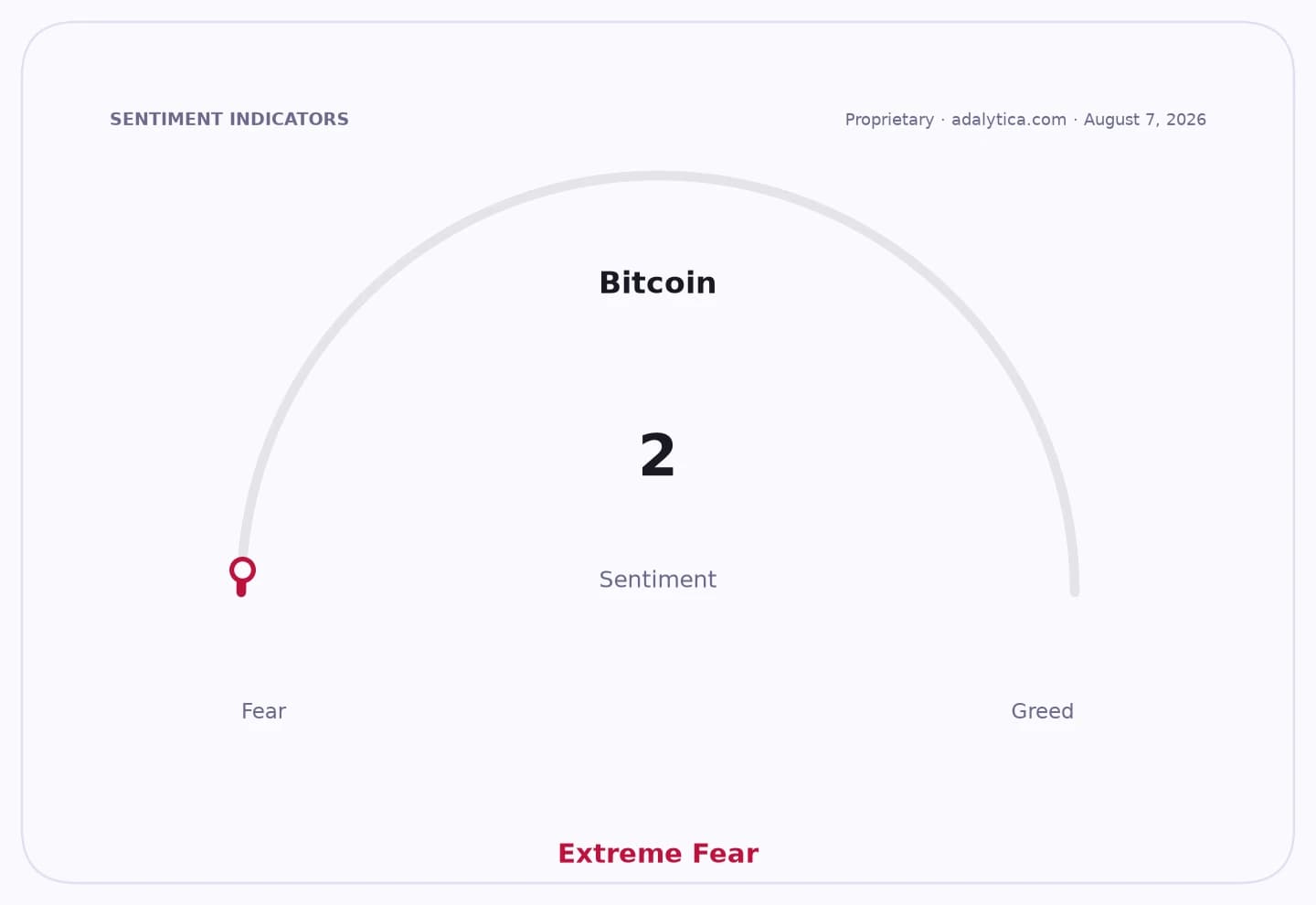
Sentiment IndicatorsⓘProprietary · adalytica.com · August 7, 2026
This is a snapshot — live sentiment, awareness and momentum for 130+ markets update continuously in the dashboard.Open AlphaPulse
The action also has immediate implications for the crypto market. Exchanges and brokers with exposure to counterparties tied to sanctioned flows face higher compliance costs, stronger screening requirements and greater risk of asset freezes or account closures. For listed U.S. crypto platforms such as Coinbase, the bigger issue is not direct revenue loss from Iran-linked activity, but the broader message that regulators are prepared to police on-chain transactions more aggressively, which can slow some institutional adoption while reinforcing the case for firms with stronger compliance systems.
The sanctions come at a time when digital-asset trading is already fragile. Bitcoin has been under heavy pressure, with Adalytica’s Bitcoin Fear & Greed Index at 2, or “Extreme Fear,” even as awareness remains elevated, suggesting investors are highly attuned to crypto headlines but deeply risk-averse. Coinbase shares have also weakened sharply from earlier highs, and the stock remains below both its 50-day and 200-day moving averages, while momentum indicators such as RSI and MACD point to a still-bearish technical setup. Miners including Marathon Digital and Riot Platforms have likewise traded well below recent peaks, reflecting both bitcoin volatility and the market’s sensitivity to policy shocks.
For Washington, the sanctions fit a broader pattern of using financial enforcement to pressure Tehran without military escalation. For investors, the takeaway is that sanctions risk is not just a geopolitical issue but a market structure issue: the more regulators treat crypto as a sanctions transmission channel, the more the industry’s winners will be the firms that can prove clean counterparties, robust surveillance and rapid response to enforcement actions.
The near-term question is whether Treasury follows this action with more designations, and whether exchanges, stablecoin issuers and custodians step up de-risking of cross-border flows that touch high-risk jurisdictions. If so, the result could be a more compliant but less permissive crypto market, with lower illicit activity — and potentially slower frictionless volume growth.
| Entity | Gains | Losses |
|---|