US attempts to stabilize currency and bond markets are starting to unsettle European central banks, as the surge in long-dated Treasury yields reinforces the dollar and threatens to export volatility across global fixed income.
US Treasury Yields Lift Dollar Pressure Europe

That matters because the latest move higher in US government borrowing costs is not just a domestic rates story. It raises the cost of capital worldwide, complicates central banks’ efforts to ease policy and risks tightening financial conditions even where inflation is already cooling. The 30-year and 50-year Treasury yields have risen to all-time highs, while the 10-year yield sits around 4.64% and the 2-year near 4.17%, leaving the US curve steep enough to keep the dollar bid even as markets price more policy uncertainty.
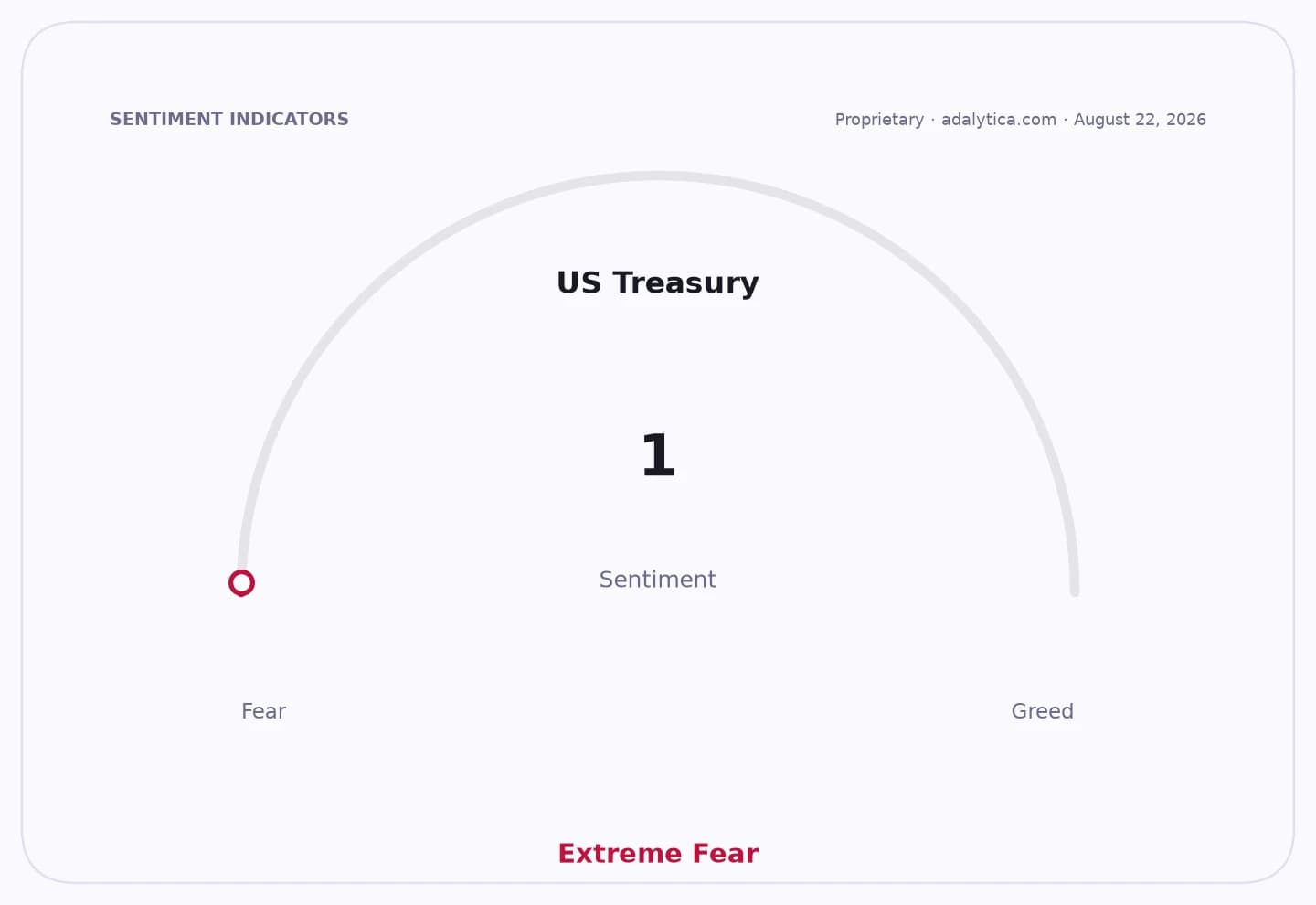
Sentiment IndicatorsⓘProprietary · adalytica.com · August 30, 2026
This is a snapshot — live sentiment, awareness and momentum for 130+ markets update continuously in the dashboard.Open AlphaPulse

For Europe, the problem is twofold. Higher US yields tend to pull global sovereign borrowing costs higher through relative-value trading, hedging flows and investor allocation decisions. They also strengthen the greenback against the euro and yen, which can tighten financial conditions abroad and pressure import prices. FXE, the euro-tracking ETF, has slipped to $106.98 from $107.60 two days earlier, while the dollar’s proprietary trade signals from Adalytica show sentiment at 16, labeled fear, even as awareness remains elevated at 75, a sign of how closely the market is watching the move.
The bond market is already responding. TLT, the long-duration US Treasury ETF, closed at $82.88 on Friday, below its 50-day moving average of $83.62 and well under its 200-day average of $85.02, a bearish technical backdrop that underscores how investors are still uncomfortable owning duration at current yields. Adalytica’s Treasury-bond trade signals remain neutral overall, but the 7-day change is positive, reflecting the kind of sharp swings that often accompany policy and intervention risk.

European officials are particularly wary that US measures intended to calm domestic volatility could have the opposite effect abroad if they push more capital into dollar assets or prompt traders to reprice the path of global rates. That would matter for government funding costs, corporate refinancing and sovereign debt management across the euro area, especially if inflation expectations remain sticky because of Middle East tensions and other geopolitical risks.
The bullish case for the dollar is straightforward: if US yields stay near current highs, the greenback should remain supported against lower-yielding currencies, and foreign central banks may be forced to stay tighter for longer. The bearish case is that sustained stress in long bonds eventually forces the Federal Reserve and other policymakers to signal a backstop, which could cool yields and unwind some of the dollar’s strength.
For investors, the key takeaway is that the trade is no longer just about US growth or inflation. It is about whether official interventions in the Treasury and FX markets can contain volatility without deepening it — and whether Europe, in trying to preserve monetary flexibility, gets pulled into a tighter global rate regime anyway.
| Entity | Gains | Losses |
|---|---|---|
| US dollar | ▲Higher-yield support | ▼Euro and yen |
| Treasury bears / short duration | ▲Volatility and yield spike | ▼Long-bond holders |
| European central banks | ▲None from stronger dollar | ▼Policy flexibility |
| US exporters | ▲None from firmer currency | ▼Importers and foreign borrowers |