The United States is widening its tariff fight beyond China, accusing more than 40 countries — including close allies Canada, Mexico and Japan — of helping Chinese goods slip around Trump-era trade barriers, a move that could prolong trade tension and keep global supply chains on edge.
U.S. widens China tariff probe to allies

That matters because circumvention claims are the kind of trade issue that can outlast headline tariff rates. If Washington decides that third countries are being used as transshipment hubs or finishing points for Chinese products, the pressure shifts from bilateral tariffs to a broader policing of global commerce. For investors, that raises the odds of more compliance costs, more supply-chain rerouting and less certainty for companies that depend on Asia-centered manufacturing networks.
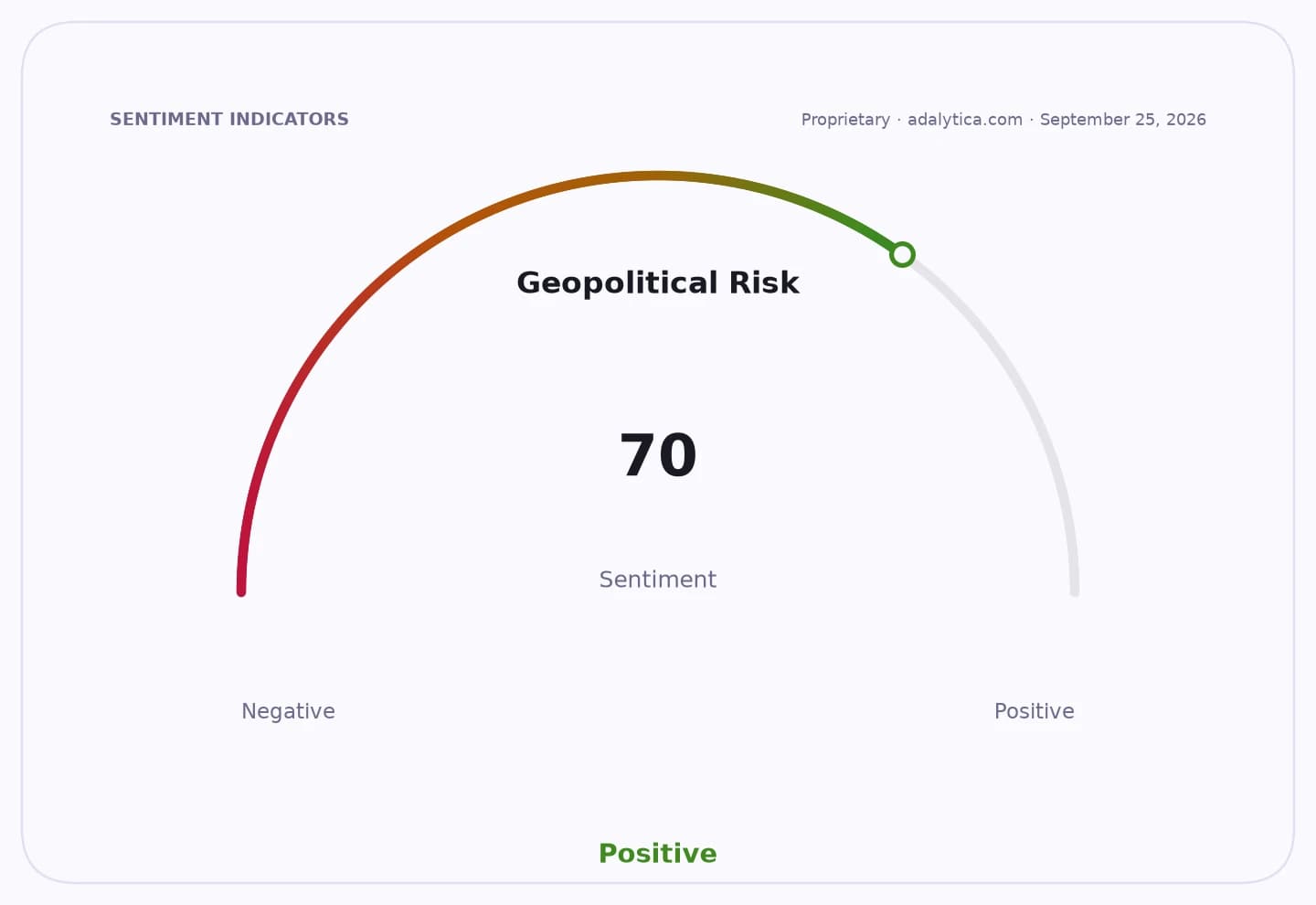
Sentiment IndicatorsⓘProprietary · adalytica.com · August 13, 2026
This is a snapshot — live sentiment, awareness and momentum for 130+ markets update continuously in the dashboard.Open AlphaPulse

The market has been sensitive to exactly that kind of uncertainty. The iShares China Large-Cap ETF, FXI, has been choppy and is trading below its 200-day moving average, a reminder that investors are still treating China exposure as a policy risk rather than a clean recovery trade. The fund was last at 34.83, compared with a 200-day average near 36.83, while its RSI reading of 52.6 suggests momentum is neither washed out nor convincingly strong. In other words, the market is waiting for clarity, and trade clarity remains elusive.
Canada and Mexico are especially important in this story because they sit at the center of North American supply chains. If Washington starts tightening rules on how goods are assembled, labeled or rerouted through those countries, the result could be higher costs for importers, exporters and logistics firms, even if the direct tariff rate on China does not change. Japan’s presence on the list also underscores how wide the net has become, turning what began as a U.S.-China confrontation into a broader test of allied trade discipline.

The economic stakes go beyond politics. Companies often respond to tariff pressure by moving final assembly, adjusting invoices or reclassifying origin to preserve margins. That can support some manufacturers and freight providers in the short run, but it also raises friction, slows trade flows and creates the kind of policy noise that can freeze capital spending. The longer that lasts, the harder it becomes for global businesses to plan inventory, pricing and sourcing.
That is why investors should pay attention not just to tariff headlines, but to enforcement. A crackdown on circumvention can ripple through retailers, industrial suppliers, transport companies and any business with deep China exposure. It can also keep pressure on the yuan and on China-linked equity markets if traders conclude the trade war is evolving from a tariff dispute into a broader contest over industrial policy and supply-chain control.
For long-term investors, the lesson is simple: trade policy is no longer a side issue. It is part of the investment case for China, for North American manufacturing and for multinational companies with complex sourcing footprints. If Washington follows through on the accusation, expect more volatility, more rerouting and more winners and losers across global trade. Worth watching, and a reminder to stay diversified.
| Entity | Gains | Losses |
|---|---|---|
| U.S. policymakers | ▲More leverage on China | ▼More trade friction |
| China-linked exporters | ▲Less near-term clarity | ▼Higher enforcement risk |
| Canada, Mexico, Japan | ▲Possible talks leverage | ▼Scrutiny over supply chains |
| Multinational importers | ▲Few immediate gains | ▼Higher compliance costs |