The dollar’s rebound against the yen is back on traders’ radar, and the move matters because a push through 160 yen per dollar would drag the pair straight back into Japan’s intervention zone. For investors, that means the market is once again pricing a currency regime where U.S. policy expectations, Bank of Japan caution and official jawboning can move equities, rates and hedges in a matter of hours.
USD/JPY Nears 160 as Japan Intervention Risk Rises

USD/JPY has recovered to around 159, while the yen remains under pressure even after a recent bout of strength tied to fading bets on further Federal Reserve tightening. That backdrop leaves the pair only a step away from the 160 level that has repeatedly triggered anxiety in Tokyo. The tension is simple: the dollar still has enough support from relative yield differentials, but the yen is not weak enough to ignore, especially with authorities already having intervened before to slow its slide.
Sentiment IndicatorsⓘProprietary · adalytica.com · August 17, 2026
This is a snapshot — live sentiment, awareness and momentum for 130+ markets update continuously in the dashboard.Open AlphaPulse

The technical picture supports the idea that the market is coiling rather than breaking down cleanly. The yen proxy traded near 159.01 in the latest reading, below its 50-day moving average and only modestly above the 200-day line, while RSI readings were subdued rather than oversold. That suggests the market is not in panic mode, but also not showing the kind of structural yen demand that would force a decisive reversal without a policy catalyst.
What makes this more than a short-term forex headline is the second-order effect across global assets. A weaker yen helps Japanese exporters and carries implications for the Nikkei, while a stronger dollar tends to tighten financial conditions globally, pressure emerging markets and weigh on commodities priced in dollars. It also revives the trade that has been in and out of favor for months: long dollar, short yen, with intervention risk acting as the main stop-loss.
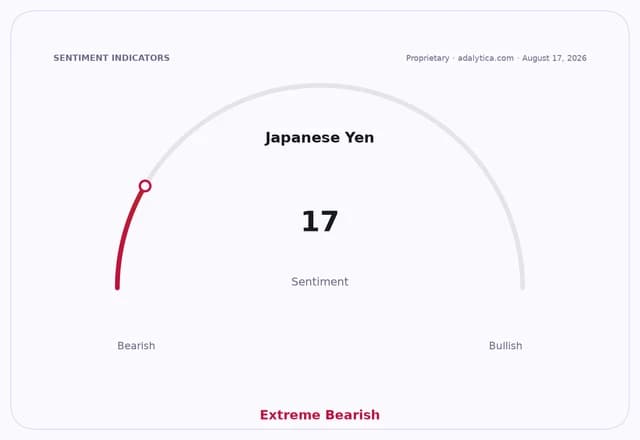
Adalytica’s U.S. dollar trade signals still show extreme fear even as awareness remains elevated, underscoring how quickly sentiment has become stretched on both sides of the pair. The yen trade signal has slipped into fear as well, which tells you the market is not positioning for a clean, one-way move but for volatility around policy headlines. In other words, the biggest opportunity may not be in chasing the spot move itself, but in owning the assets that benefit if USD/JPY continues to probe the 160 area and forces Tokyo to respond.
For investors, the actionable takeaway is to treat yen weakness as a macro trade with equity consequences. Exporters, dollar earners and volatility hedges stand to benefit if the pair grinds higher, while import-sensitive Japanese sectors, carry-trade funded positions and unhedged foreign assets face the most risk if officials step in to cap the move. The market is telling us the next leg in USD/JPY is likely to be decided less by charts than by policy tolerance.
| Entity | Gains | Losses |
|---|---|---|
| U.S. dollar | ▲Yield support | ▼Crowded shorts |
| Japanese exporters | ▲Translation tailwind | ▼Importers |
| Bank of Japan | ▲Time to stay cautious | ▼Credibility if yen breaks lower |
| Carry trade longs | ▲Higher funding spread | ▼Intervention shock |




