USD Coin has done what stablecoins are supposed to do: stay close to $1, even if that means investors who bought and held for five years would barely break even after fees and slippage.
USDC Holds Near $1 After Five Years
A $1,000 purchase of USDC five years ago would now be worth about $999.68 using the latest quoted price of $0.9997, a loss of 0.03%. The calculation underlines the core appeal of a dollar-backed token — capital preservation — but also the limited upside for buy-and-hold investors compared with risk assets that can compound over time.
Sentiment IndicatorsⓘProprietary · adalytica.com · October 10, 2026
This is a snapshot — live sentiment, awareness and momentum for 130+ markets update continuously in the dashboard.Open AlphaPulse
That flat return matters because stablecoins are no longer a niche crypto convenience. They are increasingly used as cash equivalents across trading, payments and on-chain finance, making their credibility important not just to crypto participants but to the broader plumbing of digital markets. A token that trades within a fraction of a cent of par supports liquidity, settlement and collateral management; one that drifts materially would raise questions about reserve quality, redemption mechanics and counterparty trust.
For investors, the story is less about price appreciation than about the role USDC plays in portfolios. The token remains a parking place for funds waiting to be redeployed into crypto or other risk assets, and its stability is the asset. That also explains why the 52-week range near $1 matters more than any attempted comparison with equity-like returns. The recent low of $0.9995 and high of $1.000 show remarkably tight trading, consistent with a product designed to mimic cash rather than generate gains.
The broader backdrop is a crypto market that has become more institutional and more sensitive to product structure, regulation and liquidity. SEC disclosures tied to StablecoinX and related entities point to the usual stablecoin risks: tax treatment, growth execution and infrastructure development. Those issues matter because stablecoins now sit at the intersection of payments, trading and balance-sheet management, and any shift in regulation or reserve confidence could quickly spill into market pricing.
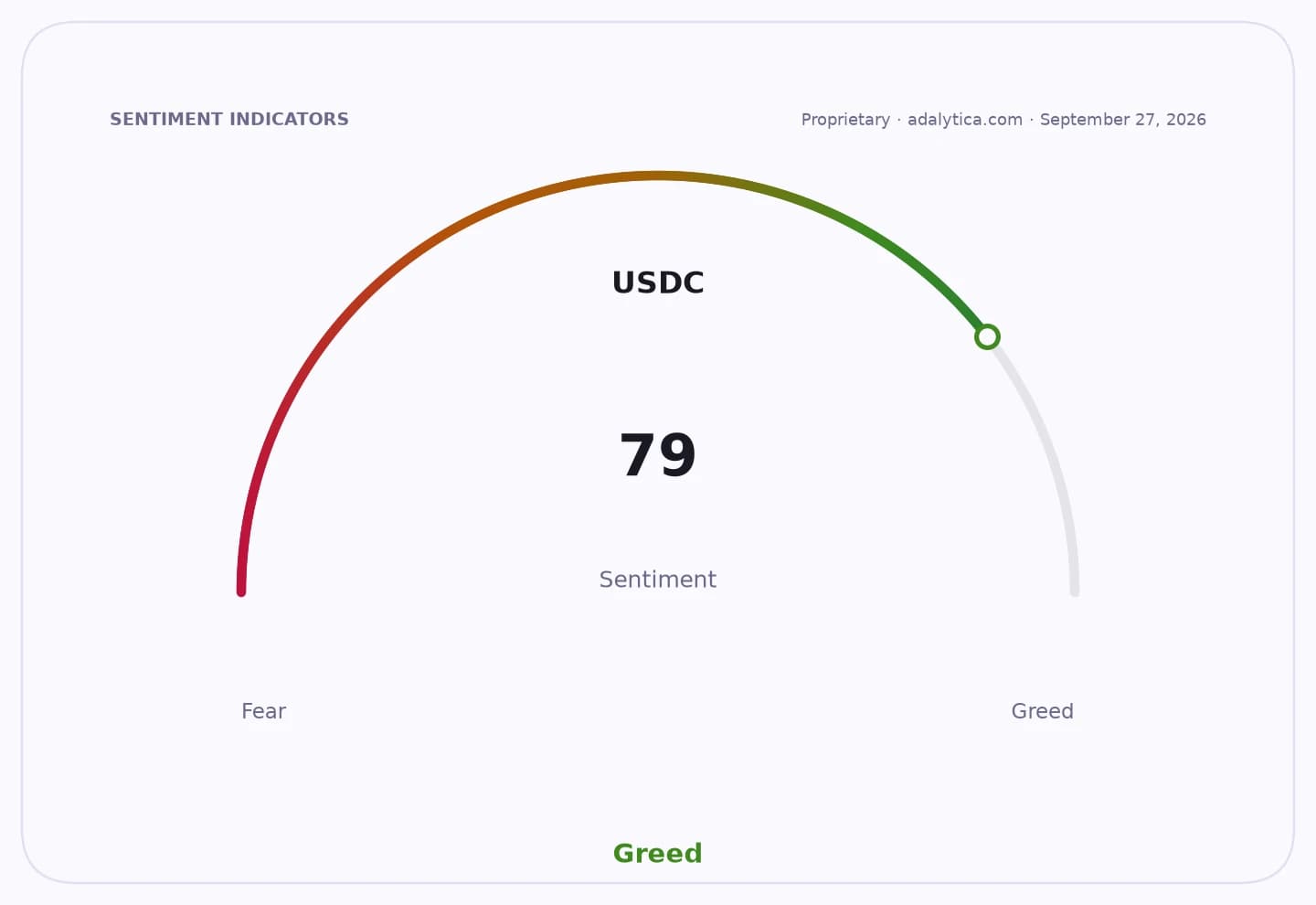
Technically, USDC’s price action remains subdued, with little evidence of volatility that would attract momentum traders. That is precisely the point for long-term holders: a stablecoin is judged by its ability to avoid drama. For investors weighing where to keep dry powder, USDC’s near-par performance argues for utility rather than return.
The key question from here is not whether USDC can outperform a stock index. It is whether it can continue to maintain its peg through changing regulation, market stress and rising competition from other dollar-linked tokens. As long as it does, its value proposition remains intact — even if the five-year reward is essentially preservation, not profit.
| Entity | Gains | Losses |
|---|---|---|
| USDC holders | ▲Cash-like stability | ▼Meaningful capital gains |
| Stablecoin issuers | ▲Usage and liquidity | ▼Yield-seeking investors |
| Crypto traders | ▲Settlement efficiency | ▼Upside from holding idle cash |
| Competitors | ▲Market validation for stablecoins | ▼Differentiation pressure |