USDT’s market value has climbed above $250 billion, and that matters because the world’s dominant stablecoin is becoming an even bigger conduit for dollar liquidity just as regulators appear to be stepping back from the edges of the market.
USDT Tops $250 Billion as Crypto Liquidity Grows

For investors, the key point is not the round number itself. It is the signal that capital is still pouring into crypto’s settlement layer even after a brutal shakeout in Bitcoin and Ethereum. USDT at a $1 peg with massive daily turnover suggests the market is not rewarding speculative leverage so much as it is stockpiling dry powder, moving money across exchanges and jurisdictions, and keeping capital mobile in places where banking rails are slower, more expensive or harder to access.
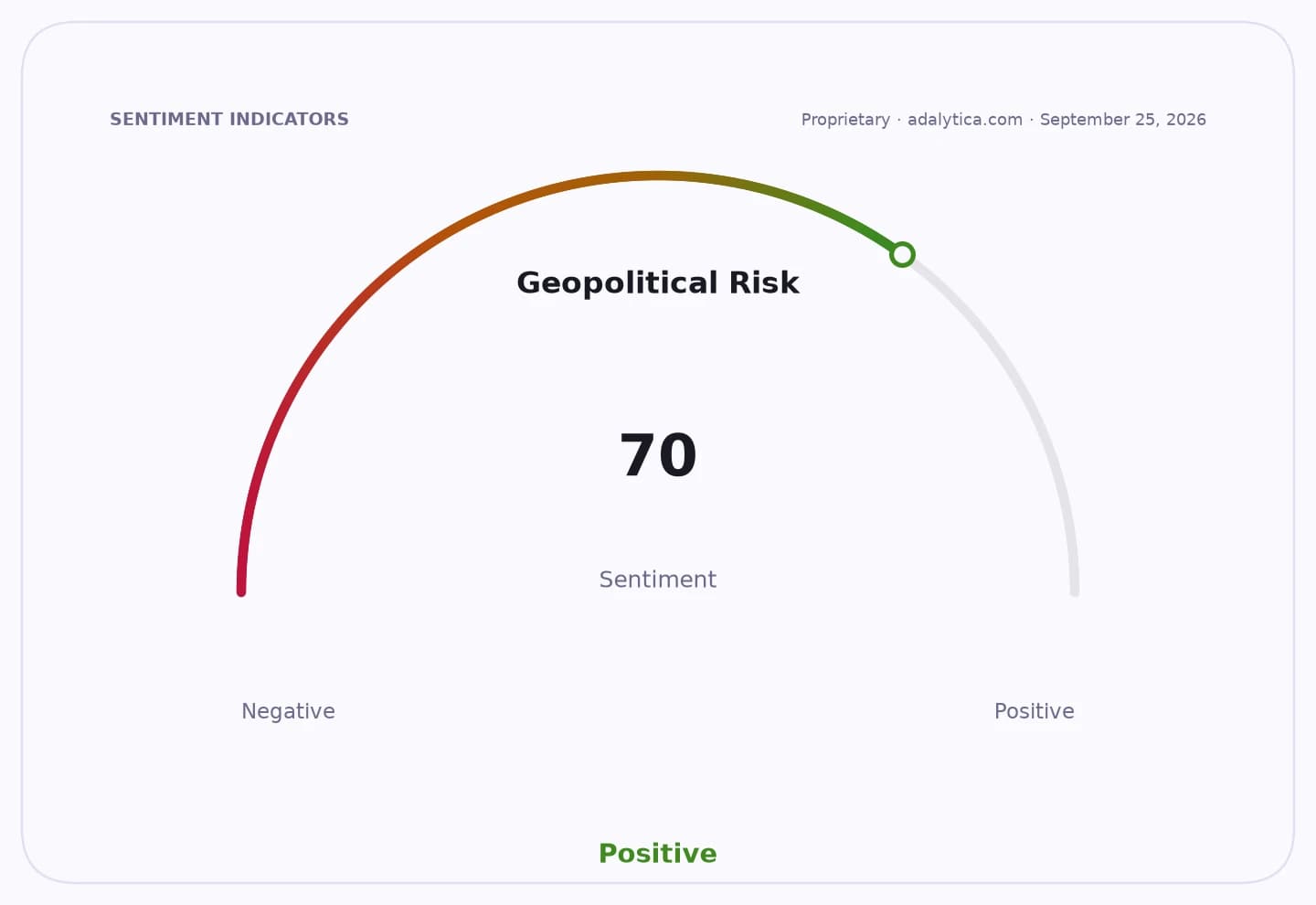
Sentiment IndicatorsⓘProprietary · adalytica.com · August 6, 2026
This is a snapshot — live sentiment, awareness and momentum for 130+ markets update continuously in the dashboard.Open AlphaPulse

That dynamic is especially relevant in Thailand, where crypto activity has long been shaped by a mix of retail demand, capital controls, remittances and gray-zone liquidity. If U.S. enforcement is drifting into neutral, as the seed headline suggests, the practical effect is not the disappearance of risk but the expansion of room for flows that are harder to police in real time. In that world, USDT is less a trading token than a parallel payments network.
The market backdrop reinforces that view. Bitcoin is stuck around $64,600 after a deep drawdown from earlier highs, while Ethereum is only just stabilizing near $1,911. Both remain well below their prior peaks, yet USDT volumes remain enormous, which points to persistent demand for dollar-denominated liquidity even when the speculative part of the market is wounded. Adalytica’s Bitcoin Fear & Greed reading sits at 2, or extreme fear, while the dollar signals show extreme greed, a combination that usually favors cash-like instruments over directional crypto bets.
That is why this matters economically: stablecoins are becoming a shadow layer for cross-border settlement, market making and capital flight, particularly in regions where local financial systems are less trusted or where offshore access is politically attractive. A stablecoin that can absorb more than $250 billion in value is not a sideshow. It is infrastructure. It competes with banks, payment processors and, in some markets, even the formal dollar system.
For investors, the opportunity is not necessarily in chasing USDT itself. Tether remains the toll road, not the destination. The upside sits with the plumbing: exchanges, on-chain settlement providers, compliance tooling, custodians, blockchain infrastructure and the listed companies that enable stablecoin circulation and redemption. Mastercard’s move to expand stablecoin capabilities through BVNK is a reminder that traditional payments firms are already positioning for this shift rather than resisting it.
The risk, of course, is regulatory whiplash. If policymakers decide that stablecoin growth is effectively capital leakage, enforcement can return quickly. But until then, the market is telling us something important: dollar demand is migrating further onto crypto rails, and that migration is likely to keep benefiting the infrastructure layer long after the next Bitcoin cycle turns.
| Entity | Gains | Losses |
|---|---|---|
| USDT / Tether | ▲Higher utility, deeper liquidity | ▼Greater regulatory scrutiny |
| Thai crypto market | ▲More dollar liquidity | ▼Harder capital oversight |
| Stablecoin infrastructure firms | ▲Transaction growth | ▼Banks, legacy rails |
| Bitcoin and Ethereum speculators | ▲Potential liquidity spillover | ▼Trading volatility from fear |