A major highway upgrade in Uzbekistan is cutting transit times and transport costs along a China-to-Europe trade corridor, underscoring how Central Asia is trying to turn infrastructure spending into faster freight flows and more trade.
Uzbekistan A380 road upgrade cuts transit times
The expansion of the A380 in Karakalpakstan is part of a broader push to make overland routes through Central Asia more competitive as shippers look for alternatives and governments try to capture more of the value from cross-border trade. Cargo operators say the completed stretch between Kungrad and the Kazakhstan border has already slashed travel time on one segment from 10 to 12 hours to as little as three to four, a shift that directly lowers fuel, maintenance and downtime costs.
Sentiment Indicators
The latest project covers a 25-kilometer section between Nukus and Urgench, where the road is being widened from two lanes to four at a cost of $48.7 million. Officials said the work is about 90% complete and should finish by the end of 2026, with the route expected to carry 14,000 to 15,000 vehicles a day once finished, up from 6,000 to 7,000 before reconstruction.
For investors, the story is less about one road than about a logistics system taking shape across the region. The broader road program is budgeted at $383.4 million, including $274.2 million in financing from the Asian Development Bank and $109.2 million from the Uzbek government, part of the CAREC Corridor 2 network meant to move goods more efficiently between China, Central Asia and Europe.
The economic payoff is straightforward: faster roads can reduce unit shipping costs, improve reliability and make inland routes more attractive for exporters in Turkey, Kazakhstan, Tajikistan and beyond. That can support trade volumes, local employment and investment in adjacent sectors such as warehousing, agriculture and tourism.
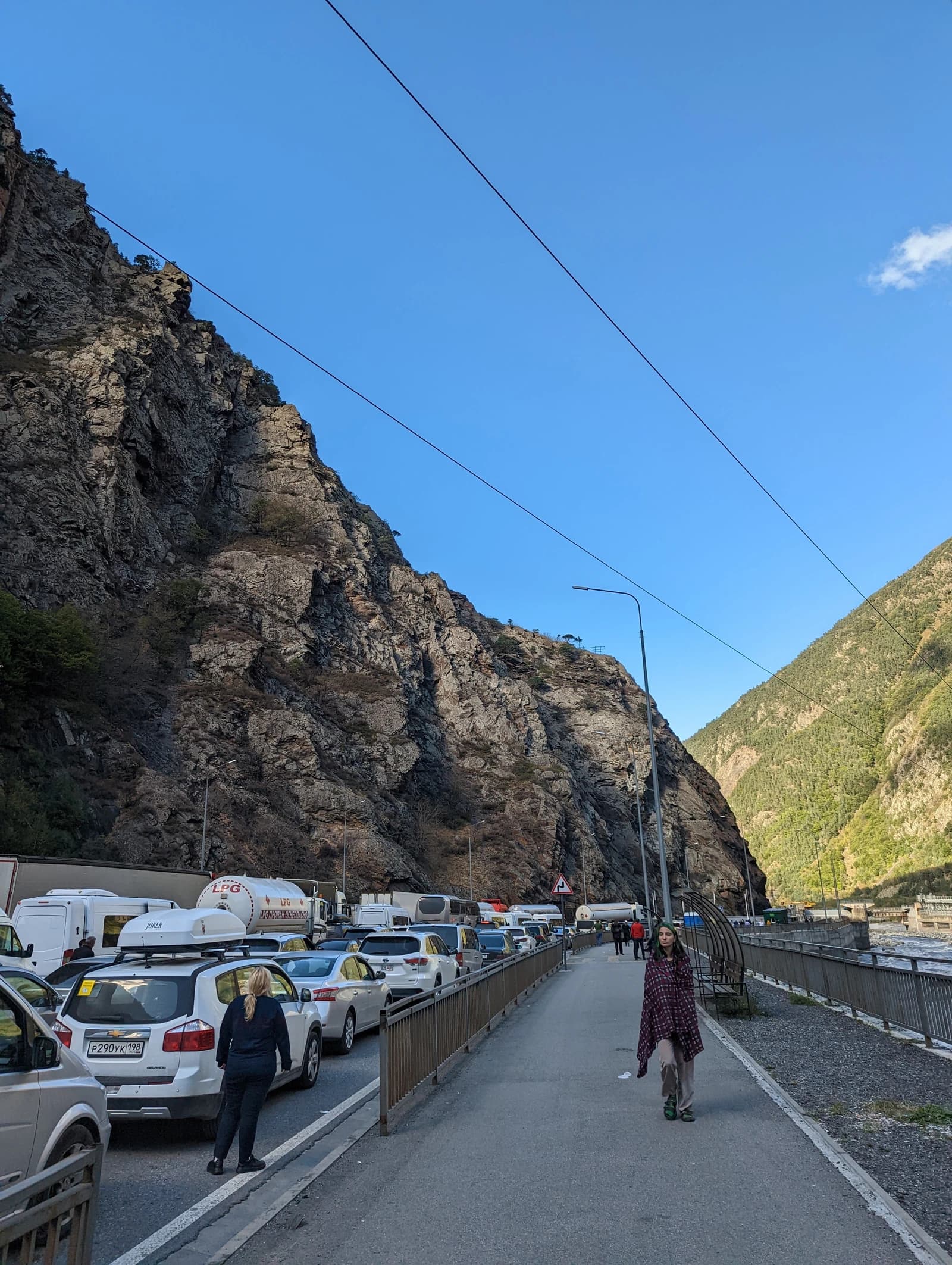
But the bottleneck has not disappeared. Border delays, customs procedures and inconsistent inspections still slow freight even when the road itself improves, which is why the ADB is also funding digitalization and queue-management systems at crossings. A separate $400 million regional border-upgrades program approved in August 2026 is meant to modernize road and rail checkpoints across CAREC with better digital systems, inspection tools and border management.
For logistics companies, the immediate benefit is lower operating costs and faster turnarounds. For rail and truck operators tied to Eurasian trade, the risk remains that physical upgrades will not deliver full gains unless border processing keeps pace.
| Entity | Gains | Losses |
|---|---|---|
| Uzbek exporters and shippers | ▲Faster deliveries, lower costs | ▼Less time lost in transit |
| Road transport operators | ▲Higher route capacity, lower maintenance | ▼Delays from border bottlenecks |
| Central Asia trade corridor | ▲More freight throughput, better competitiveness | ▼Routes that remain slow or unreliable |
| Border slow-moving customs systems | ▲Pressure to modernize | ▼Lost efficiency advantage |